An eclectic collection of mixed media.
Shematria is a dedicated biblical gematria calculator.
Type in Hebrew, Greek or Roman or look up a number.
Works with Strong’s references.
Look up bible verses in Hebrew or Greek.
‘The Book of the Law’ by Aleister Crowley, now searchable.

Letter Symbolism and Merkavah imagery in the Zohar’ by Eliot R. Wolfson.
Living Thelema – Cognitive Therapy for Magicians (2012)
This track from episode 29 is from the Living Thelema series by Dr. David Shoemaker. This particular segment is about Cognitive Therapy for Magicians.
“Was deciphering the MDW NTR necessary to formulate the Ancient Hebrew Abjad?”
This is an excellent video lecture by ‘Divine Prospect’ (Ron Shields). Discusses the work of Professor Douglas Petrovich as he traces the migration patterns of the Israelite people through the ancient near east. Have a note book handy because DP gives you a lot of work to go and research for yourselves afterwards.
“Ancient Egyptian Calendars: How Many Were There?”
[Abstract] “In 1950, Richard A. Parker hypothesized that pharaonic Egypt had three separate calendars: origi-nal lunar; civil; later lunar, of which the most ancient was the original lunar. l To be fair, it should be noted that Ludwig Borchardt first discussed the idea of a second lunar …”
Publisher: JSTOR
Publication Date: Jan 1, 2002
Publication Name: Journal of the American Research Center in Egypt 39: 241-250
Heaven on Earth: A Tour of Solomon’s Temple through Near Eastern Eyes [Video]
Victor Avigdor Hurowitz presented “Heaven on Earth:
A Tour of Solomon’s Temple Through Ancient Near Eastern Eyes.”
“This blog is used to discuss various issues and topics pertinent to ritual magick and ritual magicians as proposed by Frater Barrabbas Tiresius – author, witch and ritual magick practitioner.”
Is Quantum Physics Necessary for the Account of Consciousness? The Lecture of Stuart Hameroff
One of the most comprehensive lectures on the Orch OR theory of consciousness to date. It was held at the Moscow Center for Consciousness Studies in October 2016.
“The nature of consciousness, the mechanism by which it occurs in the brain and its place in the universe are unknown. In the mid 1990’s Sir Roger Penrose and I suggested that consciousness depends on biologically ‘orchestrated’ coherent quantum processes in collections of microtubules within brain neurons, that these quantum processes correlate with, and regulate, neuronal activity, and that the continuous Schrodinger evolution of each such process terminates in accordance with the specific Diosi-Penrose (‘DP’) scheme of objective reduction (‘OR’) of the quantum state. ‘Orchestrated’ OR activity (‘Orch OR’) is taken to result in moments of full conscious awareness and/or choice. The DP form of OR is related to the fundamentals of quantum mechanics and space-time geometry, so Orch OR suggests a connection between brain biomolecular processes and the basic structure of the universe. I will review Orch OR in light of criticisms, presenting experimental evidence for 1) hierarchical microtubule quantum resonances (terahertz, gigahertz, megahertz, kilohertz), and 2) anesthetics preventing consciousness through quantum actions on microtubules. Further novel Orch OR suggestions include 1) topological quantum bits (‘qubits’) intrinsic to microtubule geometry, 2) interference ‘beat frequencies’ of fast (e.g. megahertz) microtubule vibrations producing slower electro-encephalographic (EEG) correlates of consciousness, 3) mental state alterations caused by brain stimulation with megahertz mechanical vibrations (ultrasound), and 4) OR-based primitive feelings prompting life’s origin and evolution. Orch OR is rigorous, consistent with neuronal-level approaches and better supported experimentally than other theories of consciousness. Reference: Hameroff & Penrose (2014) Phys. Life Rev., 11(1):39-78”
“The Visions of Aleph” by Doctor T. (1797).
Published in ‘The New York Magazine, Or Literary Repository’.
Author of mysterious Voynich manuscript was Italian Jew, says scholar. – News feature from the Guardian.com
Illustrations of the book that has confounded code-breakers and scholars for more than 100 years may offer key clues about authorship
Chicago Library Seeks Help Transcribing Magical Manuscripts
Three texts dealing with charms, spirits, and all other manners of magical practice are now accessible online
Among the library’s collection of rare Bibles and Christian devotional texts are a series of manuscripts that would have scandalized the religious establishment. These texts deal with magic—from casting charms to conjuring spirits—and the Newberry is asking for help translating and transcribing them.”
THE 100th MONKEY PRESS
Ex Scientia Adhevo Sapientia
– has an impressive collection of reproductions of the original works of Aleister Crowley.
Origins of the ancient constellations: The Mesopotamian Traditions. By John H Rogers.
A personal explication of the Thelemic Qabalah, by Soror N.’.O.’.
The Great Clock: -3- The Sirian Year
The Ancient Egyptians used a Sirian Year of 365.25 days which was neither the Tropical year of 365.242, or the Sidereal Year of 365.256 days. We explain the manner of discovering this unique astronomical cycle and go through some ideas about Sirius as a neighbor star to the Solar System.
“The fact is that Sirius is the only star in the night sky that is not affected by the precession of the equinoxes as the rest of the stars are. The Egyptians would signal their New Year’s Day when Sirius became visible again after about 70 days of absence in the night sky. As the Sun moved through the neighboring Zodiac constellations of Gemini and Cancer, Sirius would not be seen because of the bright sunlight in front of it by day, but as soon as the sun advanced around the year and entered Leo, Sirius became visible again. On the day when it became visible again, it would rise at morning right before the Sun in what is known technically as heliacal rising.
Right at the break of dawn, Sirius would become visible again after 70 days of invisibility for the ancient inhabitants of the Nile, and being the brightest of stars, it would appear over the horizon just before the Sun with a flash indicating New Year’s day for the ancient Egyptians. But why did they choose the heliacal rising of Sirius for their New Year?”
[Pdf] Beholders of Divine Secrets:
Mysticism and Myth in the Hekhalot and Merkavah Literature
by Vita Daphna Arbel
An examination “of the mystical notions present in the enigmatic Hekhalot and Merkavah literature, the manner in which these are expressed through mythological imagery, as well as the possible social-cultural and ideological affiliation of members of the Hekhalot and Merkavah mystical circle.”
[Podcast] from the Washington James Information School on the text ‘The exhalation of Inanna’.
“1-12. Lady of all the divine powers, resplendent light, righteous woman clothed in radiance, beloved of An and Uraš! Mistress of heaven, with the great diadem, who loves the good headdress befitting the office of en priestess, who has seized all seven of its divine powers! My lady, you are the guardian of the great divine powers! You have taken up the divine powers, you have hung the divine powers from your hand. You have gathered up the divine powers, you have clasped the divine powers to your breast. Like a dragon you have deposited venom on the foreign lands. When like Iškur you roar at the earth, no vegetation can stand up to you. As a flood descending upon (?) those foreign lands, powerful one of heaven and earth, you are their Inana…”
Sumerian is the first language for which we have written evidence and its literature the earliest known.
The Electronic Text Corpus of Sumerian Literature (ETCSL), a project of the University of Oxford, comprises a selection of nearly 400 literary compositions recorded on sources which come from ancient Mesopotamia (modern Iraq) and date to the late third and early second millennia BCE.
Review by: Joel Hecker
Source: The Jewish Quarterly Review,
Vol. 90, No. 1/2 (Jul. – Oct., 1999), pp. 202-206
Published by: University of Pennsylvania Press
Stable URL: http://www.jstor.org/stable/1455412
“Sod ha-Egoz, the Secret of the Nut, is an esoteric teaching with ancient roots that reached its fullest expression in Germany in the 12th-13th centuries. Emerging as an exegetical expansion on Song of Songs 6:11, I went down to the nut grove, the doctrine of the nut marks an early attempt by Jewish mystics of medieval Europe to speculate upon the divine chariot as imagined in the book of the prophet Ezekiel. In the various documents relating this mystery, the anatomy of the nut, with its shell, fruit, and various chambers, corresponds to the diverse aspects of the chariot. While speculation upon the chariot is a prominent theme in pre-kabbalistic and kabbalistic writings, its representation as a nut, an English or Persian walnut to be precise, is among its more novel expressions.”
Death and afterlife in Ugarit and Israel
By Elizabeth Bloch-Smith and Mark Smith
Abstract: “The background of the New Testament concepts of resurrection and afterlife has been studied intensively in the last two decades, largely under the impetus of the Ugaritic tablets from Ras Shamra. In the book under review, the author undertakes a comprehensive study of afterlife and “resurrection” in Northwest Semitic literature.”
The Use of the Hebrew Bible in Early Jewish Magic
“This study seeks to enumerate the extensive and variegated use of the Hebrew Bible in early Jewish magic. The survey focuses mainly on the key Jewish magical corpora from late antiquity and the early Middle Ages – Palestinian Amulets, Babylonian magic bowls, assorted magical texts from the Cairo Geniza, and several magical handbooks deriving from Babylonia and other indeterminate locations. The article is divided into three substantive sections. The first treats numerous methodological pitfalls tied to the use of the terms ‘magic,’ ‘Jewish magic,’ and ‘Hebrew Bible.’The second and third sections are devoted, respectively, to the two broad formal categories into which magical use of the Hebrew Bible may be divided, citations of biblical verses and biblical historiolae.”
Hebrew Union College Annual, vol. 58, 1987, pp. 157–225.
Genesis 1-11 and Its Mesopotamian Problem
Cultural Borrowings and Ethnic Appropriations in Antiquity, ed. E. Gruen (Stuttgart: Franz Steiner Verlag, 2005), pp. 23-36.
The Micro-Zodiac in Babylon and Uruk: Seleucid Zodiacal Astrology,
“Abstract: in ed. J. Steele, The Circulation of Astronomical Knowledge in the Ancient World, 2016.”
“When God Abandoned the Garden of Eden: A Forgotten Reading of Genesis 3:24“, Vetus Testamentum, 2015
OF HEBREW COSMOLOGY AMONG ANCIENT NEAR EASTERN LITERATURE
By Joe Miller
Victor Avigdor Hurowitz
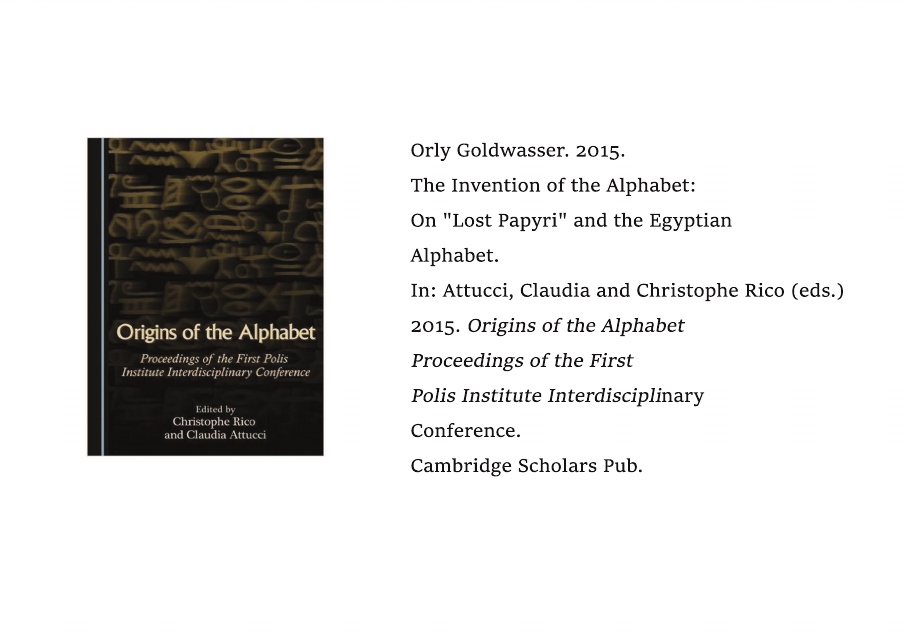
“An increase of cross-cultural learning as a consequence of increased travel and migration between Egypt and the Levant during the Iron Age occurred after millennia of migration in earlier times. The result was an Egyptian-Levantine koine, often not recognized as relevant by historians due to an uncritical reproduction of ancient myths of separation.However, the cultural exchange triggered by migration is attested in the language, in the iconography of the region,in the history of the alphabet, in literary motifs, in the characterization of central characters of the Hebrew Bible and,last but not least, in the rise of new religions, which integrated the experience of otherness in a new ethos.”
Reviewed Work(s): The Zohar: Translation and Commentary, 2 volumes. Pritzker edition.Vol. 1, Vol. 2 by Daniel C. Matt; A Guide to the Zohar by Arthur Green Review by: Joel HeckerSource: Hebrew Studies,
Pleiades in Ancient Mesopotamia
A paper looking at the alphabet;
from its paleo-Hebrew beginnings to the Futhark Runes of Northern Europe, by Judith Dillon.
Elusive Scrolls: Could Any Hebrew Literature HaveBeen Written Prior to the Eighth Century BCE?
Comments on the Historical Background of the Abraham Narrative
Cogito – A short film by Russell W.B Kirkby
Tag Line: “How do you know what you think you know?
A man narrates his personal deconstruction of his reality as he journeys to an audition to discovers that he is an actor auditioning for the film he is already in.
“A post modern interpretation of Descartes Meditations.”
“Did I Not Bring Israel Out of Egypt?”
‘Aleister Crowley e a contracultura’ by Vitor Cei Santos. [Portuguese]
ABSTRACT: “The main objective of this article is discussing Crowley´s doctrine of the New Aeon, thinking about its historical constitution, its values and consequences to the postmodernism. The occultist was a mythical and controversial writer, poet of the unrestricted freedom and of the will as a maxim sovereign, besides being a defender of the use of sex and drugs to magical purposes. His esoteric discourse stimulated existential trajectories of great refutable power, making him the counterculture guru.””
90 books, pamphlets, documents, conferences, letters, etc. including the Sepher Bahir, The Egyptian Book of the Dead, and the Magical Ritual of the Sanctum Regnum.
“Stellarium is a free open source planetarium for your computer. It shows a realistic sky in 3D, just like what you see with the naked eye, binoculars or a telescope.” It is being used in planetarium projectors. Just set your coordinates and go.
“With the rapid advances in the technological environment that significantly expand options for preservation, presentation and access to digital content, the National Library of Israel initiated the renewal of its collection of copies of Hebrew manuscripts. This enterprise, undertaken in partnership with the Friedberg Jewish Manuscript Society (FJMS) is designed to make Jewish manuscripts widely available. The International Collection of Digitized Hebrew Manuscripts will enable global centralized digital access to the complete corpus of existing Hebrew manuscripts. The images will be preserved long-term using state of the art technology, and the collection will be accessible to international communities of researchers and users from the comfort of their own institutions and homes.
The International Digital Library of Hebrew Manuscripts is made possible through the generous support of the Friedberg Jewish Manuscript Society (FJMS) and the Landmarks Heritage Program in the Prime Minister’s Office, created to preserve national heritage.”
Author Bio: Henryk Drawnel is Professor of Second Temple Literature and Jewish Studies in the Biblical Studies Institute at the John Paul II Catholic University of Lublin, Poland. His published works include articles and monographs on the Qumran Aramaic texts, including An Aramaic Wisdom Text from Qumran: A New Interpretation of the Levi Document (Brill, 2004) and The Aramaic Astronomical Book (4Q208-4Q211) from Qumran: Text, Translation, and Commentary (Oxford, 2011).
Zodiac mosaics in ancient synagogues.
Walter Zanger • 06/09/2017
Abstract
Alleging parallels between Scripture and other ancient Near Eastern texts has always been a matter of controversy. The controversy has resulted from criticism of the comparative method by those who accuse its users of being overly simplistic or reckless when applying their particular approaches to the texts. This recklessness has resulted in alleged connections that are now considered very loose, unjustified, and harmful to the context of Scripture. In order to avoid the dreaded “parallelomania” that has resulted from hasty conclusions in comparative studies, it is necessary to approach alleged comparative units in a more concrete fashion, synthesizing the best of past approaches and cautiously utilizing those approaches when arriving at conclusions. The comparative element under discussion in this paper is that of divine cloud-riding, and the texts under consideration are Psalm 104:3 and the Ugaritic Epic of Baal. Both the Hebrew Bible and the Ugaritic texts describe Yahweh/Baal as a rider of the clouds. The mythopoetical motif of cloud-riding can be seen in many ancient Near Eastern texts where a storm god races through the heavens on his or her angelic cloud-chariot. This is true also of portions of the Hebrew Bible that describe Yahweh as one “who makes the clouds his chariot, who walks on the wings of the wind” (Ps 104:3). Since Ugarit is, in literature, Israel’s most significant Canaanite neighbor, it becomes a matter of interest when Baal is called repeatedly “the Rider of the Clouds” in his respective texts. Is there a legitimate parallel between the Yahwistic motif of cloud-riding and the northern Canaanite expression “Rider of the Clouds”? If so, what is to be made of this parallel and what were the psalmist’s intentions by including Baal-like language in his description of Yahweh?
The Brazen Serpent by Helen Kirby.
Published by Nephilim Press.
“In The Brazen Serpent, Helen Kirkby offers a far-reaching and thoughtful exploration of the philosophical, psychological and practical aspects of the Qabalah. Keep an eye on this promising new author!”
—David Shoemaker, author of Living Thelema, The Winds of Wisdom and other writings
The Brazen Serpent is an advanced treatise on the Hermetic Qabalah from a unique Thelemic perspective. It is NOT a beginner’s guide. The Brazen Serpent expects the reader to be familiar with the Thelemic paradigm and have working knowledge of the Tree of Life.