BethSheba Ashe

Author & Researcher in the Original Gematria and the Precursor to the Tree of Life

You are here: Home / Archives for Merkabah Wheel

More about the Genesis alphabetic acrostic

January 25, 2019 By BethSheba Ashe Leave a Comment

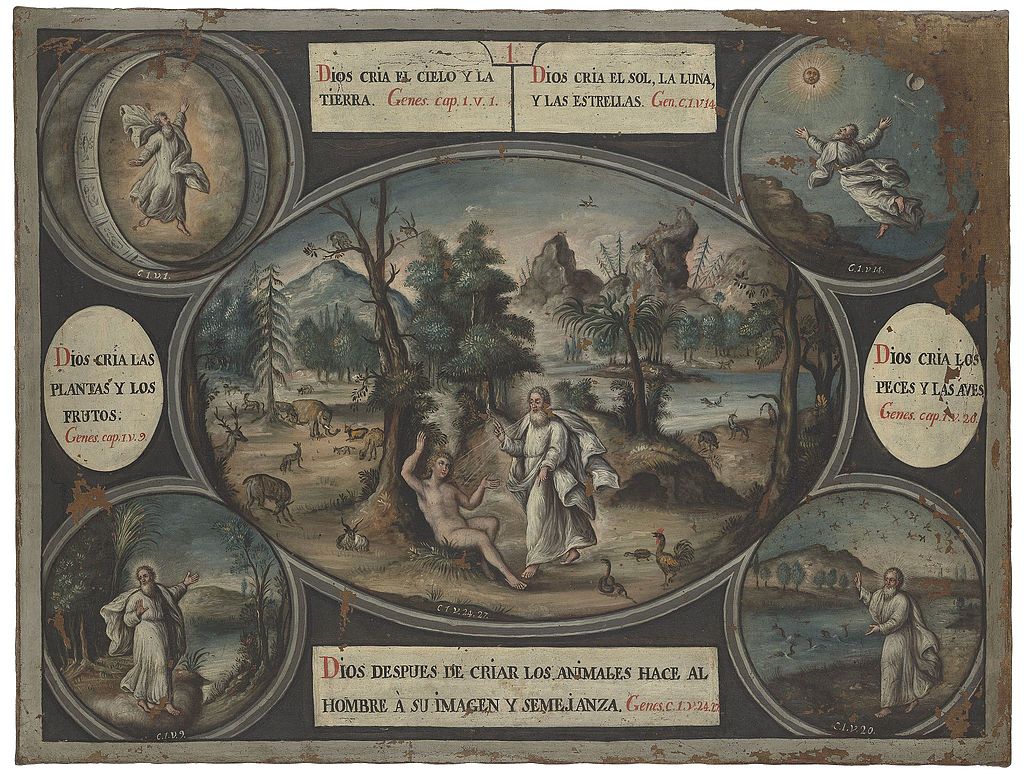
Episodes in the Book of Genesis

Welcome to the fourth installment of my blog about gematria, the Merkabah and the birth of the alephbet, and a happy Hanukkah to you all.

Yesterday I gave you the Genesis alphabetic acrostic to contemplate, but today I’m going to attempt a brief potted commentary on it, although its really something I feel should be expounded upon by a more learned soul than myself.  I’m not going to throw open all the gematria of the first two chapters of Genesis for you, because that would deprive you from the fun of finding out new things about the Torah for yourself, but I will point out the most interesting or pertinent information as I can.

What the presence of the acrostic means is that we have far more information about the qualities of the letters and their attributions to the Seven Palaces.  It functions as verification of the great antiquity of Genesis, given that the Shin and Tav are placed in their earliest order and not at the back of the alephbet.  The acrostic also means that we have a lot more information about these two chapters of Genesis herself.  For example, when on the path of Cheth, said Elohim :

Let Us make man in Our image, according to Our likeness; and let them rule over ‎the fish of the sea and over the birds of the sky and over the cattle and over all the earth, and over ‎every creeping thing that creeps on the earth.

~ we already know that the fish of the sea and the birds of the sky were created with the Vav, and that the cattle and creeping things were created with the Zayin; so with the Cheth ruling at the head we have the word חזו meaning vision or appearance.

The verses of Genesis, and indeed all the Torah were first publicly numbered (as we find them today) by Robert Estienne (Robert Stephanus) in 1571, but the ‎move was not without criticism at the time from traditionalists.  The manuscripts that he worked from did not ‎contain the chapter and verse divisions in a numbered form.

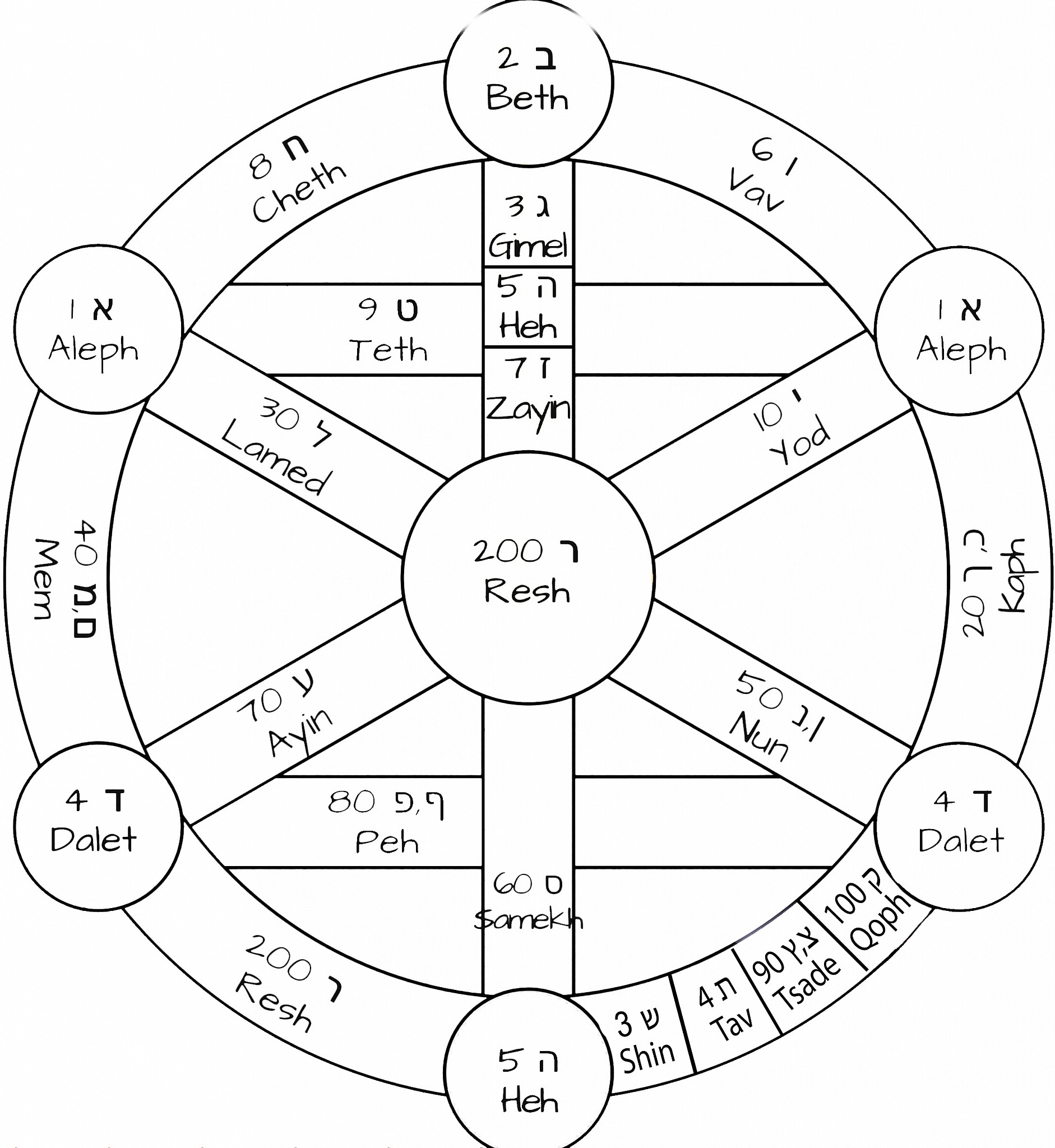
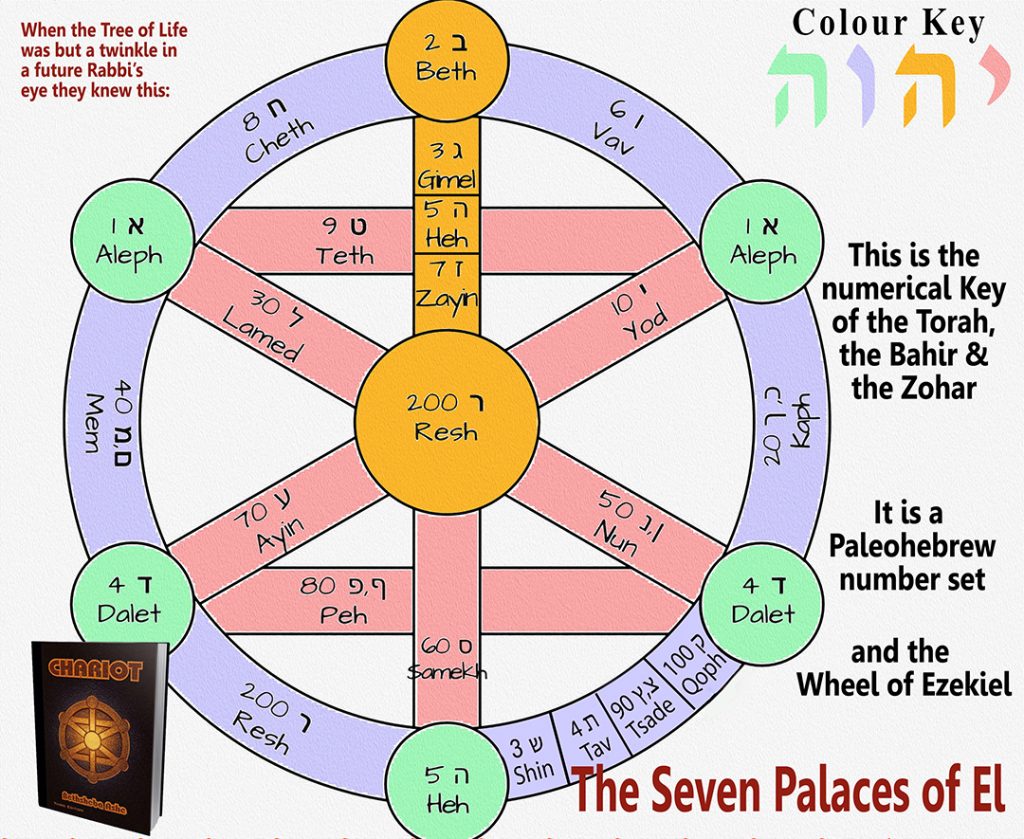
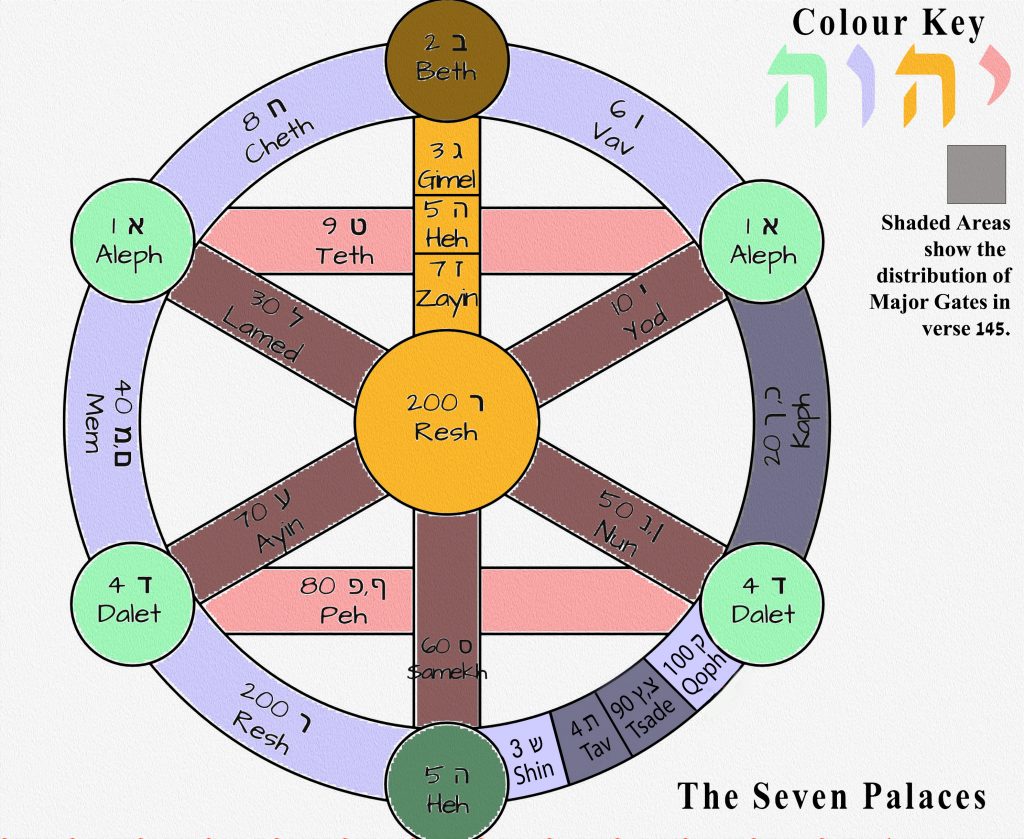
The progression through the alephbet in Genesis starts with a Beth (2) for the Seventh Palace (at the top) rather than an Aleph, though Aleph (1) is the smaller number.  There are also two Alephs for the two Palaces directly to the left and right of the Beth, as if Beth had been split into two, like a new shoot, to form the Palaces of the Alephs; of Day and of Night.  Beth is also the letter that begins the Book of Genesis with the word בראשית, which has the value of 220 [and 220/7 gives a pi approximation].

The Seven Palaces with Gate correspondences.

Kabbalah supports the idea that the Beth begins the acrostic with the Aleph coming afterwards.  Note the the Aleph is called twice:

The Creator told her, “Aleph, Aleph, although the world was created with the letter Bet, you will be the head of all the letters, for there is no unification in Me, except in you. In you will all calculations begin, all the works of the people of the world, and the whole unification is only in the letter Aleph.” ~ Sepher Ha Zohar.

The letter Beth means “house” or palace and it was where Elohim was thought to dwell in the thick darkness of the watery expanse that the ancients believed surrounded the earth.  It is from this Seventh Palace that he began his work to create the Heavens (or the Sky) and the Earth with his sacred signs.

If you’re exploring the gematria of Genesis it’s worth noting that gematria calculations are generally intended to come to fruition over several subsequent verses, so if you can’t determine what text is telling you in that verse, see if the values are carried over to the next verse.  For instance:

[Genesis 1:2-3] פְּנֵ֣י תְה֑וֹם – וְחֹ֖שֶׁךְ + אֽוֹר  : the face of the deep – and darkness + light = 365
[Genesis 1:4]  הָא֖וֹר + הַחֹֽשֶׁךְ  : the light + the darkness = 248
365 + 248 = 613.

The Talmud tells us that there are 613 commandments in the Torah; 248 Positive Commandments (do’s) and 365 Negative Commandments (do not’s), however there is disagreement on whether 613 is the right number since the matter rests on gematria that would, if calculated with biblical gematria rather than Standard, result in the value 217, but on the other hand it may simply be that the use of Standard Gematria rather than Biblical Gematria is the norm in the Talmud.  I cannot explain what 613 has to do with the Palaces of the Aleph or the Day and Night, so answers on a postcard please…

If I were to mnemonic the letters via the descriptions from Genesis they’d probably resemble something like this:

Beth ~ Gods house, everything in Heaven and Earth.
Aleph ~ Light/ Day and Night.
Gimel ~ Sky / Heaven.
Shin ~ Fire / Dryness / Heat.
Daleth ~ Doors into and out of the world.
Tav ~ the Measurement of Solar and Lunar Time.
Heh ~ Stars and Starlight.
Vav ~ Birds, Fish and Sea Monsters.
Zayin ~ Cattle and Insects.
Cheth ~ Sight, Vision, Appearance, Prophesy, Man.
Teth ~ Food.
Yod ~ Rest and Contemplation.
Kaph ~ Mist, Rain, Desire.
Lamed ~ The breath of Life, Ruach.
Mem ~ Pregnancy.
Nun ~ Life, but also Death for all living things under the Sun.
Samekh ~ the great River.
Ayin ~ Temptation.
Peh ~ Mating.
Tsade ~ Childbirth, because Eve is regarded as the first birth according to Kabbalah.
Qoph ~ Moon / Eve / female.
Resh ~ Sun / Adam / male.

The letter Daleth needs a little further explanation; as it is assigned to two Palaces, but only one of them – the one to the left – is being discussed in her verses.  This Palace represents the door through which all things enter into the world from heaven.  It’s twin on the right side is the door through which all things exit the world and enter heaven.  In these verses, though they seem to be about the creation of trees and vegetation in the world, the take away is that it is the first time God has caused anything to live upon the earth and so it is the first time one of these doors are used.

A note to say about Teth.  Because these verses begin with the word “behold” הִנֵּה֩, which is a word that indicates there is gematria to follow, we must total the gifts that Elohim has given to man.

One more matter of note is the origin of the letter Tsade.  This has long been an open question to attract a great deal of debate so I feel quite free to offer the unusual but logical suggestion here that the letter Tsade may have started off life as an image of an ancient vaginal specula.

I hope you’ve enjoyed this installment as you navigate your way through the gematria of the Torah.  Tomorrow I’ll be discussing the relationship of the tabernacle and first temple to the Seven Palaces, and on Thursday this will be followed by a discussion about the implications for the long planned for Third Temple.  So stay tuned for more numerical liquid gold.

[Originally published DEC 4, 2018, 9:39 PM
https://blogs.timesofisrael.com/more-about-the-genesis-alphabetic-acrostic/]
ABOUT THE AUTHOR Bethsheba Ashe is almost Scottish. She was born a Geordie in the North East of England but she currently lives 3 thousand miles away in Pennsylvania. She started writing and self-publishing in 1992, with a series of magazines. She is the author of several non-fiction titles such as "Chariot", and has recently published her first adventure/murder mystery novel. She also coded and runs the gematria calculator app "Shematria". Bethsheba is an inventor and her invention is 'Galay'; which is the worlds first dual logographic and alphabetical writing script. Currently she is coding an app for Galay messaging. She's a quiet but intensely curious human being who likes to keep busy and she loves animals.

Filed Under: Gematria, Merkabah Wheel Tagged With: Gematria, Genesis, mnemonic, pi

The conventions of biblical gematria.

January 25, 2019 By BethSheba Ashe Leave a Comment

Yesterday I called the biblical art of gematria ‘sophisticated’, and today I’d like to elaborate a little upon that theme.

You’ll all be familiar with the concept of written grammar, but have you ever paid mind to numerical grammar?  It is by convention to numerical grammar that we structure our mathematical calculations the way that we do.  For instance, understanding the sum [ 220 / 7 = 31.428571r ] requires us to know which elements of the sum are arranged where and for what reason.  And before we do any calculation we also need to be familiar with the signs for math functions (like +, -, *, /, $, %, !) .  Therefore, because we require knowledge of the conventions, we need some degree of formal education in order to do math, and the same is true for biblical gematria.  There are numerical conventions for biblical gematria; it has a type of numerical grammar.

A student who is learning biblical gematria needs to develop an eye for the text they are working with.  They should try to see the cues, the math functions, the indicators, the logic of the calculation, the results, and finally ~ the sum in context with the other gematria calculations in the text.

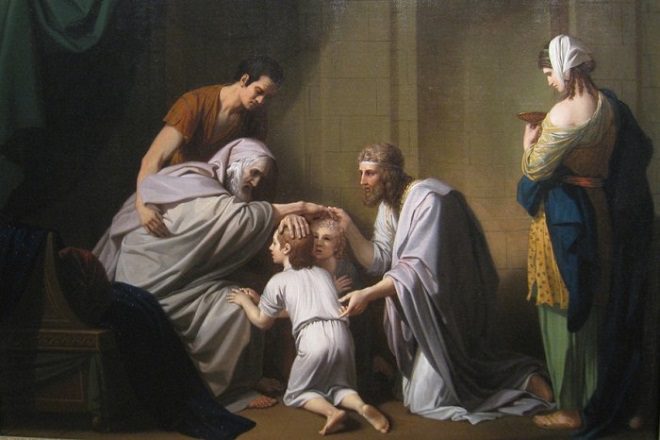
Most indicators have a logical relationship ‎with their mathematical function, for instance:‎“et” = add, “not” = disregard, “on the head” = ‎the first syllable of a word, “bruise” = put two ‎words together, “the heel” = the end syllable of ‎a word.  So we’re going to be taking you on a bit of a whirlwind tour around the Torah, to alight on some of the common conventions of biblical gematria.  As promised, today we’re going to look at an unusual bit of gematria in the story of Ephraim and Manasseh; Genesis 48:14.

This calculation has something of the feel of a cryptic crossword clue about it.  When we read it we should be looking for logical relationships ‎between the words in the sentence:

וישלח ישראל את־ימינו וישת על־ראש אפרים והוא הצעיר ואת־שמאלו ‏על־ראש מנשה שכל את־ידיו כי מנשה הבכור

“But Israel stretched out his right hand and laid ‎it on the head of Ephraim, who was the younger, ‎and his left hand on Manasseh’s head, crossing ‎his hands, although Manasseh was the firstborn.”‎

The value of the names are exactly the same, until just ‘the head’ of the names are considered;

מְנַשֶּׁ֖ה הַבְּכֽוֹר ‘Manasseh the firstborn’ = 331
 אֶפְרַ֙יִם֙ ‘Ephraim’ = 331

Israel is touching both Ephraim and Manasseh which indicates the sum of the three names are to be added, but the text specifies that he is only touching them  עַל רֹ֤אש “on the head” which by convention means we should add ‎‎‘the head’ or first parts from each name, therefore we take the Peh and Aleph from Ephraim and the Mem from Manasseh:

יִשְׂרָאֵ֨ל‎ ‘Israel’ (244) + (‎‏(81) אֶפְ‎ of  ‎‏(אֶפְרַ֙יִם֙‎ + (‎‏ (40) מְof ‎מְנַשֶּׁ֑ה‎) = 365 (days).

And now we may ask ourselves “Why is the number of days in a year relevant to the story of Manasseh and Ephraim?”   Much of the gematria in Genesis concerns the Solar and Lunar cycles, and we see the number 365 appearing many times in Genesis as the text discusses the cycles of the solar year.  It’s first seen in Genesis 1:2-3;

365 = פְּנֵ֣י תְה֑וֹם – וְחֹ֖שֶׁךְ + אֽוֹר
“The Face of the Deep” – “and darkness” + “light” = 365

We see 365 again in Genesis 3:3;

ומפרי העץ אשר בתוך ־ הגן
“And the fruit of the tree which in the middle of the garden.

[In my experience of the calculating art, typically the use of the words such as בְּתוֹךְ ‘middle’ or ‘’between’ denotes the function of division by 2 of the following noun, which in this case is הגן ‘garden’ 58. Therefore: 58 / 2 = 29 and when we add this to ומפרי ‘and the fruit’ 336 results in 365 (days in a year).]

365 is central to the story of Jacob and Esau [Genesis 25:27];

עֵשָׂ֗ו + צַ֖יִד + יַעֲקֹב֙

Esau 79 + hunter 104 + Jacob 182 = 365

This story in particular has strong typological similarities to the 3rd millennium BCE Sumerian text The Debate between Winter and Summer.

365 is a significant number to the Seven Palaces.  When the sum of the middle column is calculated (282 if we do not ‎use gates) and then removed from the total number (1012 ‎for the entire wheel) this leaves 730 and also splits the ‎wheel into two sections.

730 = 365 days + 365 nights.

When the letters Yod and Ayin are doubled on their paths we find the total sum from the Palace of the Aleph to the Palace of the Daleth is 365;

Aleph (1) + (Yod x 2 (20)) + Resh (200) + (Ayin x 2 (140) + Daleth (4) = 365.

And we also find the same calculation with the opposite diagonal;

Aleph (1) + (Lamed x 2 (60)) + Resh (200) + (Nun x 2 (100) + Daleth (4) = 365.

Lastly, the Talmud Yerushalmi Tractate Rosh Hashanah ‎‎2:5 says:

”The Holy One blessed be He ‎created 365 windows that the world might ‎use them:  182 in the east, and 182 in the ‎west and one in the center of the firmament ‎from which it came forth at the beginning of ‎the Creation.”‎

That’s it for today.  Continuing on tomorrow I’ll be discussing how the ancients thought about light, as well looking into the story of the expulsion of Adam and Eve from the Garden of Eden.  So stay tuned for more numerical honey.

ABOUT THE AUTHOR Bethsheba Ashe is almost Scottish. She was born a Geordie in the North East of England but she currently lives 3 thousand miles away in Pennsylvania. She started writing and self-publishing in 1992, with a series of magazines. She is the author of several non-fiction titles such as "Chariot", and has recently published her first adventure/murder mystery novel. She also coded and runs the gematria calculator app "Shematria". Bethsheba is an inventor and her invention is 'Galay'; which is the worlds first dual logographic and alphabetical writing script. Currently she is coding an app for Galay messaging. She's a quiet but intensely curious human being who likes to keep busy and she loves animals.

Filed Under: Gematria, Merkabah Wheel Tagged With: biblical, Eden, Ephraim, Garden of Eden, Gematria, Genesis, Jacob, Manasseh

The Lost Art of Gematria

January 25, 2019 By BethSheba Ashe Leave a Comment

Welcome to my blog.  With this blog I’ve elected to speak upon Biblical Gematria, the Merkabah, and the birth of the alephbet.  If you have any questions or comments, please feel free to express them in the comments section below.

“If I were asked to characterize the gematria of the Torah, I would call it a sophisticated, frequent, secret and very clever art form that is interwoven with the plain text.”

There is a great deal of gematria in the texts of the Tanakh. There is more than any one scholar could investigate in a lifetime of study.

The gematria of Genesis appears concerned with the planets and of those things spoken of in 1:14. The story of Adam and Eve is much clarified by the gematria; enabling us to see that the fruit of the Tree of Knowledge was light. The gematria of 1 Kings concerns the conformations of the Temple and how they are harmonized with the Seven Palaces. Ezekiel is also much concerned with the Temple and the Seven Palaces with his gematria, but he also has a bit of a dig at the ruler of Tyre… pulling his whiskers. Job… that’s a pure joy in terms of gematria; a real work of art both behind the scenes numerically as well as in plain composition.

Biblical gematria was a sophisticated practice that knew formal and informal conventions.  For instance, it is convention with some authors to signal the presence of gematria with a cue word like “Behold!”.  And since biblical gematria existed at a time before the Greeks or anyone else had thought to standardize mathematical notation, words stood in to do the job instead.  Touching something could signify addition (+), but eating from something is usually a sign of subtraction (-).  To magnify something is to multiply it by 10, but to get between two things expressed division by two.

Traditionally, biblical gematria has been something of a secret.  The same number set that appears on the Seven Palaces, is also the same one used in biblical gematria, and therefore it’s likely that the secrecy surrounding the Merkabah also wrapped around its gematria.

The Seven Palaces
The Seven Palaces

Secrecy is also the reason why gematria is something of a lost art.

On its own, the word (any word) stands in a void of isolation; bearing no relationship to other actors. It is simply a word and a number. Most of the time there is no intrinsic relationship between words that share a common number, other than what you would expect through randomness and chance.  Happily, since ancient gematria was focused on presenting and preserving mathematics and not on numerology this poses us no issues at all.

All the number values for Biblical Gematria are the same as Standard Gematria except that the letter shin is counted as 3 (not 300), and the letter tav is counted as 4 (not 400).  The finals are counted with their small values (i.e. ץ  = 90, not 900).  I’ve encoded a gematria calculator for convenience which is available at shematria.com, but if you’re using a pen and paper, then the number values for biblical gematria are these;

א 1 ב 2 ג 3 ש 3 ד 4 ת 4 ה 5 ו 6 ז 7 ח 8 ט 9 י 10 כ 20
ל 30 מ 40 נ 50 ס 60 ע 70 פ 80 צ 90 ק 100 ר 200

To really understand how clever the art of biblical gematria is, we need to view a few examples firsthand.  So let’s start at the very beginning with Genesis 1:1;

בראשית ברא אלהים את השמים ואת הארץ

“In the beginning (220) created (203) Elohim (86) ath (+) The Heavens (98) vath (and +) The Earth (296).”

et and v’et are excluded from this calculation because et almost always signifies addition.  The word bra is a verb and not of consequence to the calculations except to signify addition.

220 + 86 + 98 + 296 = 700.
יָמִ֖ים is the word for ‘days’ (100).

700 = 100 x 7 = The Seven Days of Creation.  But perhaps the 700 is also representative of the Seven Palaces themselves?  These palaces were considered to be the abode of God; each part under the governance of a letter of the alphabet, and each letter representing a quality of the heavenly and earthly life.

More instances of 700 that appear in the Tanakh are;

  • Abraham (248) + Isaac (208) + Israel (244) = 700.
  • Exodus 25:10-11 is as follows:אֲר֖וֹן = Ark = from ‘אָרָה’ meaning ‘to pick’ [fruit] or ‘to gather’ [myrrh].
    עֲצֵ֣י = wood 170
    שִׁטִּ֑ים = acacia 62
    זָהָ֣ב = Gold 14
    טָה֔וֹר = Pure 220.
  • According to the text, the ‘pure gold’ is overlaid both inside and outside the Ark, therefore we use the sum for ‘pure gold’ twice:  Wood 170 + Acacia 62 + (Pure 220 x 2) + (Gold 14 x 2) = 700.  Perhaps you know of more instances of 700?  Why not drop me a line and let me know.  If you’d like some homework, why not find out why 217 was a significant number to the ancients?

—

Thank you for reading my first blog post with the Times of Israel.  In my next blog post I’m going to be looking at a text that that does something very usual with the gematria when someone crosses his arms, so stay tuned for numerical honey.

ABOUT THE AUTHOR Bethsheba Ashe is almost Scottish. She was born a Geordie in the North East of England but she currently lives 3 thousand miles away in Pennsylvania. She started writing and self-publishing in 1992, with a series of magazines. She is the author of several non-fiction titles such as "Chariot", and has recently published her first adventure/murder mystery novel. She also coded and runs the gematria calculator app "Shematria". Bethsheba is an inventor and her invention is 'Galay'; which is the worlds first dual logographic and alphabetical writing script. Currently she is coding an app for Galay messaging. She's a quiet but intensely curious human being who likes to keep busy and she loves animals.
.

Filed Under: Gematria, Merkabah Wheel Tagged With: Gematria, Seven Palaces

Aleister Crowley’s Secret Temple – Second Edition

April 4, 2018 By BethSheba Ashe Leave a Comment

http://bethshebaashe.com/wp-content/uploads/2018/04/ACST-SE-Banner.mp4
Buy the Paperback version of Aleister Crowley’s Secret Temple…

Reviews for Aleister Crowley’s Secret Temple…

“This book is excellent! A must have for any library. The author certainly knows her subject. I’ve been studying Merkabah since the early 90’s. She is an expert in this field. They long encoded mysteries have been brought forth! This is artistic genius!” ~ By PLaGuardia.


“The ‘Book of The Law’ is probably Crowley’s greatest literary achievement, if not one of the most significant texts of esoteric lore. To fully understand and appreciate its multi-faceted content Alrah Fraser delves deep into the ‘mystery behind the mystery’, a concept that is at the heart of much arcane knowledge. The ‘Merkabah’ is the key to Crowley’s system, and although this must be thoroughly delineated, it is to the author’s credit that she does not falter whilst gathering together the many threads of the mystery. The result is a clear and concise exposition of this particular fount of learning, one fundamental to any worthwhile understanding of the Kabbalah.” ~ By Caduceus.


“This is not your “run of the mill” take on The Book of the Law using gematria. This is book that looks at the Book of the Law through the eyes of a professional cryptographer! Aleister Crowley’s Liber vel Legis was “unlocked” by Frater Jones using his key of 31. But for a lot of Thelemites (and non-Thelemites) there seemed to be more to this book. Well Soror Alrah Fraser has unlocked even more of Liber vel Legis, and shows how it fits into the Merkuba system of attainment. I highly recommend this book!” ~ By Mysticqabalah.


“For those of us who love Tarot, Numerology, Gematria, Qabalistic studies, Crowley, the mysteries of the universe and more, this carefully illustrated and explained study of the Tree of Life is an informative and enjoyable read.” – By Marie Clewley.


“Everyone who studies magick wants to more deeply understand the universe, and this book greatly assists in meditation and reflection of Liber AL as well as other texts. The addition of the Merkabah as a map of understanding is especially useful for those who have seen the perfection of the universe, to which the Tree in its classical sense is no longer completely valid.” ~ By lasphodelius.


“In the greatest symbolism of all, however, the symbolism beyond all planetary and Zodiacal considerations, this card is the feminine complement of the Fool, for the letters Aleph Lamed constitute the secret key of the Book of the Law, and this is the basis of a complete Qabalistic system of greater depth and sublimity than any other. The details of this system have not yet been revealed. It has been thought right, nevertheless, to hint at its existence by equating the designs of these two cards.” – Aleister Crowley, The Book of Thoth, Adjustment.

Read it with Ipad, Kindle
or Paperback

Available Today
Available Today

#Aleister Crowley #Thelema #Book of the Law #Seven Palaces #Merkabah #Gematria #Qabalah

Filed Under: Aleister Crowley, Gematria, Merkabah Wheel, Tarot Tagged With: A.'.A.'., ACST, Aleister Crowley, Gematria, Merkabah, Secret Temple, Thelema

Merkabah

August 12, 2017 By BethSheba Ashe Leave a Comment

Or not?

Have you heard of the phrase ‘activating your ‎Merkabah’?
Do you think the Merkabah is a ‎Chariot of Light that will
help you ascend to ‎the realm of the divine if you learn
enough ‎Yoga and activate all your Chakra’s?

Perhaps you’ve bought Merkabah Jewelry? Or do you have ‎a special Merkabah candle to burn while you ‎surf the astral?

Drunvalo Melchizedek.

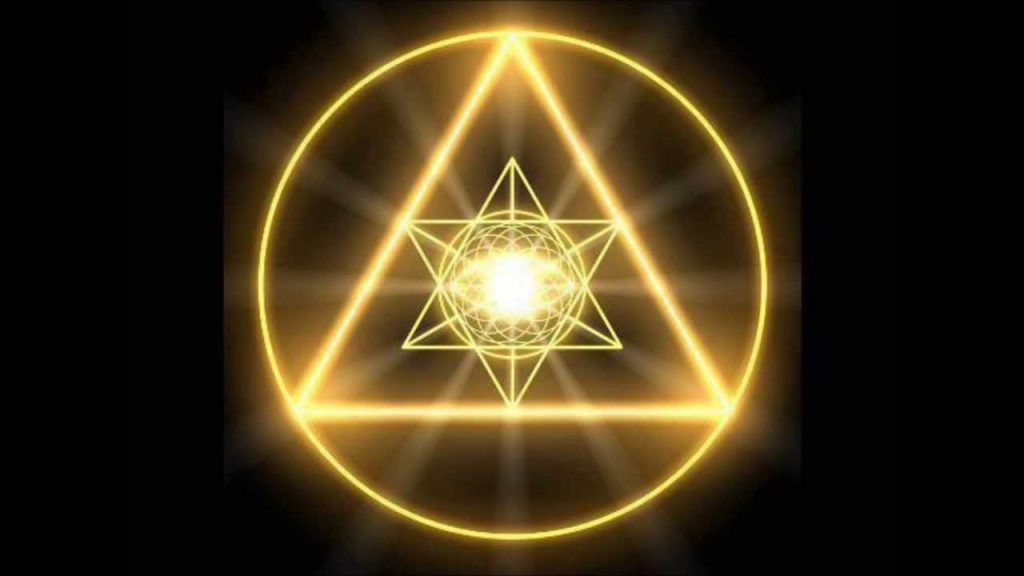
Fake news is not just a problem for the popular ‎press.  Popular knowledge of the Merkabah is ‎swamped by a plastic rainbow hippy amalgam ‎of Indian Kundalini Yoga, Greek Euclidian ‎Geometry and the insight of someone that was ‎very high on acid to fuse the two things ‎together with just a splash of etymology into ‎an interdimensional vehicle consisting of two ‎equally sized, interlocked tetrahedrals of light.‎

This might make a great backstory for a movie ‎but this just isn’t what the Merkabah is. This ‎alternate Merkabah didn’t exist until 1972 ‎when Drunvalo Melchizedek met Lucy in ‎California one summer. She brought a strange ‎man with her that told him there were three ‎missing atoms in the universe and he wanted ‎him to find them.‎   That was the beginning of the Drunvalo scam.

The Jews in the ancient near east didn’t know ‎anything about Chakra’s.  If you were able to ‎go back in time and visit an ancient student of ‎the Merkabah, and if you were to sit in asana ‎before him, he might express some concern for ‎your comfort. ‎ He would have no clue what you were up to.  He ‎might display admiration for your Merkabah ‎jewelry – but only if it was high enough quality.  And if you asked him about riding the chariot of ‎ascension to see YHVH he might think you were ‎quite mad.

For a start, the chariot wasn’t a ‎vehicle commanded by men; instead it was the way ‎that God made everything – the heavens and the ‎earth and everything in between.  God was ‎inaccessible – in a place that the ancients ‎thought was the farthest away place there was ‎‎– the pole star. Here he was guaranteed ‎complete privacy to dwell in a formless state of ‎bliss; utterly unknowable in his full glory by any ‎mortal man. Even to touch his earthly tabernacle was to be ‎struck dead[1]. However man was free to wander ‎the rest of God’s realm in his sleep, and all of ‎the earth when awake.

The role of man and ‎woman was as it had always been when they ‎had lived in God’s private pleasure garden in ‎the heavens; it was to tend to all of God’s ‎creations. And after they died they traveled to ‎the palace in the west which had a door into ‎the afterlife; and they would be tested and ‎returned to life on earth. This was how living ‎beings traveled the Merkabah; in daydreams ‎and night dreams, and through reincarnation. ‎Each being – both living and dead had their ‎own different relative position on the Chariot which ‎meant that the chariot was different for ‎everyone – but this didn’t mean there was a ‎separate Chariot for every living being.

The ‎idea of multiplicity is derived from Ezekiel’s ‎description of ‘a wheel within a wheel’; ‎however this actually refers to the letters Teth.  The Paleohebrew sign also resembled a wheel and ‎Teth was the letter attributed to the face of the ‎‎‘the fiery waters of heaven’ – hashamayim. ‎

 The Sun, Moon, planets and stars were thought ‎of as living beings that swam in the vast waters ‎that we know today as space.‎

‎ “Whenever the living beings moved, the ‎wheels moved with them. And whenever the ‎living beings rose from the earth, the wheels ‎rose also […] for the spirit of the living beings ‎was in the wheels.” – Ezekiel 1:20.‎

By contrast, while we mortals may travel the ‎heavens and the earth in life and death – we do ‎so within the divine wheel of the vehicle of God ‎‎- and its motion causes life, death and the ‎passing of the seasons.‎

‎“Whenever those went, these went; and ‎whenever those stood still, these stood still. “‎

When a planet turns retrograde then it appears ‎from the earth to stop in the sky for a few days. ‎This is the planets stationary period before it ‎appears to travel backwards. This is an optical ‎illusion however.‎

‎“And whenever those rose from the earth, the ‎wheels rose close beside them; for the spirit of ‎the living beings was in the wheels.”‎

Don’t all planets appear to rise from the earth ‎during the night? Don’t they look a lot to you ‎like little wheels? Don’t the rays of light remind ‎you of spokes? This is why the face of the ‎heavens on the Seven Palaces is attributed to ‎the letter Teth.‎

So next time someone asks you what the ‎Merkabah is:- please please DON’T tell them ‎that Merkabah means Light Spirit Body? Or ‎that a Merkabah is counter-rotating fields of ‎light and spirals of energy which transport the ‎spirit-body from one dimension to another? ‎That stuff is cobbled together ‎snake-oil horseshit by a Californian guru trying ‎to make a buck.  It’s not Merkabah.

‎ ‎

Filed Under: Merkabah Wheel

Psalm 145:1-21 : A Fantastic Alphabetic Acrostic!

August 4, 2017 By BethSheba Ashe 1 Comment

Calculation, Frequency and Analysis of Psalm 145 with biblical gematria.

1.  Introduction.
2.  Gematria.
3.  Calculations.
4.  Frequency and Analysis.
5.  A Tour of the Afterlife.
6.  Conclusion.
7.  Footnotes.

1.  Introduction.

תהלה לדוד  A Psalm of Praise of David is the only chapter of the Book of Psalms that identifies itself as a תְּהִלָה (tehillah) – as a psalm (namely, a hymn of praise).  It is an alphabetic acrostic; the initial letter of each verse running in a Hebrew alphabetic sequence.  The book of Psalms overall contains eight alphabetic acrostics, four in book one and four in book five.[1]

One of Psalm 145’s peculiarities is that there is no verse beginning with the letter nun (נ).  The sequence skips from Mem to Samekh.  There have been various theories proposed for the reason behind this since the Third Century CE, but there is still no modern consensus of opinion on the matter.  The Septuagint, the Syriac Peshitta, and the Dead Sea Scrolls all provide a verse at this point, so I have included it as 13b in the commentary.  Psalm 145 appeared to be volunteering itself for a deeper examination of its contents through the lens of biblical gematria[2], and it didn’t disappoint.

The Talmud, Berakhot 4b[3] says of it: “If you say that it is because it is arranged alphabetically, then let us say: “Happy are they who are upright in the way” (Psalms 119*) where the alphabetical arrangement appears eight times.”

אשרי תמימי־דרך ההלכים בתורת יהוה *
“Happy are the upright in the way who walk in the laws of YHVH.“[4]

Concerning the missing Nun it adds “Additionally, with regard to this psalm, Rabbi Yoḥanan said: Why is there no verse beginning with the letter nun in ashrei? Because it contains an allusion to the downfall of the enemies of Israel, a euphemism for Israel itself. As it is written: “The virgin of Israel has fallen and she will rise no more; abandoned in her land, none will raise her up” (Amos 5:2), which begins with the letter nun. Due to this verse, ashrei does not include a verse beginning with the letter nun.”

 The Dead Sea scrolls version of Psalm 145 ends each of the 21 verses with the words: “this is for a memorial”, but it doesn’t say for whom it is a memorial for.  Benun has argued “that acrostics in Psalms are part of a sophisticated literary system which creates a series of signposts intended to guide the reader to each psalm’’s embedded message.”.[5]

As the text is ‘for a memorial’, it is my working hypothesis that the scribe sought to fix the way of the deceased with number magic.  I will show in my analysis that a substantial amount of gematria was carefully embedded into the verses and it’s my hypothesis that these numerical constructions are intended to function in a similar way to the spells of the Egyptian Book of the Dead.
Typological to the journey through the Duat, the deceased Hebrew traveled through the paths and pavilions of the lower section of the Seven Palaces.  These ‘Seven Palaces’ represented the cosmology of the world and it functioned as a type of Bhavacakra; allowing new and reincarnated souls into the world from doors at the east, and providing an exit for the dead through the door in the west.

Each Path and Palace of this arrangement was created by God (El-YHVH) with the qualities and numbers of the 22 letters.  The Hebrew word for symbol is ot, which, in early Judaism, denoted not only a sign, but also a visible religious token of the relation between God and man.  The number of things could represent quite abstract concepts as well as demonstrable qualia.  Thus (the theory goes) that instead of Egyptian spells that require things such as “nine apple seeds and your urine” (for example) – a simple number that reflected the good and harmonious ordering of the world was substituted.  Besides ‘fixing the way’ these numbers evoke a sense of divinely appointed order over the forces of chaos that may also have been a comfort to those grieving.

What I’ve sought to do below is to map out the gematria of the text and then narrow in on calculations that are most relevant to the value of each letter of the alphabet.  I’ve looked at the frequency of Major and Minor gates[6] and where they are found on the Palaces to see if there is a concentration of gate numbers that correspond with the journey of the deceased.  High frequency recurring numbers have also been flagged, as well as any values (such as gates) that are seen on the Seven Palaces[7].  Finally we shall take a tour of the afterlife as we try and understand what significance the numbers have to the newly deceased on his travels.


2.  Gematria.

Aleph  ארוממך אלוהי המלך ואברכה מך לעולם ועד

  1. I will extol (307) ALVHI (52), King (95), and bless (234) your name (60) forever (176) everlasting (77).

Beth  בכל־יום אברכך ואהללה מך לעולם ועד

  1. Every (52) day (56) I will bless (243) and praise (77) your name (60) forever (176) everlasting (77).

Gimel  גדול יהוה ומהלל מאד ולגדלתו אין חקר

  1. Great (43) YHVH (26), and praised (111) greatly (45), and his greatness (83) not (61) searchable (308).

Daleth  דור לדור ישבח מעשיך וגבורתיך יגידו

  1. Generation (210) to generation (240) shall praise (23) Your works (143) and your mighty acts (251) declare (33).

Heh  הדר כבוד הודך ודברי נפלאותיך אשיחה

  1. Honour (209) on the glorious (32) splendour (35) and works (222) of your wonder (201) shall I speak (27).

Vav  ועזוז נוראתיך יאמרו [וגדולתיך כ] (וגדולתך ק) אספרנה

  1. And of the might (96) of your terrible acts (291) they will say (257) and greatness (83) I shall declare (396).

Zayin  זכר רב־טובך יביעו וצדקתך ירננו

  1. Memory (227) great (202) goodness (37) they shall abundantly utter (98) and of your righteousness (224) shall sing (316).

Cheth  חנון ורחום יהוה ארך אפים וגדל־חסד

  1. Gracious (114) and compassionate (260) YHVH (26) slow (221) to anger (131) and great (43) of covenant loyalty (82).

Teth  טוב־יהוה לכל ורחמיו על־כל־מעשיו

  1. Good (17) YHVH (26) to all (80) and bringing mercy (270) over (100) all (50) his works (129).

Yod  יודוך יהוה כל־מעשיך וחסידיך יברכוכה

  1. Shall praise (46) YHVH (26) all (50) your works (143) and goodly ones (118) shall bless (263).

Kaph  כבוד מלכותך יאמרו וגבורתך ידברו

  1. Glory (32) of Malkuth (120) They shall Speak (257) and of your Power (241) talk (222).

Lamed  להודיע ׀ לבני האדם גבורתיו וכבוד הדר מלכותו

Isis Maat, Tomb of Siptah. Valley of the Kings.
Maat is the Goddess of Truth and Justice who personifies cosmic order and harmony as established by the Creator God at the beginning of time. Her symbol is an ostrich feather.
  1. To make atonement (125) to the sons of (92) the men (50) your mighty acts (231) and the majestic (38) splendor (209) of Malkuth (106).

Mem  מלכותך מלכות כל־עלמים וממשלתך בכל־דור ודור

  1. Your kingdom (120) kingdom (100) all (50) everlasting (190) and your dominion (143) in all (52) generations (210) and generations (216).

Nun נאמן אלוהים בדבריו וחסיד בכל מעשיו

   13b.  Faithful (141) Elohim (92) in words (224) and kind (88) in all (52) your works (129).

Samekh  סומך יהוה לכל־הנפלים וזוקף לכל־הכפופים

  1. Upholds (126) YHVH (26) to all (80) the fallen (215) and rises up (199) to all (80) the cast down (241).

Ayin  עיני־כל אליך ישברו ואתה נותן־להם את־אכלם בעתו

  1. The eyes of (140) all (50) the elect (61) await you (221) and you (16) give (110) like (75) plus (5) their food (91) in season (82).

Peh  פותח את־ידך ומשביע לכל־חי רצון

  1. Open (98) plus (5) Your hand (34) and satisfy (131) to all (80) living things (18) desire (346).

Tsade  צדיק יהוה בכל־דרכיו וחסיד בכל־מעשיו

  1. Righteous (204) YHVH (26) in all (52) his ways (240) and kind (88) in all (52) His deeds (129).

Qoph  קרוב יהוה לכל־קראיו לכל אשר יקראהו באמת

    1. Near (308) YHVH (26) to all (80) those calling (317) to all (80) that (204) call (322) in truth (47).

Resh  רצון־יראיו יעשה ואת־שועתם ישמע ויושיעם

  1. The desire (346) of the fearful (227) he will fulfill (88) and plus (11) their cry (123) he hears (123) and will save (145).

Shin  שומר יהוה את־כל־אהביו ואת כל־הרשעים ישמיד

  1. Preserves (249) YHVH (26) plus (5) all (50) those who love (24) and plus (11) all (50) wicked (328) he will destroy (67).

Tav  תהלת יהוה ידבר־פי ויברך כל־בשר שם קדשו לעולם ועד

  1. Praise (43) YHVH (26) will speak (216) my mouth (90) and bless (238) all (50) incarnate (205) name (43) holy (113) to forever (176) and ever (80).

3.  Calculations.

Aleph (1)  Line 1:  ALVHI (God) 52 + King 95 + your Name 60 = 207 (Light).
I will extol (307) – Light 207 = 100.
And bless (234) – 207 = 27
Forever (176) – everlasting (77) = 99
99 + 27 = 126.
100 – 99 = 1.

Beth (2)  Line 2:  Every (52) + day (56) – your Name (60) = 48
I will bless (243) – and praise (77) = 166
Forever (176) – everlasting (77) = 99
166 + 99 = 265.
265 – 48 = 217.
217 + 265 = 482.
Every (52) + day (56) + your Name (60) = 168
I will bless (243) – and praise (77) = 166
168 + 166 = 235
168 – 166 = 2 (Beth).

Gimel  (3)  Line 3:  Great (43) + YHVH (26) + and praised (111) + greatly (45) + and his greatness (83) = 308.
Searchable = 308.
Greatly (45) – Great (43) = 2
And praised (111) – YHVH (26) – And his greatness (83) = 2
And praised (111) + YHVH (26) + And his greatness (83) = 220
And his greatness (83) – not (61) = 22
Great (43) +  and praised (111) – greatly (45) – and his greatness (83) = 26
Great (43) + and praised (111) + greatly (45) + and his greatness (83) = 282
Greatly (45) + Great (43) + YHVH (26) + And his greatness (83) – and praised (111) = 86 (Elohim)
And praised (111) = 1 + 1 + 1 = 3.

Daleth (4)  Line 4:  Generation (210) + to generation (240) + shall praise (23) + Your works (143) + and your mighty acts (251) + declare (33) = 900.
Generation (210) + to generation (240) = 450.
Shall praise (23) + Your works (143) + and your mighty acts (251) + declare (33) = 450.
To generation (240) – Generation (210) = 30
And your mighty acts (251) – Your works (143) – shall praise (23) – declare (33) – 30 = 22
22 = 2 + 2 = 4.

Heh (5)  Line 5:  Honour 209 + Splendor 35 = 244 (like Israel).
Honour (209) + splendour (35) – shall I speak (27) = 217
And works (222) – of your wonder (201) + shall I speak (27) = 48.
On the glorious (32) – shall I speak (27) = 5.

Vav (6)  Line 6:  And of the might (96) + of your terrible acts (291) + they will say (257) – I shall declare (396) = 248.
(They will say (257) + I shall declare (396)) – (And of the might (96) + of your terrible acts (291) + and greatness (83)) = 183.
I shall declare (396) – And of the might (96) – they will say (257) + greatness (83) = 126.
I shall declare (396) + and greatness (83) – they will say (257) = 222 = 2 + 2 + 2 = 6.

Zayin (7)  Line 7:  Memory (227) + great (202) + goodness (37) + they shall abundantly utter (98) – shall sing (316) = 248.
Memory (227) – and of your righteousness (224) = 3.
Great (202) + goodness (37) + they shall abundantly utter (98) – shall sing (316) = 21.
21 / 3 = 7.

Cheth (8)  Line 8:  Gracious (114) + and compassionate (260) + YHVH (26) = 400.
Slow (221) – to anger (131) + and great (43) + of covenant loyalty (82) = 215
Slow (221) – to anger (131) – of covenant loyalty (82) = 8 (Cheth).

Teth (9)  Line 9:  Good (17) + YHVH (26) + to all (80) + his works (129) = 252.
Over (100) + all (50) + his works (129) = 279.
279 – and bringing mercy (270) = 9 (Teth).

Yod (10)  Line 10:  Shall praise (46) + YHVH (26) + your works (143) = 215
Shall bless (263) – and goodly ones (118) = 145
215 – 145 = 70.
Shall praise (46) + YHVH (26) + your works (143) – and goodly ones (118) + shall bless (263) = 360.
Shall praise (46) – YHVH (26) + your works (143) = 163
Shall bless (263) – 163 = 100.
100 + YHVH = 126.

Kaph (20)  Line 11:  They shall Speak (257) + and of your Power (241) + talk (222) = 720.
720 – Malkuth (120) = 600 = Kaph x 30.
Malkuth (120) – Glory (32) + talk (222) = 310.
720 – 310 = 410.
Malkuth (120) – Glory (32) = 88.
Glory (32) + talk (222) = 254.
Talk (222) – (They shall Speak (257) – and of your Power (241)) = 206.
talk (222) – of Malkuth (120) – Glory (32) = 70
They shall Speak (257) – and of your Power (241) = 16
70 + 16 = 86.

Lamed (30)  Line 12:  To make atonement (125) + To the sons of (92) = 217.
Your mighty acts (231) – splendor (209) = 22
To make atonement (125) + to the sons of (92) + the men (50) – and the majestic (38) – 22 = 207
To the sons of (92) the men (50) and the majestic (38) = 180.
Splendor (209) + of Malkuth (106) – To make atonement (125)  = 190
To the sons of (92) + the men (50) = 142
190 – 142 = 48

Mem (40)  Line 13:  Your kingdom (120) + kingdom (100) = 220.
Everlasting (190) + and your dominion (143) = 333
Generations (210) + and generations (216) = 426
426 – 333 = 93.
Your kingdom (120) + kingdom (100) + everlasting (190) = 410

Nun (50)  Line 13b:  In words (224) – Elohim (92) – your works (129) = 3.
Faithful (141) + Elohim  (92) + Your works (224) =  362.
In Words (224) + And Kind (88) = 312.
362 – 312 = 50 (Nun).
In words (224) – Elohim (92) – in all (52) = 80.
Faithful (141) –  your works (129) + and kind (88) = 100.
80 + 100 = 180.

Samekh (60)  Line 14:   rises up (199) + the cast down (241) = 440
YHVH (26) + the fallen (215) = 241.  The same as ‘the cast down (241).
YHVH (26) + the fallen (215) + the cast down (241) = 482.
Upholds (126) +  to all (80)  + and rises up (199) + to all (80) = 485.
This is the gate number of the path between the Palaces of Beth and Resh when added to the Path of Samekh on the Seven Palaces.  The path of Samekh upholds the heavenly abode of YHVH.
Upholds (126).

Ayin (70)  Line 15:  The eyes (140) – the elect (61) + await you (221) = 300.
Like (75) + their food (91) + in season (82) = 248.
And you (16) + like (75) + their food (91) = 182.
All (50) + await you (221) – The eyes (140) – the elect (61) =  70.
And you (16) + give (110) = 126.

Peh  (80)  Line 16:  to all (80)
Open (98) = to all (80) + Living things (18) = 98
Your hand (34) + desire (346) = 380.
Open (98) + Your hand (34) – and satisfy (131) = 1
Desire (346) – To all (80) – living things (18) = 248.

Tsade (90)  Line 17:  Righteous (204)
In all (52) + His deeds (129) = 217.
His ways (240) – YHVH (26) – and kind (88) = 126
Righteous (204) – in all (52) – in all (52) + YHVH (26) = 126
Righteous (204) – in all (52) – and kind (88) + YHVH (26) = 90

Qoph (100)  Line 18:  Near (308) + call (322) = 630.
Those calling (317) – in truth (47) = 270.
630 – 270 = 360.
to all (80) + to all (80) = 160
360 – 160 = 200.

Resh (200)  Line 19:  The desire (346)
Of the fearful (227) + he will fulfill (88) + and will save (145) = 460.
Their cry (123) + he hears (123) = 246
346 – 246 = 100
460 – 100 = 360.

Shin  (3)  Line 20:  Preserves (249) + YHVH (26) + all (50) + those who love (24) – wicked (328) = 21 = 2 + 1 = 3.
YHVH (26) – those who love (24) = 2.
YHVH (26) + those who love (24) = 50.
Wicked (328) – all (50) – he will destroy (67) – YHVH (26) – all (50) – those who love (24) = 111 = 1 + 3 + 1 = 3.

Tav (4)  Line 21:  Incarnate (205) + name (43) = 248
To forever (176) + and ever (80) =  256
Praise (43) + YHVH (26) + will speak (216) = 285
And bless (238) – holy (113) + My mouth (90) = 215.
285 + 215 = 500.
248 + 256 + 285 + 215 = 1004 = Ath (with a large aleph).
To forever (176) + and ever (80) – all (50) =  206
Praise (43) + YHVH (26) + will speak (216) + my mouth (90) + and bless (238) + all (50) + incarnate (205) + name (43) + holy (113) + to forever (176) + and ever (80) = 1200.
1200 / 50 = 24.


4. Frequency and Analysis.

The 14 main gates of the Seven Palaces are; 9, 11, 11, 25, 45, 88, 206, 209, 211, 217, 231, 254, 265, 274.

The text contains 6 of these gate values and they occur 11 times:  206 (x 2), 209 (x 2), 217 (x 4), 231, 254, 265, in the paths of Beth, Heh, Yod, Kaph (x2), Lamed, Nun, Samekh, Ayin, Tsade, and Tav.  The path of the Resh represents the solar voyage across the land of the living and is the destination of the fortunate reincarnated soul.

The first 9 values of the letters through either straight gematria or calculation can be returned from the first 9 corresponding verses and is discovered sporadically 6 times after the Teth.

  1. ALVHI (God) 52 + King 95 + your Name 60 = 207
    I will extol (307) – 207 = 100.
    Forever (176) – everlasting (77) = 99
    100 – 99 = 1.  Aleph
  2. Every (52) + day (56) + your Name (60) = 168
    I will bless (243) – and praise (77) = 166
    168 – 166 = 2.  Beth
  3. And praised (111) = 1 + 1 + 1 = 3. Gimel
  4. To generation (240) – Generation (210) = 30
    And your mighty acts (251) – Your works (143) – shall praise (23) – declare (33) – 30 = 22
    22 = 2 + 2 = 4.  Daleth
  5. On the glorious (32) – shall I speak (27) = 5. Heh
  6. I shall declare (396) + and greatness (83) – they will say (257) = 222 = 2 + 2 + 2 = 6.  Vav
  7. Memory (227) – and of your righteousness (224) = 3.
    Great (202) + goodness (37) + they shall abundantly utter (98) – shall sing (316) = 21.
    21 / 3 = 7.  Zayin
  8. Slow (221) – to anger (131) – of covenant loyalty (82) = 8.  Cheth
  9. Over (100) + all (50) + his works (129) = 279.
    279 – and bringing mercy (270) = 9.  Teth
Verses with number sympathy for their letter.

and also from verses
Nun;  Faithful (141) + Elohim  (92) + Your works (224) =  362.
In Words (224) + And Kind (88) = 312.
362 – 312 = 50.  Nun
Ayin;  All (50) – await you (221) – The eyes (140) – the elect (61) =  70. Ayin
Peh;  to all = 80. Peh
Tsade;  Righteous (204) – in all (52) – and kind (88) + YHVH (26) = 90.  Tsade
And twice in Shin;
Preserves (249) + YHVH (26) + all (50) + those who love (24) – wicked (328) = 21 = 2 + 1 = 3.
Wicked (328) – all (50) – he will destroy (67) – YHVH (26) – all (50) – those who love (24) = 111 = 1 + 3 + 1 = 3.

The value for Resh (200) is found in the verse for Qoph (100) and vice versa; the value for Qoph is returned in the verse for Resh. Each verse also produces the value of 360 (which commonly represents the circle of 360 degrees in these calculations).  This is interesting because Qoph and Resh correspond to verses 23 and 24 of Genesis which is on the theme of interdependent generation and marriage:

Qoph 100‎.
‎23. The man said,‎
‎“This is now bone of my bones,
And flesh of my flesh;
She shall be called Woman,
Because she was taken out of Man.”‎

Resh 200‎.
‎24. For this reason a man shall leave his father and his mother, and be joined to his wife; and they shall ‎become one flesh. 25. And the man and his wife were both naked and were not ashamed.‎”

The value of 100 is also found in the verses Aleph, Teth, Yod, Mem and Nun.

The value 126 occurs in the text 7 times; once in the gematria of the verse for Samekh; with סוֹמֵ֥ךְ sowmek (which means ‘Upholds’) and a further 6 times in the calculations; in Aleph, Vav, Yod, Ayin and Tsade.  א + ו + י + ע + צ

סוֹמֵ֥ךְ sō·w·mêḵ:
bear up, establish, uphold, lay, lean, lie hard, put, rest self,

A primitive root; to prop (literally or figuratively); reflexively, to lean upon or take hold of (in a favorable or unfavorable sense) — bear up, establish, (up-)hold, lay, lean, lie hard, put, rest self, set self, stand fast, stay (self), sustain.

248  was returned 5 times in the analysis; in Vav, Zayin, Ayin, Peh, and Tav.

אַבְרָהָ֔ם – ‘Abraham’ (248);  His name was changed by God from Abram to Abraham.

When God originally makes the change of Abram’s name to Abraham (248) he gives his reason for the change by saying המון גוים נתתיך ‘of many nations I have made you’ = 248.  The gematria of the name and the explanation for it is a match.  248 is 8 x 31 (אל) and when the name of Abraham is magnified[8] by 10 (2480) then it is the total value of the two gates of the middle pillar of the Seven Palaces when the Beth is also magnified from 2 to 2000:
(Beth, Gimel, Heh, Zayin, Resh) 2215  + (Samekh + Resh + Heh) 265 = 2480.
248 is also the paths Cheth + Mem + Resh around the circumference of the Seven Palaces.

The number of Abraham’s name is a powerful and protective symbol to be woven into these verses of memorial.

שְׁלֵמָ֥ה + מַסָּ֖ע ‘made ready’ + ‘at the quarry’ = 248 (see 1 Kings 6:7).
הָא֖וֹר + הַחֹֽשֶׁךְ ‘the Light’ + ‘the darkness’ = 248 (see Genesis 1:4).

217  was returned 4 times in the verses for Beth, Heh, Lamed and Tsade.

217 is one of the most important gematria values associated with the Seven Palaces of El;
It is 7 x 31  = 217.
EL (God) = אל = 31.
It is the gematria number of the letters assigned to the Seven Palaces:  Beth + Aleph + Resh + Aleph + Heh + Daleth + Daleth = 217.
It is the gate number of the first Heh of YHVH; Beth + Gimel + Heh + Zayin + Resh = 217
It is the combined gate number of Cheth and the fourfold path (Shin, Tav, Tsade & Qoph).
It is the number of the order of the letters when Shin and Tav share 3rd and 4th place with Gimel and Daleth;
1 + 2 + 3 + 3 + 4 + 4 + 5 + 6 + 7 + 8 + 9 + 10 + 11 + 12 + 13 + 14 + 15 + 16 + 17 + 18 + 19 + 20 = 217.

It is the number of the ‘Holy Name’ and is thus the most powerful number to be evoked in memorial to the unknown deceased.

215  was also returned 4 times in Cheth, Yod, Samekh and Tav.  215 is similar to 217 but the 2 of the Beth is missing.  Therefore this number represents all of God’s creation apart from the Godhead itself.

The shaded areas mark the paths that total to 220.

207  usually represents ‘light’ (207) א֑וֹר, was returned 2 times from the verses of Aleph and Lamed (אל). The letters Aleph Lamed spells out El (God).  In verse 1 the scribe explicitly links the name of God (and King) to Light; ALVHI (God) 52 + King 95 + your Name 60 = 207 (Light).

48  was returned 3 times in Beth, Heh and Lamed.
Is a shortened version of 248.  It represents that paths of Mem and Cheth on the circumference and it is the value of the name ‘Moses’ (48) מֹשֶׁ֔ה and for דַּלְת֧וֹת  ‘Daltowt’ (48); the Doors, as well as כּוֹכָב ‘Kokab’ (48) meaning ‘star’.  Kochab and its neighbor Pherkad served as twin pole stars from 1500 BC until 500 AD, and ancient Egyptian astronomers dubbed them “The Indestructibles“.

360 was also returned 3 times in Yod, Qoph and Resh.  Circles tend to convey the notion of divinity or divine cycles in most ancient cultures.

Other values of interest include 410 (usually associated with לָרָקִ֔יעַ lā·rā·qî·a ‘to the firmament’ or ‘to the expanse’ (See Genesis 1:7) and is found in the verses for Kaph and Mem.  410 is the total number of the letters from door to door under the Seven Palaces (ד + ר + ה + ש + ת + צ + ק + ד);
220 which is the value of the first word of Genesis’ בראשית, and  טָה֑וֹר Tahowr’ (220); ‘Pure’ and also התורה ‘The Torah’ and is found in the verses for Gimel and Mem.  In the Egyptian Book of the Dead during the weighing of the heart ritual, the deceased says “I am pure, I am pure, I am pure, I am pure!”


5.  A Tour of the Afterlife...

The Seven Palaces.

  We’re going to take a tour around the afterlife in order to better understand Psalm 145 and what the scribe was trying to achieve by composing this work.  We’ll follow the path of the deceased and witness how the scribe seeks to deal with any difficulties the deceased may encounter on his road back to a new life.

The first station that the newly deceased crossed is the Palace of the Heh.  The Heh represents the most basic earthly plane as well as the most heavenly abode of YHVH, so there are two of them positioned on the Seven Palaces; the upper Heh (the first ‘Heh of YHVH) and the lower Heh (the last Heh of YHVH).  Verse 5 is actually the first verse where the scribe really speaks because it’s here that his magical workings begin with: “Honour (209) on the glorious (32) splendour (35) and works (222) of your wonder (201) shall I speak (27).”  According to tradition, the site of the Temple of Solomon was built at the Gate of this Earthly Palace, and its reputed to be the site that Adam and Eve emerged onto the earth after leaving the Garden of Eden.

Line 5:  Honour 209 + Splendor 35 = 244 (like Israel).
Honour (209) + splendour (35) – shall I speak (27) = 217
And works (222) – of your wonder (201) + shall I speak (27) = 48.
On the glorious (32) – shall I speak (27) = 5.

Because the phrase ‘shall I speak’ is subtracted from Honour and Spendour, this verse reminded me of the admonition “to be silent before the lord”;  “Be silent, all flesh, before the LORD; for He is aroused from His holy habitation.”  – Zechariah 2:13.

When the deceased cross this threshold they shuffle off their mortal coil and begin their journey to the Palace of the Daleth in the West.  Each Palace and path had guardians that allowed the worthy to pass but stopped the unworthy from continuing the road to reincarnation, so it was probably good council to guard your speech.  The scribe offers the number five for the Palace of the Heh, and then evokes the number of the holy name (217) as a pass to the next gate which has the combined gate of 217 with the Cheth in the heavens.

The Path to the Palace of the Daleth is the only one to be comprised of 4 letters; the Shin and the Tav, the Tsade and the Qoph.  It has a gate number of 206; seen in Kaph and Tav.  The letters Qoph, Shin and Tav spell out the word keshet for ‘Rainbow’ QShTh.

The Tsade has two seperate instances of 126 (upholds) possible, and the scribe again offers 217 for the combined gate and 90 for the letter Tsade.  The main theme of this letter is the praise of God:  In all (52) + His deeds (129) = 217.

This letter is associated with the earthly aspect of pregnancy and midwifery.  The Tarot card associated with the Tsade is the Emperor Caesar because of the legend that the Emperor was born by Caesarian Section.  The first act of reproduction is recorded in Genesis and it corresponds with this Tsade with this verse; “And caused to fall YHVH Elohim a deep sleep upon the Man and he slept and he took one of his ribs.  And made YHVH Elohim + the Rib that he had taken from the man to the woman and brought her to the man.” – Genesis 2:21-2. The deceased has got quite some way to go before he thinks of a new earthly body however; he’s got a rainbow to climb.

The letter Qoph may represent a test of the deceased.  By withdrawing ‘in truth’ from ‘those calling’ it results in the number for evil רָֽע) 270), but by calling on the aid of YHVH and speaking nothing but truth the deceased could pass on to the next leg of our tour. Once a day the Sun (Resh 200) would pass this way and fully illuminate the reflective Moon, and the worthy were allowed to ride along with the Sun to the Palace of the Daleth.

The letter Shin represents the fire of earthly heat that causes both dry land and the decomposition of a corpse alike.  The verse promises preservation for ‘those who love’ and destruction for the wicked and unworthy, but whatever your stripe your physical remains will break down into their essential elemental forms.  This letter represents this process but it also promises renewal; it is an important part of the cycle of biological life.

In Genesis 1, the corresponding verse for Shin reads:  “9. Then God said, “Let the waters below the heavens be gathered into one place, and let the dry land ‎appear”; and it was so. ‎ God called the dry land earth, and the gathering of the waters He called seas; and God saw that it ‎was good.”‎

To explain the Tav I’m going to read the corresponding verse of Genesis 1: 14 “Then God said, “Let there be lights in the expanse of the heavens to separate the day from the ‎night, and let them be for signs and for seasons and for days and years; 15. and let them be for lights ‎in the expanse of the heavens to give light on the earth”; and it was so. 16. God made the two great ‎lights, the greater light to govern the day, and the lesser light to govern the night.”

The letter Tav is all matter and all time, and the measurement of both.  The scribe offers 206 for the gate and evokes the mighty word of 8 x 31 so the deceased may proceed to the Palace.  The scribes ultimate offering is 1200 from the total sum of this verse.

Once the deceased arrives at the Palace of the Daleth its decision time.  If the deceased is found to be unworthy here, then they will evaporate into their spiritually constituent parts like mist by the power of the Kaph.  Kaph is like the heavenly version of the Shin in this respect.  On the other side of the Tree is the Mem emerging from the Aleph represents all things emerging from the one, but the Kaph connection to the Palace of the Aleph represents all things returning to the one.

 The path along to the other Daleth, which is re-entry and reincarnation, is along the path of Peh:  Open (98) plus (5) Your hand (34) and satisfy (131) to all (80) living things (18) desire (346).  However because this path is only open for all living things then the way of the deceased is barred.

“Open (98) = to all (80) + Living things (18) = 98”

The path of Peh involves the mysteries of fertility.  The theme of unsatisfied desires is confronted in the Genesis verses that correspond with the Peh:  “Then the LORD God said, “It is not good for the man to be alone; I will make him a helper suitable ‎for him.” 19. Out of the ground the LORD God formed every beast of the field and every bird of the sky, ‎and brought them to the man to see what he would call them; and whatever the man called a living ‎creature, that was its name. 20. The man gave names to all the cattle, and to the birds of the sky, and ‎to every beast of the field, but for Adam there was not found a helper suitable for him.”

Desire (346) – To all (80) – living things (18) = 248.

The only way left for the deceased to travel is along on the Path of Nun (corresponding to the Death card in the Tarot) towards the Sun.  The value of the Nun is 50, the same as האדם ‘The Adam’ and also מ֥וֹת ‘mowt’ which means ‘Death’ and יָם ‘Sea’.  The path opposite to Nun and influencing (or governing) it from above is Lamed.

The verse for Nun in the Dead Sea scrolls is not very helpful in assisting us to form a picture of what the deceased might face on this path.  “13b.  Faithful (141) Elohim (92) in words (224) and kind (88) in all (52) your works (129).”  The scribe made it possible to produce the 50 with the calculations:

Faithful (141) + Elohim  (92) + Your works (224) =  362.
In Words (224) + And Kind (88) = 312.
362 – 312 = 50 (Nun).
We can also find an 80 (which is Nun 50 + Lamed 30) from “In words (224) – Elohim (92) – in all (52)”; which addresses the influence from the Lamed upon this path (Nun + Lamed = 80).

The verse for Lamed is “To make atonement (125) to the sons of (92) the men (50) your mighty acts (231) and the majestic (38) splendor (209) of Malkuth (106)”.

Here, the scribe pulls out all the stops and densely packs the verse with protective numbers and gate numbers;
‘Your mighty acts’ (231) is the gate number of the Lamed (Aleph + Lamed + Resh), and splendor (209) is the gate number of the Resh associated with the Sun.  To make atonement (125) + To the sons of (92) = 217 for the holy name, and the values of 207 (light) and 48 (כּוֹכָב star/מֹשֶׁ֔ה Moses/דַּלְת֧וֹת the doors) are also discoverable in the calculations.  

The corresponding verse for the Nun in Genesis is:
“Out of the ground the LORD God caused to grow every tree that is pleasing to the sight and good ‎for food; the tree of life also in the midst of the garden, and the tree of the knowledge of good and ‎evil‎” (600).  The penalty that God threatened Adam and Eve with should they eat the fruit of the Tree of Knowledge was death, but first their souls had to be born on the earth.  It may be that the tempting fruit of the garden of Eden are all the sensual pleasures of incarnating into flesh itself.

The corresponding verse for the Lamed in Genesis is:  “Then the LORD God formed man of dust from the ground, and breathed into his nostrils the breath ‎of life; and man became a living being.”  Aleister Crowley believed the Lamed was associated with the Goddess Ma’at therefore there may have been one last and final test of the deceased that was something like the weighing of the heart ritual (against the feather of Ma’at) here.  On the other hand it’s equally possible that the Hebrew tradition was distinctly different.  The theme of the verse is one of praise.

The next path is the Ayin and it runs from the Palace of the Sun to the Daleth on the left.  In the Tarot, this path is attributed to ‘the Devil’, but this is because of the Gnostic belief that the material world was somehow ‘evil’.  Originally however, this path represented the creative and fertile aspect of God that begets and engenders life. In the path of the Peh, the material aspect of the sexual act itself is symbolised by the Peh that passes between the two doors, but on the path of the Ayin the influence of the Yod is felt.  In Genesis the verses associated with the Ayin and the Yod are:

Yod  1. Thus the heavens and the earth were completed, and all their hosts. 2. By the seventh day God ‎completed His work which He had done, and He rested on the seventh day from all His work which He ‎had done. 3. Then God blessed the seventh day and sanctified it, because in it He rested from all His ‎work which God had created and made.‎

Ayin  5. Then the LORD God took the man and put him into the garden of Eden to cultivate it and keep it. ‎‎16. The LORD God commanded the man, saying, “From any tree of the garden you may eat freely; 17. ‎but from the tree of the knowledge of good and evil you shall not eat, for in the day that you eat from ‎it you will surely die.”‎

Ayin could be thought of as the path of temptation and desire leading to the ultimate fulfillment and satisfaction of God after his creative work which is represented by the Yod.

To Aleister Crowley the sexual connotations were obvious; the Yod represented spermatozoa and the penis spent and at rest, while the Ayin was the erect and potent forces of God in the appropriate season begetting the universe.  For Crowley the symbolism of the sexual act was everywhere found in fertility rituals.  In the Thoth tarot deck the figure of the Hermit is hooded and phallic.  He is slightly bent over and his hair bears an obvious resemblance to cum.

“Yod Phallus Spermatozoon HandLogos Virgin. There is perfect Identity, not merely Equivalence,of the Extremes, the Manifestation, and the Method” , ‘The Book of Thoth’, by Aleister Crowley.

The deceased, now confirmed as pure and fit for reincarnation is allowed to ride in the presence of God on his solar chariot until they reach the Palace of the Dalet and he deposits his load.  The Palace of the Daleth receives the blessings of God that emerges into the world as one; the solar fire and the souls of the departed (and now about to become reincarnated) as well as the seat of the consciousness of the material substance passing from the male to the female. From this door into the world, the consciousness of the deceased influences their new material body (represented by the Tsade) and after 248 days they are born anew under the Sun – in the Palace of the Heh and the cycle of death and life is complete.


6.  Conclusion.

Psalm 145 is not only an alphabetic acrostic; it is a very deliberately arranged composition that has been densely packed with gematria calculations.  While the text could perhaps be criticized for being rather prosaic in terms of ‘a good read’, there’s something rather more energetic, artistic and exciting happening on a numerical level.  Each verse has been composed as a numerical ‘spell’; designed to aid the deceased on their travels into the afterlife and provide some measure of protection for the righteous who will be reborn on the Wheel.


7.  Footnotes.

[1][5]  Evil and the Disruption of Order: A Structural analysis of the Acrostics in the First Book of Psalms [Pdf] by Ronald Benun.

[2]   The gematria of the Tanakh was composed with the Paleohebrew script.
Because Paleohebrew has no ‘final forms’ then any final letters in Ashuri are counted with the same value as ordinary letters.
All the values are exactly the same as ‘standard gematria’ except that the letter Shin = 3 (not 300) and the letter Tav = 4 (not 400).
Paleohebrew has 22 letters and 22 characters. Ashuri on the other hand has 22 letters and 27 characters so it can represent the numbers 1 – 900. When the number values from Paleohebrew were transposed to the Ashuri letters the Shin and Tav were multiplied to 300 and 400.

Most published gematria values contain this mistake (or blind). A clue is left in the names of the numbers themselves however that reflect the Resh was the last letter of the alphabet: each of the words for the gematria numbers (i.e. עֶ֣שֶׂר Ten, מֵאָ֥ה One Hundred, מָאתַ֔יִם Two Hundred) have a single word to denote them but this pattern breaks at Three Hundred, which has two words; שְׁלֹ֣שׁ מֵא֣וֹת Three Hundred – indicating that Three Hundred and Four Hundred were not primary values of the letters.

The values of the Shin and Tav are further confirmed as 3 and 4 by the gematria of the Seven Palaces which arranges the number set in a fashion that evokes combinations (gates) which can be used as a checksum; ב(2) + (8)ח + (1)א  +  (5)ה +  (3)ש + (4)ת + (90)צ + (100)ק + (4)ד = 217.

[3] Attributed to Rabbi Johanan Ha-Nappah in the 3rd Century CE.

[4] The word for ‘upright‘ is תְמִֽימֵי ṯə·mî·mê: which means without blemish, complete, full, perfect, sincerely, sound, without spot, undefiled. The word is from תָּמַם tamam; accomplish, cease, be clean passed, consume, have done, come to an end.
A primitive root; to complete, in a good or a bad sense, literal, or figurative, transitive or intransitive (as follows) accomplish, cease, be clean (pass-)ed, consume, have done, (come to an, have an, make an) end, fail, come to the full, be all gone, X be all here, be (make) perfect, be spent, sum, be (shew self) upright, be wasted, whole.

[6]  Gates are made by combinations of letters on the Paths and Palaces.  For instance; the path leading from the Palace of the Beth to the Palace of the Resh has 3 letters attributed to it; Gimel, Heh and Zayin: therefore the main ‘gate’ for this path is 217.  Opposite this path (the Samekh) the main gate value is 265.  When each is added to it’s opposite then a combined gate value is made (482).

[7] Please see ‘Confirmations of the Tree of Life’ and diverse other articles on this site for more information about the Seven Palaces.

[8] Multiplying the value of Abraham’s name is suggested by Genesis 12:2 “ואעשך לגוי גדול ואברכך ואגדלה שמך והיה ברכה
– “And I will make you a nation great and will magnify your name and you shall be a blessing.”

Filed Under: Aleister Crowley, Gematria, Merkabah Wheel, Tarot

  • « Previous Page
  • 1
  • 2
  • 3
  • Next Page »

Copyright © 2025 · BethSheba Ashe · Log in