BethSheba Ashe

Author & Researcher in the Original Gematria and the Precursor to the Tree of Life

You are here: Home / Archives for Seven Palaces

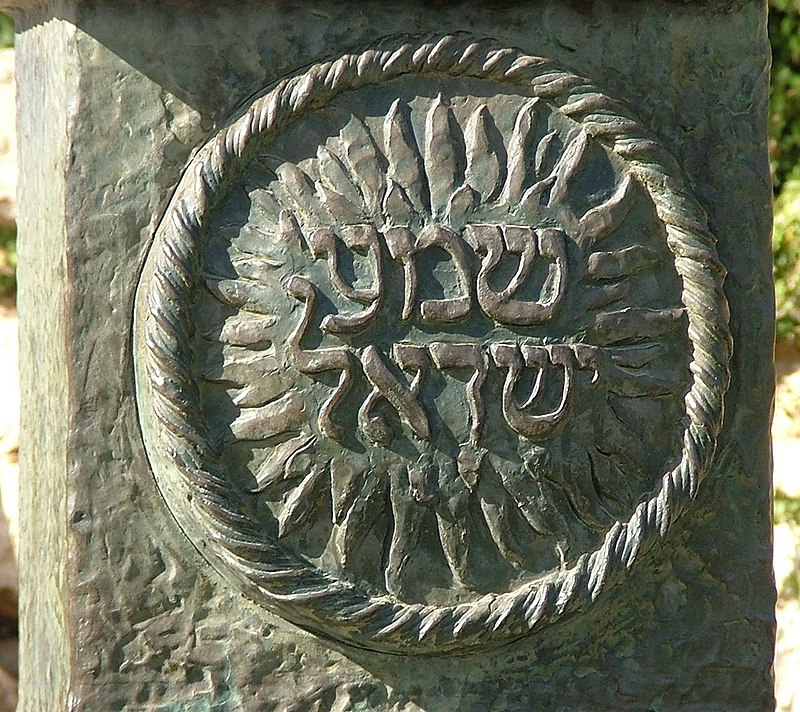
Hear O Israel the Lord Is Our God the Lord is one!

January 25, 2019 By BethSheba Ashe Leave a Comment

[First published on DEC 25, 2018, 6:25 AM;
https://blogs.timesofisrael.com/hear-o-israel-the-lord-is-our-god-the-lord-is-one/].

Welcome to a special installment of my blog on gematria, the merkabah and the birth of the alephbet.  Today I wish to share with you some truly amazing, beautiful and awe inspiring gematria work by Reuben Levi on the Shema!  It brought tears to my eyes and I thank him for revealing it and allowing me to share it with you.  ~ Bethsheba Ashe.


Reuben Levi ~
Using the Chariot gematria, I took a look at the Shema, which is known as the “watch-word” of the Jewish faith― whatever a “watch-word” is. Those of you who know a little about the format of a Jewish prayer service may know that the ḥazzan (cantor) calls out the Shema (Deuteronomy 6:4) as it is written:

שמע ישראל אדוני אלהינו אדוני אחד

(“Hear, O Israel, the Lᴏʀᴅ is our Goᴅ, the Lᴏʀᴅ is one!”)

The gematrical value of this verse using Chariot gematria is 614― ONE MORE than 613.

The following verse does not appear in the Scripture, and if person is praying alone or in a group of less than ten, it is uttered silently― but when a congregation of at least ten people is present, they respond to the leader’s recitation of the Shema by chanting the following phrase aloud:

ברוך שם כבוד מלכותו לעולם ועד
(“Bless His Majesty’s Name forever!”)*

The gematrical value of this phrase using Chariot gematria is 665― ONE LESS than 666.

At Beth’s suggestion, I decided to see what would happen if I substituted “King Solomon” (שלמה המלך) for “His Majesty’s Name” in the response:

ברוך שם שלמה המלך לעולם ועד
(“Bless the name of Solomon the King forever.”)

Lo and behold, the gematrical value sums to exactly 700!

Knowing that King Solomon was also known as Jedidiah (ידידיה), I tried substituting that name instead:

ברוך שם ידידיה המלך לעולם ועד
(“Bless the name of Jedediah the King forever.”)

Wouldn’t you know it, the gematrical value is 665― the same as the traditional response.

It’s worth mentioning that in Kabbalah, the opening verse of the Shema is associated with Heaven, because the word Eloheinu (“Our God”) dwells in it. The response line, then, is associated with the Earth. Traditionally, the Shema is recited when wrapping the tefillin (phylacteries) to the forehead and to the left arm (beside the heart). The significance of this ritual is to “bind” the head, heart and hand into ONE: a unified vehicle for carrying out God’s work on Earth.

In concordance with that precept, the response to the Shema is worded in a very particular way. If you’re familiar with Hebrew or the Jewish liturgy, then you may know that ברוך שם כבוד מלכותו לעולם ועד is typically translated as “Blessed be His glorious Kingdom forever” or “Blessed be the glory of His Kingdom forever.” For those who understand Hebrew grammar, this presents a bit of a problem, because the word kevod (“glory”) is a noun, and is interposed between shem (“name”) and malkhuto (“His Kingdom”).

*Without getting into the intricacies of Hebrew noun construct-chains, the phrase is syntactically odd in that שם כבוד מלכותו literally parses out as “[the] name [of the] glory [of] His Kingdom.” So the glory of His Kingdom has a name? Not exactly. There’s a nuance at play here. The word מלכות means “kingdom” but could also be rendered as “kingship” or even “majesty.” The fact is, כבוד מלכותו is meant to be read as a single unit: an honorific comparable to “His [Glorious] Majesty.” That’s why I translated it as above: “Bless His Majesty’s Name forever.” (That’s what cued Beth into the idea that “His Majesty’s Name” might in fact be the name of King Solomon a.k.a. Jedediah.)

To wrap it up (no pun intended) the Shema and its non-Scriptural response are symbolic of the channeling of Divine Energy from Heaven to Earth. As stated above, the Shema itself represents Heaven, while the response represents Earth. To be more precise, the first line represents the highest Heaven, known in Kabbalah as the World of Atzilut (“Emanation”). The response is like a ladder that steps down one word/world at a time and ends on the Earth. Let’s consider the phrase as literally parsed, “Bless the NAME of the GLORY of His KINGDOM.”

For this purpose, “NAME” represents the head (the phylactery between the eyes) and the World of Beriah (“Creation”), because the name is “created” as a thought (מחשבה) in the brain (מוח). Next, “GLORY” represents the heart (the phylactery on the left arm) and the World of Yetzirah (“Formation”), because glory― a synonym for תפארת (“Beauty”) is formed in the heart (לב). Finally, we end with “KINGDOM” which represents the hand (the strap winding down the arm to the finger) and the World of Assiyah (“Action”), because the good deeds (מעשים טובים) are performed with the hand (יד).

So by wrapping the tefillin and reciting the Shema and its response, we are performing a ritual symbolic of transmitting Heavenly power down to the Earth. At the start, I demonstrated that the gematrical value of the Shema is 614 and the value of its response is 665.The last word of the former is “one” and by transmitting a 1 (i.e. God) down from Heaven to Earth, we end up with 613 Mitzvot above, and 666 representing the Earth below.

In our solar system, any planet’s orbital period (i.e. the time it takes to complete one whole circle around the Sun, in years) is directly related to its average distance from the Sun. If P is the planet’s orbital period in years, and D is its average distance from the Sun in Astronomical Units (AU) then the equation to derive the later from the former is D = P·⁶⁶⁶. That is, D equals P to the power of 0.666. This is accurate to at least 99.9% for every planet from Mercury to Uranus, and accurate to 99.8% for Pluto. You can do the math to prove this.”


What a beautiful gift for the holidays!  Note ~ the Palace of King Solomon in 1 Kings corresponds with the first Palace of the Seven, which becomes the Sephiroth of Yesod and Malkuth on the Tree of Life.

And that’s a wrap for today [also no pun intended!]  Thank you for reading my blog and for all your support and encouragement.  We truly appreciate it.  Have a wonderful day.  I’ll be back in the new year with my analysis of the Sefer Bahir, so stay tuned for more numerical honey!

~ Bethsheba Ashe.
ABOUT THE AUTHOR Bethsheba Ashe is almost Scottish. She was born a Geordie in the North East of England but she currently lives 3 thousand miles away in Pennsylvania. She started writing and self-publishing in 1992, with a series of magazines. She is the author of several non-fiction titles such as "Chariot", and has recently published her first adventure/murder mystery novel. She also coded and runs the gematria calculator app "Shematria". Bethsheba is an inventor and her invention is 'Galay'; which is the worlds first dual logographic and alphabetical writing script. Currently she is coding an app for Galay messaging. She's a quiet but intensely curious human being who likes to keep busy and she loves animals.
.

Filed Under: Gematria, Merkabah Wheel Tagged With: Deuteronomy, Gematria, Reuben Levi, Seven Palaces, Shema, watchword

The Lost Art of Gematria

January 25, 2019 By BethSheba Ashe Leave a Comment

Welcome to my blog.  With this blog I’ve elected to speak upon Biblical Gematria, the Merkabah, and the birth of the alephbet.  If you have any questions or comments, please feel free to express them in the comments section below.

“If I were asked to characterize the gematria of the Torah, I would call it a sophisticated, frequent, secret and very clever art form that is interwoven with the plain text.”

There is a great deal of gematria in the texts of the Tanakh. There is more than any one scholar could investigate in a lifetime of study.

The gematria of Genesis appears concerned with the planets and of those things spoken of in 1:14. The story of Adam and Eve is much clarified by the gematria; enabling us to see that the fruit of the Tree of Knowledge was light. The gematria of 1 Kings concerns the conformations of the Temple and how they are harmonized with the Seven Palaces. Ezekiel is also much concerned with the Temple and the Seven Palaces with his gematria, but he also has a bit of a dig at the ruler of Tyre… pulling his whiskers. Job… that’s a pure joy in terms of gematria; a real work of art both behind the scenes numerically as well as in plain composition.

Biblical gematria was a sophisticated practice that knew formal and informal conventions.  For instance, it is convention with some authors to signal the presence of gematria with a cue word like “Behold!”.  And since biblical gematria existed at a time before the Greeks or anyone else had thought to standardize mathematical notation, words stood in to do the job instead.  Touching something could signify addition (+), but eating from something is usually a sign of subtraction (-).  To magnify something is to multiply it by 10, but to get between two things expressed division by two.

Traditionally, biblical gematria has been something of a secret.  The same number set that appears on the Seven Palaces, is also the same one used in biblical gematria, and therefore it’s likely that the secrecy surrounding the Merkabah also wrapped around its gematria.

The Seven Palaces
The Seven Palaces

Secrecy is also the reason why gematria is something of a lost art.

On its own, the word (any word) stands in a void of isolation; bearing no relationship to other actors. It is simply a word and a number. Most of the time there is no intrinsic relationship between words that share a common number, other than what you would expect through randomness and chance.  Happily, since ancient gematria was focused on presenting and preserving mathematics and not on numerology this poses us no issues at all.

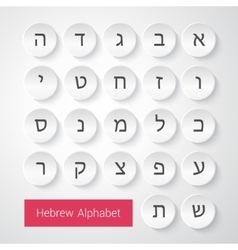
All the number values for Biblical Gematria are the same as Standard Gematria except that the letter shin is counted as 3 (not 300), and the letter tav is counted as 4 (not 400).  The finals are counted with their small values (i.e. ץ  = 90, not 900).  I’ve encoded a gematria calculator for convenience which is available at shematria.com, but if you’re using a pen and paper, then the number values for biblical gematria are these;

א 1 ב 2 ג 3 ש 3 ד 4 ת 4 ה 5 ו 6 ז 7 ח 8 ט 9 י 10 כ 20
ל 30 מ 40 נ 50 ס 60 ע 70 פ 80 צ 90 ק 100 ר 200

To really understand how clever the art of biblical gematria is, we need to view a few examples firsthand.  So let’s start at the very beginning with Genesis 1:1;

בראשית ברא אלהים את השמים ואת הארץ

“In the beginning (220) created (203) Elohim (86) ath (+) The Heavens (98) vath (and +) The Earth (296).”

et and v’et are excluded from this calculation because et almost always signifies addition.  The word bra is a verb and not of consequence to the calculations except to signify addition.

220 + 86 + 98 + 296 = 700.
יָמִ֖ים is the word for ‘days’ (100).

700 = 100 x 7 = The Seven Days of Creation.  But perhaps the 700 is also representative of the Seven Palaces themselves?  These palaces were considered to be the abode of God; each part under the governance of a letter of the alphabet, and each letter representing a quality of the heavenly and earthly life.

More instances of 700 that appear in the Tanakh are;

  • Abraham (248) + Isaac (208) + Israel (244) = 700.
  • Exodus 25:10-11 is as follows:אֲר֖וֹן = Ark = from ‘אָרָה’ meaning ‘to pick’ [fruit] or ‘to gather’ [myrrh].
    עֲצֵ֣י = wood 170
    שִׁטִּ֑ים = acacia 62
    זָהָ֣ב = Gold 14
    טָה֔וֹר = Pure 220.
  • According to the text, the ‘pure gold’ is overlaid both inside and outside the Ark, therefore we use the sum for ‘pure gold’ twice:  Wood 170 + Acacia 62 + (Pure 220 x 2) + (Gold 14 x 2) = 700.  Perhaps you know of more instances of 700?  Why not drop me a line and let me know.  If you’d like some homework, why not find out why 217 was a significant number to the ancients?

—

Thank you for reading my first blog post with the Times of Israel.  In my next blog post I’m going to be looking at a text that that does something very usual with the gematria when someone crosses his arms, so stay tuned for numerical honey.

ABOUT THE AUTHOR Bethsheba Ashe is almost Scottish. She was born a Geordie in the North East of England but she currently lives 3 thousand miles away in Pennsylvania. She started writing and self-publishing in 1992, with a series of magazines. She is the author of several non-fiction titles such as "Chariot", and has recently published her first adventure/murder mystery novel. She also coded and runs the gematria calculator app "Shematria". Bethsheba is an inventor and her invention is 'Galay'; which is the worlds first dual logographic and alphabetical writing script. Currently she is coding an app for Galay messaging. She's a quiet but intensely curious human being who likes to keep busy and she loves animals.
.

Filed Under: Gematria, Merkabah Wheel Tagged With: Gematria, Seven Palaces

Ezekiel’s “living creatures”…

February 2, 2018 By BethSheba Ashe Leave a Comment

http://bethshebaashe.com/wp-content/uploads/2018/02/Ezekiel-Part-One-3.mp4
The biblical text that is most associated with the Divine Chariot is Ezekiel; who gives an account of a vision where there were wheels inside of other wheels, and a living creature of four faces; that of an ox and a lion and an eagle and a man.  The vision is actually a calculation to indicate that the living creature had the numerical likeness of Abraham (248).

——————————————————-

Before we get to that, we’re going to be looking closely at ‎the Hebrew letters and the part they play in Jewish mythology about the creation of the world and in ‎what is called the secrets of the Torah.‎

‎The Mishnah tells us that these secrets are “the esoteric Act of Creation and the Act of the ‎Divine ‎Chariot,” and it adds “which should remain hidden”.‎

The Tree of Life – showing Malkuth being added to Yesod – Portae Lucis, Augsberg 1516.

A thousand years after the Mishnah, Kabbalah was invented. Although you’ve probably read, and it is ‎popularly cited that Kabbalah is Jewish mysticism, it’s actually a rather elaborate cipher for a type of ‎secret biblical exegesis known as ‘the Sod’. We won’t be discussing Kabbalah, but I note that we’ll be ‎discussing a branch of knowledge that Kabbalah is a cipher for.‎

The Sod was one of 4 methods of biblical exegesis known to and used by the Tannaim. These were the ‎Rabbinic sages whose views are recorded in the Mishnah, from approximately 10-220 CE. The 4 ‎methods of biblical exegesis were called by the acronym ‘the PaRDeS’ (Orchard). It stood for:‎

P for a Plain (Peshat) interpretation of the Bible.‎
R (Remez) for a symbolic interpretation just under the plain sense of the text. Remez means ‘hint’.‎
D for Derash means “inquire” and refers to comparative interpretation.‎
Sod (pronounced sode) is the secret method of biblical interpretation. ‎

The secret method was concerned with the conformations of the Universe as the ancient semitic ‎peoples thought of them. They called this ‘the Divine Chariot’ and they imagined that it existed prior ‎to the creation of the heavens and the earth by God. They imagined that God sat upon this chariot and ‎rode around in the clouds on it causing the storms.

Ezekiel refers to this Wheel, but it’s also called ‘the ‎Seven Palaces’ in texts such as the Hekhalot. According to their ancient way of thinking, they believed ‎God used 22 letters to create the world with, and these 22 letters were each attributed to separate ‎sections of the wheel that moved the Divine Chariot.
‎
In the Genesis account of creation, the 22 letters are attributed to the first two chapters, but the order ‎of the letters in the alphabet are different from what they are today, and that’s because Genesis was ‎created in a different Hebrew writing script.‎

The Jewish King Ezra changed the official writing script of his people from Paleo-Hebrew to Ashuri in the 6th ‎Century BCE. Ashuri has 27 characters, but Paleohebrew has only 22; one for each letter. Ashuri has a ‎number set from 1-1000 but Paleohebrew has a number set from 1-200. A peculiarity about the ‎Paleohebrew script number set, is that it has two letters with the value of 3, and another two letters ‎with the value of 4. A lack of numerical linearity was justified by the final total of the order of the ‎count (217) because it was a divine number – being seven times the number of EL (God); the creator.‎

‎1 + 2 + 3 + 3 + 4 + 4 + 5 + 6 + 7 [ … and so on] 18 + 19 + 20 = 217.‎

So this is the way that the paleohebrew alphabet is attributed to the verses of Genesis chapters 1 & 2 (from right to left): ‎

Gematria Key:‎
א 1 ב 2 ג 3 ש 3 ד 4 ת 4 ה 5 ו 6 ז 7 ח 8 ט 9 ‏
י 10 כ 20 ל 30 מ 40 נ 50 ס 60 ע 70 פ 80 צ 90 ק 100 ר 200‏

Studying Genesis can tell you about the qualities that each letter contributed to the creation of the ‎heavens and the earth. If you use these numbers to study the gematria of Genesis you’ll discover ‎various matters concerning astronomy (not astrology) and the calendar recorded within the text.

The ‎number set was also transposed to the Greek script so certain Christian texts (such as 1 John) carry this ‎subset of mathematical information used by the Sod to interpret the text with.

There are many great online programs that can help you learn the 22 letters of the alphabet in under ‎an hour. I’d recommend the this Hebrew Quizlet;https://quizlet.com/222209/hebrew-alphabet-flash-‎cards/‎

You could also make your own and add the letter values to them, or even make scrabble-tiles to help ‎you count Hebrew words.‎

———————–

Ezekiel’s Numerical Arte.

The calculations that reveal Ezekiels “living creatures” to have the likeness of Abraham are located in Ezekiel 1:10:

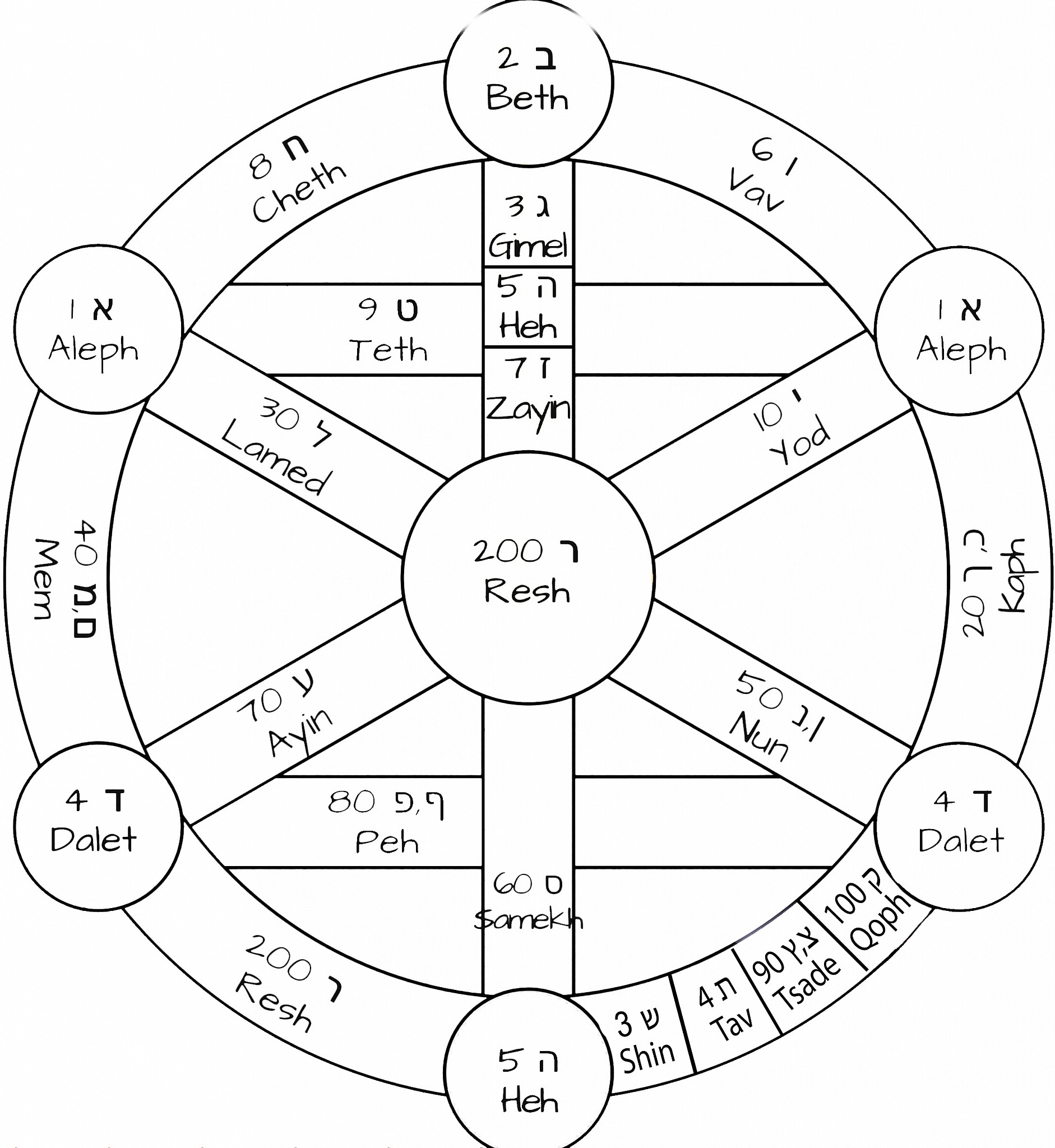
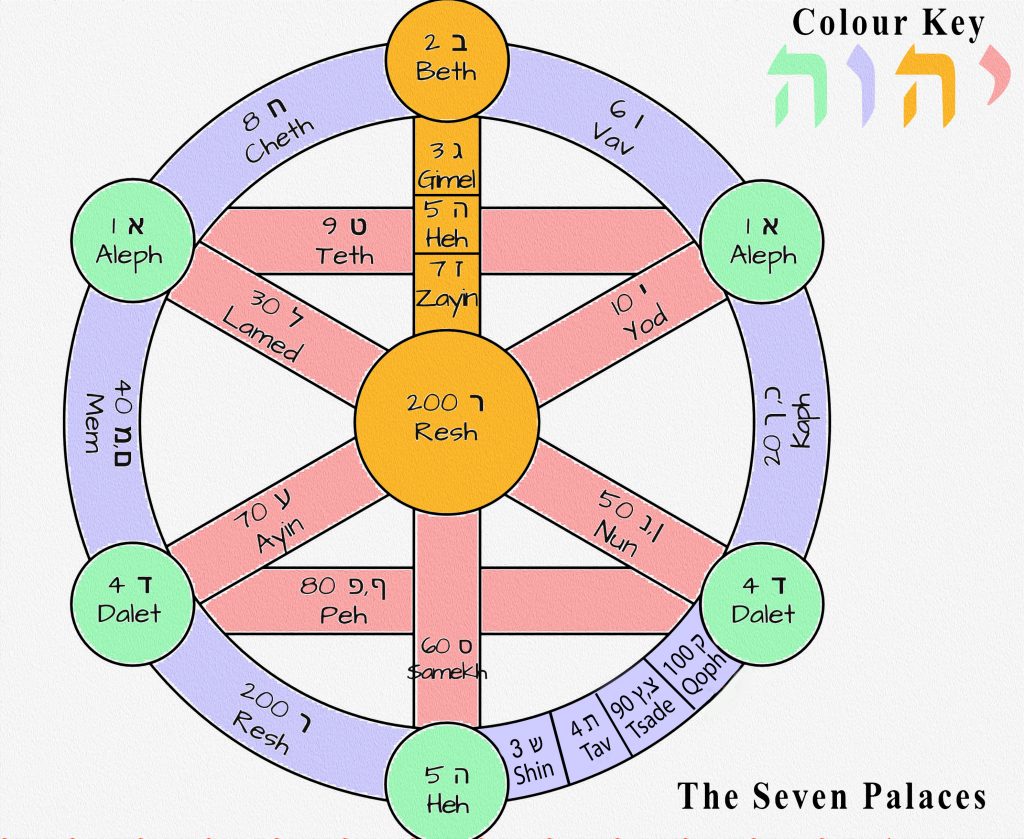
Consult this diagram of the Seven Palaces for this next part, and I’ll show you why….

The Seven Palaces
The Seven Palaces

Ezekiel 1:10
ודמות פניהם פני אדם ופני אריה אל־הימין לארבעתם ופני־שור מהשמאול לארבעתן ופני־נשר לארבעתן

And the likeness of their faces, the face of a man and the face of a lion on the right side [of the word] to them four and had the face of an ox to the left [of the word] to them four and had the face of an eagle to them four.

Man = אדם = 45 = the gate of Mem.‎

Lion = ‎אַרְיֵ֤ה‎ = 216 on the right side of the word = ‎אַרְיֵ֤‎ = 211 (gate of the ‎path of Yod).‎

Ox = ‎שׁ֥וֹר‎ = 209 on the left side of the word = ‎וֹר‎ = 206 (gate of the path ‎with four letters; ‎(‎שתצק)‎ Shin, Tav, Tsade & Qoph).

Eagle = ‎נֶ֖שֶׁר‎ = 253:
For this one we collect the letters from all four paths and palaces connecting to the Palace of the Aleph on the right hand side of the wheel:

Chariot, by Bethsheba Ashe
Want to know more about the Merkabah?

‎1 Palace of the Aleph‎
‎9 Path of Teth + 1 the other Aleph = 10‎
‎6 The Vav + 2 the Palace of Beth = 8‎
‎20 The Kaph + 4 the Palace of Daleth = 24‎
‎10 The Yod + 200 the Palace of Resh = 210‎
‎1 + 10 + 8 + 24 + 210 = 253.‎

Therefore:
Man = Gate of Mem
Lion = Gate of Yod
Ox = Fourfold (‎שתצק‎) Gate
Eagles = Palace of Aleph
‎
Mem (40) Yod (10) Shin (3) Tav (4) Tsade (90) Qoph (100) Aleph (1) = 248, which is numerically identical with the value of Abraham (248).

It is as Rabbi Shimon ben Lakish once said: “The patriarchs they ‎themselves were the Divine Chariot!“

Filed Under: Gematria Tagged With: Abraham, alphabet, Ezekiel, Genesis, Greek, Isopsephy, Mishnah Kabbalah Merkabah Divine Chariot, New Testament, Paleohebrew, Seven Palaces, Torah Bible Gematria

Conformations of the Tree of Life

July 23, 2017 By BethSheba Ashe 1 Comment

“…Such an one is that man who ‎can neither institute the union of the Holy Name…” – The Book of Concealed Mystery.

The Tree of Life – showing Malkuth being added to Yesod – Portae Lucis, Augsberg 1516.

The Seven Palaces were hidden under the cipher of the Tree of Life and finding them required a student that was curious enough to ask themselves “I wonder what the original conformations of this diagram looked like?”

The first picture to be published of the Tree of life that wasn’t just a series of concentric circles, ‎was featured on the front cover of the Portae Lucis magazine in 1516[1].

Within a few centuries – new versions of the Etz haChayim (עץ החיים) [The Tree of Life] were popping up across Europe.  New paths were added to the Tree or the positions of the paths were altered.  Sometimes entire Sephiroth were added – no matter what the Sepher Yetzirah said[2]. Issac Luria and other later Kabbalists put much effort into this hermeneutical past-time, and they were joined by Western Occultists such as Frater Achad. These students redistributed the letters into something that was more pleasing and attuned to their personal view of the cosmos.

In it’s own private sphere this is a worthy inquiry if it assists the student to understand themselves somewhat better, but that isn’t the only motivation that people have when they start tweaking at the tree.  The Zohar contains an admonition in the ‘Book of Concealed Mystery’ that says “…derive the Supernals[3] into the position required…“ which is an open invitation to change the tree.

Notice that only one ‘position’ is mentioned. The word ‘position’ is not a plural, and Da’ath is not a Sephiroth, but ‘the position’.

The Seven Palaces – 5th knowledge lecture – The Complete Golden Dawn. Bill Heidrick noted the Golden Dawn diagram “This is the traditional depiction of the moment of the opening of the 50th Gate of Understanding, although there is little evidence that the matter was understood by the G.’. D.’. as such.”

When the supernals are combined in the position of Da’ath then the top half of the Seven Palaces are seen. When Malkuth is drawn back up into Yesod then all the Seven Palaces can be seen.

The Seven Palaces were hidden[4], and finding them required a student that was curious enough to ask themselves “I wonder what the original conformations of this diagram looked like?”  The first step in solving any really good puzzle or riddle is to take yourself out of the equation completely.  It’s not about what you think: it’s about what the writer means.  In a sense, it is a spiritual test… *to see* the Merkabah you have to first leave your ego at the door.

Students of the Golden Dawn had a slightly easier time of finding the original conformation of the Tree of Life because a picture of the Seven Palaces was given to initiates with their fifth knowledge lecture.  It’s a starting point but this diagram is devoid of any paths running between the palaces and it was mis-attributed as “the Seven Palaces of Assiah” (the lowest of the Kabbalistic four worlds).  Essentially the Golden Dawn lumped the Seven Palaces into the same category as the Qlippoth, without taking into account the ancient near east view of the cosmos with its Seven Heavens, Seven Earths and Seven Hells.

The idea of seven heavens originated in ancient Mesopotamia.  Sumerian incantations of the late second millennium BCE make references to seven heavens and seven earths. One incantation is: “an-imin-bi ki-imin-bi” (the heavens are seven, the earths are seven) and the Hebrew word for “heavens” was Shamayim (שָׁמַיִם 93).

What are the ten kings? They are the seven voices and three sayings (Amarim). – The Bahir.

To really comprehend the origin of the Tree of Life, you have to be a bit of a sleuth on an investigation – rather than an inventor at the potters wheel.  In a sense, you have to attack both the Torah and the Zohar as if they were cryptic crossword puzzles; analyzing every word to see if it has a second meaning.  Unlike a cryptic crossword the sources themselves require investigation and this can be especially difficult with translation.  Even the recent Pritzker edition has been ‘corrected’ with the Aramaic word for ‘Supernals’ having been replaced with another one for ‘Spheres’.

The Seven Palaces
The Seven Palaces

The phrasing of the full Zoharic admonition itself is a barrier to understanding;

“‎11. But what is to be understood by that ‎passage
“And they that despise Me shall be ‎lightly esteemed?”
Such an one is that man who ‎can neither institute the union of the Holy Name,
nor bind together the links of truth,
nor derive ‎the supernals into the position required,
nor ‎honour the Name of his Lord.
Better were it for ‎that man had he never been created,
and much ‎more for that man who doth not attentively ‎meditate when he saith Amen!”

– Chapter III – ‎Verse 11, ‘Kabbalah Unveiled’.

The line “and they that despise me shall be lightly esteemed” is lifted from Samuel 2:30 and it reads:

“Therefore the LORD God of Israel declares,
I did indeed say that your house and the house of your father should walk before Me forever;
but now the LORD declares,
‘Far be it from Me – for those who honor Me I will honor,
and those who despise Me will be lightly esteemed.

The theme of honour is repeated later in the verse; “…nor ‎honour the Name of his Lord…” but the word ‘honour’ in Samuel is מְכַבְּדַ֥י while the word used for ‘honour’ in the Zoharic verse is ‘הדר‘ which (according to Strong’s concordance) also carries the meanings of ‘to honor, adorn, and perhaps also ‘to swell’.   The word comprises three letters that appear on four of the seven palaces (the daleth appearing on two palaces).

In Deuteronomy the word ‘honour’ הדר is used in a very different context:  בכור שורו הדר ל֗וֹ  “As the firstborn of his bull honour to“, which makes a fascinating link with the bull god.  הדד ‘Hadad’ was the bull god son of the supreme Father of the Gods and creator deity אל El (31) and the three letters of the lowest Palaces form his name.  According to the Ba’al cycle texts found at Ras Sharma from Ugarit (6000 BCE – 1190 BCE)- Hadad lived in the Seven Palaces of his Father.

The next line of the riddle is “Such an one is that man who ‎can neither institute the union of the Holy Name.”  At the top of this page you’ll see a diagram that illustrates how – when the letters of the Seven Palaces are correctly attributed to the right Paths and Palaces; they coalesce to form values that are identical to the names of ancient biblical deities and major characters in the narrative. When placed in a logographic arrangement the numbers of the Seven Palaces recur and reflect around the structure.  For example:

Biblical Gematria

7 x 31 = 217.
2 + 3 + 5 + 7 + 200 = 217.
2 + 1 + 200 + 1 + 5 + 4 + 4 = 217.
197 + 20 = 217.
(5 + 3 + 4 + 90 + 100 + 4) + (2 + 8 + 1) = 217

200 + 40 + 8 = 248
217 + 31 = 248.

5 + 3 + 4 + 90 + 100 + 4 = 206.
217 – 11 = 206.

One cannot help but come away from a mathematical enquiry of the Seven Palaces, thinking that the interplay of the numbers upon each of the faces – with each depending on the others for support and existence – conveys a sublime insight into the interdependent functioning of the cosmos.

“…bind together the links of truth…“

What are the links of truth…?  One word for ‘link’ may be ‘qarse’ קַרְסֵ֥י with the value 370:
ועשית קרסי נחשת חמשים והבאת את־הקרסים בללאת וחברת את־האהל והיה אחד – Exodus 26:11.
“And you shall make 50 bronze clasps and put the clasps into the loops and couple together the tent that it may be one.”

Another word for ‘link’ might be עֲנָ֖ק Anaq (220) chain; a necklace, which shares its value with words such as ‘HaTorah’ and ‘Bereshith’, as well as with an arrangement of five of the six ‘inner paths’ that connect with the centered palace of the Resh.  These five paths never change their placement when the Tree is reformatted into the Seven Palaces.  They remain right where they are.  However the sixth path to connect with the Palace of Resh (from the Beth) is made of paths that were once connected to the three Supernals, and just as the Supernals went to make one Palace above, the connecting paths are bound together to make one interconnecting path comprised of the letters ג Gimel ה Heh and ז Zayin.

“50. We have learned (Proverbs 25:2), “The glory of God is to hide a word.”
What is “a word”? That of which it is written (Psalm 119:160), “The Beginning of Your
word is truth.”  [It is also written] (Proverbs 25:2), “It is the glory of kings is to research a word.”
What is this “word”? That of which it is written (Proverbs 25:11), “A word spoken in its
proper place (Aphen-av)”, do not read “its proper place” (Aphen-av), but “its wheel”
(Ophen’av)” – The Bahir.

Insight into how to arrange the letters from the lost paths of the Tree and onto the palaces are given in a Zoharic essay ‘The Mysteries of the Alphabet’.  In this narrative, God is deciding on what letter to begin the creation of the world with, and eventually he decides to begin with the letter Beth, yet he calls to the Aleph twice “Aleph!  Aleph!” and declares that his influence upon the earth shall only be expressed through the Aleph.  This is why the Beth is to the Seventh Palace (at the top) and the Alephs flank it on the palaces at either side.  The Bahir adds this insight into the location of the Daleths upon the Palaces:

“36. His students asked: Why is the letter Daleth thick on the side?
He replied: Because of the Segol which is in the small Patach.
It is thus written (Psalm 24:7), “The openings (pitchey) of the World.” There He placed a
Patach above and a Segol below. It is for this reason that it is thick.
37. What is the Patach? It is an opening (Petach).  What is meant by an opening? This is the direction of north, which is open to all the world. It is the gate from which good and evil emerge.” – The Bahir.

Daleth means ‘door’ – and the two doors on the Palaces are the Doors of Light and Darkness; Life and Death. Between the Palaces of the Doors is the Path of Peh, which begins the words ‘Petach’ and ‘Pitchey’.

A careful study of the Tanakh throws up a wealth of commentary on the conformations and qualities of the Seven Palaces.  Ezekiel is especially forthcoming about the conformations of the Seven Palaces.  For instance in Chapter 44:1-3:

1  Then He brought me back by the way of the outer gate of the sanctuary, which faces the east; and it was shut. 2  YHVH said to me, “This gate shall be shut; it shall not be opened, and no one shall enter by it, for the YHVH God of Israel has entered by it; therefore it shall be shut. 3  “As for the prince, he shall sit in it as prince to eat before YHVH; he shall enter by way of the porch of the gate and shall go out by the same way.”

[This means that no-one may may exit life via the same gate they were born (through the Palace of the Daleth in the East).  The ‘porch’ is the path of Peh – which was represented at the temple by a porch, and ‘the Prince’ is ‘Hadad’ (son of El) who lives in the Palaces of his Father according to the Ba’al cycle texts.]

Scattered among the early Kabbalistic texts, there are plenty of cryptic aids to assist in the discovery of the Seven Palaces. Unfortunately there have been few students who are even aware that they should have been looking for them.  Aleister Crowley was a different sort of man, and from his time with Scottish freemasonry he was quite clear that he should know about them.   From his accounts in ‘The Confessions of Aleister Crowley’ we can date the time of his discovery of the Seven Palaces to 1900.  His accounts make it explicitly clear that he was searching for the ‘Lost Word’ of the Freemasons; the word that was reputably only spoken by the High Priest within the presence of God in the tabernacle, and only once a year.

It’s fascinating that Crowley chose the verse he did to prove his assertions to knowledge of the Lost Word.  He gives an example from Genesis 17:5 – a verse that corroborates biblical gematria when shin = 3 and tav = 4 (as it does on the Seven Palaces).  ‘Abraham’ = 248 and המון גוים נתתיך “of many nations I will make” = 248.  By ‘standard’ gematria the sum total of המון גוים נתתיך is 1040.  It’s one of the rare examples in the Torah where the text directly verifies the gematria result.

“This exegetical method is not a modern invention.  When Jehovah selected a family to be the father of Israel, he changed the name (אברם (243 = Abram Father of Elevation into (אברהם (248 = Abraham Father of a multitude; and by way of compensation changed (שרי (510 = Sari Nobility to (שרה (505 = Sarah, Princess. There are several other similar stories in the Bible. A change of name is considered to indicate a change of nature.  Further, each name is not arbitrary; it is a definite description of the nature of the object to which it is attached. By a similar process, I am certain of my results in the matter of the Lost Word, for the Found Word fulfils the conditions of the situation; and furthermore, throws light on the obscure symbolism of the entire ritual.”

By 1904 he was using the gates of the Seven Palaces as a checksum for the riddle of Liber Al vel Legis and thereafter he keyed (or otherwise based) several of his best A.’.A.’. works to the Palaces – in effect creating a hidden system for the Inner Order of the A.’.A.’. and hiding the whole thing in plain sight.

It can be successfully argued that Aleister Crowley was just the latest of a long line of people who have attempted to create a systematic approach to initiation, but at least he had the virtue of of fully understanding the basis of the older system before he set out to create a new vehicle.


[1] The Tree of Life – showing the number ten being added to Yesod – by Paulus Ricius, Portae Lucis, Augsberg 1516.
[2] “Ten are the numbers, as are the Sephiroth, and twenty-two the letters, these are the Foundation of all things…[]…Ten are the numbers of the ineffable Sephiroth, ten and not nine, ten and not eleven. Learn this wisdom, and be wise in the understanding of it, investigate these numbers, and draw knowledge from them, fix the design in its purity, and pass from it to its Creator seated on his throne.” – 1:2-4, The Sepher Yetzirah.
[3] The Supernals are the top three Sephiroth of Kether, Chokmah and Binah.
[4] The Seven Palaces are at the core of Merkabah literature and Judah the patriarch forbade people to speak about Merkabah to one another.  Kabbalah came about largely in response to this prohibition upon free study; as a consequence the Seven Palaces was derived into the Tree of Life so that students could discuss the Merkabah in an enciphered fashion.

Filed Under: Gematria, Merkabah Wheel Tagged With: Aleister Crowley, Golden Dawn, Kabbalah, Merkabah, Portaelvcis, Seven Palaces, Tree of Life, Wheel

Liber Arcanorum, Part I

July 11, 2017 By BethSheba Ashe 1 Comment

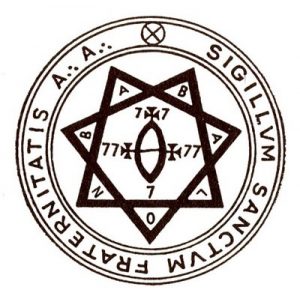
Sigil of the A.'.A.'.Tarot Correspondences to the Seven Palaces.
Liber Arcanorum τών ATU τού TAHUTI QUAS VIDIT ASAR IN AMENNTI sub figurâ CCXXXI [231] was first published in 1909 by Aleister Crowley.  It is a Class A paper and students of the mysteries have found it to be one of the more accessible and understandable papers of the A.’.A.’.[1] given that it is concerned with the Major Arcana of the Tarot; a topic that Crowley gave a very thorough treatise on in his ‘Book of Thoth’.

That said, most students err in trying to attribute the verses of Liber Arcanorum to the Tree of life instead of the Seven Palaces, largely because that’s just how the correspondences are given in the Book.  The Tree of Life is the public face of the highly secret Seven Palaces, but an adept of the Inner Order understands that when his peers say something like “…the Hierophant, which, on the other side of the Tree of Life, brings down the fire of Chokmah…” he’s actually saying “…the Hierophant, which, on the other side of the Palaces, brings down the fire of Seventh Palace…”.

Crowley hints in the Book of Thoth of “a complete qabalistic system of greater depth and sublimity than any other”, and goes on to explain “The details of this system have not yet been revealed. It has been thought right, nevertheless, to hint at its existence…”  He was talking about the Seven Palaces.  In this system (which is far older than any other extant) the supernal sephiroth of Kether, Chokmah and Binah are rectified into one combined supernal Palace, and Yesod and Malkuth are brought together as the first Palace.

Just as the Tree of Life is at the core of Kabbalah, the Seven Palaces is the basis of the Merkabah, and indeed the study of Kabbalah may be considered the enciphered study of the Merkabah because the Tree of Life was derived from the Seven Palaces.  These Palaces are not to be confused with the Qlippoth nor the Seven Hells as they are things that were themselves derived in their construction from the Tree of life; and are an averse depiction of the purity and sanctity of the former.

The Seven Palaces
The Seven Palaces

Originally, the silence and secrecy that has traditionally surrounded the Seven Palaces was due to a prohibition by Judah the Patriarch[2] that forbade Jewish people from speaking about the Merkabah.  The reasons for the prohibition were likely threefold; there was the Jewish desire to reclaim the land of Israel; there are pantheistic elements of the Seven Palaces such as the Goddess Elat and the Elohim of Hadad on its paths and palaces; and there appears to have been some concern over the spiritual welfare of students to the Merkabah, as evidenced by the stories of Rabbi Akiva and the Pardes.

The silence and secrecy of Occult orders on the matter has another source; either they are wholly ignorant of the Seven Palaces through some break in the proper transmission from adept to adept, or they are seeking to preserve knowledge that they have judged to be proprietorial to the wise; something that is (in their view) not to be seen with the eyes of the profane.

Crowley’s work with the Palaces was not a mere reiteration of the Merkabah.  He took it upon himself to create an entirely new syncretic system upon it that was fit for the new Aeon as he saw it.  His own silence about the Seven Palaces may have been because of Oaths to magical orders that he made[3], and equally – if he had revealed the Seven Palaces openly to the world at any time after he had published the Book of the Law, he would have given away the solution to the Riddle of Liber Al vel Legis.

There is however, no point in keeping something so secret that knowledge of it dies out completely and there is a break in transmission.  Therefore I have absolutely no motivation to keep any of the system secret, and unlike Crowley I have made no oaths to anyone that would prevent me from doing so[4].  Rather – I shall throw it open and let the latter day students of the mysteries have at it, and judge for themselves whether it is an effective vehicle for individual transformation and enlightenment – or not – from their results.

A fellow adept once remarked to me that when it comes to the mysteries, there is little need for formal secrecy as it is the limit of the students understanding that draws a veil of secrecy over matters such as these in any case.

Notes – The Gematria used here is biblical (paleohebrew) Gematria.  Shin = 3 (not 300) and Tav = 4 (not 400).  Also there is no final values for Ashuri final letters.  Also the Isopsephy used here is one that adjusts the Greek letters to match their Paleohebrew counterparts.  This link HERE takes you to the Isopsephy table.

The cards are keyed to Liber Arcanorum according to the value of their Hebrew letters, with the exception of the Shin and the Tav which appear at the end of the pack according to tradition.  See ‘Tarot Correspondences’ for more information about the ordering of the pack.

The Fool (1) Aleph

The Fool0

 0.  A, the heart of IAO, dwelleth in ecstasy in the secret place of the thunders. Between Asar and Asi he abideth in joy.

[This card is attributed to the two Palaces of the Aleph.

“Wherefore I solemnly affirm
This twofold Oneness at the term.
Asar on Asi did beget
Horus twin brother unto Set.”
– The Twins, by A.C.
[Dedicated to Austin Osman Spare]

There is an essay “The Visions of Aleph” by Doctor T. – which was published in ‘The New York Magazine, Or Literary Repository’ in 1797 that may be of  interest: https://tinyurl.com/ya8xwgja

The Aleph appears twice on the Seven Palaces.  It is attributed to two of the Palaces themselves, at either side of the Seventh Palace.  The Rabbis were wont to say “Aleph is never less than Beth” and this is figuratively true in respect of the Seven Palaces.  The Alephs received the influx from the letter Beth above them, for God began the creation of the World with the letter Beth[5].  The influx flows around the circumference to the twin Palaces of the Dalet below which are doors; one opening to allow the spirit to incarnate in the world below (the Palace of the final Heh) and the other allows the return of the spirit through its door once the earthly body is deceased.

What is united in the Palace of the Beth (2), is thus divided in the Palaces of the Alephs (1), and we may recall Crowleys equation “2 = 0”.

Asar is thought to be Osiris, and Asi – Isis. In the Palaces of the Alephs, they are primal forces that beget Horus the Sun God – (dwelling in the central Palace of the Resh) and all things on earth.

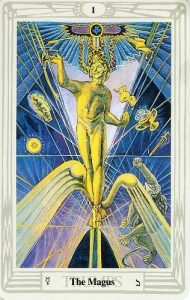
The Magician (2) Beth

The Magus
The Magus
  1. The lightnings increased and the Lord Tahuti stood forth. The Voice came from the Silence. Then the One ran and returned.

[Tahuti or Thoth is the Egyptian version of the Greek Hermes.  He represents the wisdom and the word of the aeon.  This card is attributed to the highest Palace which is the private abode of the creator divinity.  In the heavens this Palace corresponds to the Pole Star.  In Canaanite literature this card and it’s Palace corresponded to the God אל (EL).

In the Middle ages the this Palace was split into three to become the supernals of Kether, Chokmah and Binah on the Tree of Life.

Gematria:
The Palace of Beth forms 3 primary gates and 5 small gates from the paths around it.
There’s something very compelling about the initial alphebet of numbers – and by that I mean how each number essentially relates to each other spatially.  By the term ‘The inital alphabet of numbers’ I mean all the really interesting stuff happening down at the level of single digits.

The most important permutation is the number base you intend to use.  That determines the limit of how many units are accounted for in each cycle of the base number.

Now imagine that each base was a palace, that housed an infinite amount of numbers in each palace.  Is there an infinite amount of numbers or is there Seven infinitive amount of numbers?

The seventh palace uses a binary number base;  it is the light and the dark; the 1 and the 0; the positive and the negative; and yet, they exist as indivisible united parts of the whole.  “What is above the abyss exists in unity and what is below the abyss exists in division.”  And yet that is an inadequate description because by trying to describe divinity we can only say what it is not; ergo.  God is not a number.  God just made everything have a number through the very act of perceiving a difference… and even that shall remain a matter of eternal speculation.  Are we all just quantum sparks going off in the quantum night of the pre-material world?  Is every man and woman a quantum star?

Essentially we can only speak in numbers because all other qualia is absent on the subject of God.  Ought said about God is instantly a thing of speculation only.  The symbols of divinity and ancestor worship in both the old and new aeons share essentially the same quality; that they insist upon a God or a state of consciousness that cannot be named, nor described through the medium of words nor numbers.  There is a semantic employment of the symbol of the veil being cast over something without form, nor measurement nor localized position in time or space.  We can talk around the matter only by making a separation between the creator and the created, and yet that again is a matter of speculation only… the butterfly wing of a quantum fluctuation in the space-time continuum that is everywhere and nowhere and possibly there all at once.

God + Not God + God
אללאאל = 93
31 = אל
31 in base 10 is 11111 in binary.

The following is a list of permutations in their logographic placement of the letters in their mathematical relationship to each other, and to the Beth.  There is little else to say, because the rest is God, united and at one with the universe; an all pervading, and everywhere experience of consciousness itself throughout a near infinitely long time period.

 The High Priestess (3) Gimel

The High Priestess
  1. Now hath Nuit veiled herself, that she may open the gate of her sister.

[The path associated with this card joins the Palace of the Beth with the Palace of Resh.  It is the heavenly Holy of Holies between the abode of the Father and the abode of the son (and the Sun).  Its gate value of 217 using all the letters is identical to the gate value of all the palaces when added together; thus representing that everything in the Macrocosm is both begat and extant from the manifestation of divine generation.

“Turn it this way, turn it that way, everything is in it” – Ben Bag-Bag.

“The card represents the most spiritual form of Isis the Eternal Virgin; the Artemis of the Greeks. She is clothed only in the luminous veil of light. It is important for high initiation to regard Light not as the perfect manifestation of the Eternal Spirit, but rather as the veil which hides that Spirit. It does so all the more effectively because of its incomparably dazzling brilliance. Thus she is light and the body of light. She is the truth behind the veil of light. She is the soul of light. Upon her knees is the bow of Artemis, which is also a musical instrument, for she is huntress, and hunts by enchantment.

Now, regard this idea as from behind the Veil of Light, the third Veil of the original Nothing. This light is the menstruum of manifestation, the goddess Nuith, the possibility of Form. This first and most spiritual manifestation of the feminine takes to itself a masculine correlative, by formulating in itself any geometrical point from which to contemplate possibility.”  – The Book of Thoth, by A.C.

The third sister is Nephthys who creates in the dark and the silence.  In the Palace of the Aleph there is only Isis (Asi) but the triune goddess is represented on this path.  Isis veils herself with light.  Nuit veils herself with the possibility of form and Nephthys veils herself in dense darkness as she creates.

When the Gimel (3) is added to the Zayin (7) and to the Palace of the Resh (200) then the gate of Nephthys is revealed: 210 for N.O.X.

The Empress (4) Dalet

The Empress
  1. The Virgin of God is enthroned upon an oyster-shell; she is like a pearl, and seeketh Seventy to her Four. In her heart is Hadit the invisible glory.

[The Palaces of Dalet (4) on the left of the Wheel connects with the paths of Mem, Ayin, Peh and Resh.  Ayin is 70 and the path of Ayin transmits the fertile and creative force and fire of the Sun from the Palace of Resh at the axis of the Wheel.

Not alluded to in Liber Arcanorum is the Palace of the Dalet on the right, probably because that would have been either too confusing or too revealing to the student.  Traditionally, the Palace on the right is like a weigh station that receives dead souls from the underworld.  In Sumerian literature this is called the ‘Palace of Ganzer’ which is visited by the Goddess of Inanna as she descends to the underworld, and it is connected to the paths of Kaph, Nun, Peh and a path of four letters below (Tsade, Qoph, Shin and Tav – QShTh spells ‘rainbow’ and pearls have an iridescent rainbow hue commonly associated with dissolution or purification).

From ‘Strong’s Concordance’ we learn that the word Ostrakon means both “oyster shell” and a potsherd; i.e. Terra cotta, earthen-ware; by implication, of earth or earthen.  This Palace of Dalet on the left is the doorway (for the letter Dalet was a pictogram of a door) to Life or Rebirth; where the soul was clothed in the material flesh before entering into the world.  When connected with the path of Mem above, the Daleth forms the word DM – which means ‘blood’ and when topped with the Aleph we have the spelling for ADM which means mankind – the Adam.  Aleph ‘spirit’ + Mem ‘water’ + Dalet ‘earth’, with the solar light being ejaculated from the Ayin and the fire added from the Peh to form the human being.

When the Dalet joins with the Resh (of the solar barge) below then it forms the word DR which means pearl, or mother of pearl in Hebrew.  See Strong’s Hebrew: 1858. דַּר (dar):  http://biblehub.com/hebrew/1858.htm

The Star (5) Heh

The Star
  1. Now riseth Ra-Hoor-Khuit, and dominion is established in the Star of the Flame.

ה‍לא־אלוה גבה שמים וראה ראש כוכבים כי־רמו

“Not is God in the height of the heaven
and behold the head of the stars – how high
!”
– Job 22:12.

[ There is a lower Heh attributed to the 1st (bottom) palace and there is an upper Heh attributed to the path connecting the top (7th) Palace of the Beth with the Palace of the Resh at the axis of the Wheel.  This upper Heh joins Gimel and Zayin on the path.  The upper Heh is the first Heh of YHVH while the lower Heh is the final Heh of this name.  The upper Heh of the name represents the gate of this path:  Beth + Gimel + Heh + Zayin + Resh.  Heh = 5 but the two Heh’s together total to 10, which is the value of גֹּ֣בַהּ ‘height’.

“He said: There is an upper Heh and a lower Heh” – The Bahir verse 29.

The lower Heh on the palace represents the earth in motion, and with time passing, but the upper Heh made up part of the home of God in the heavens; his heavenly temple in the stars – the chief or ‘head’ of them being the pole star at the Palace of the Beth.  The lower Heh of the name represents the Palaces of the Alephs, the Daleths as well as the Palace of Heh.

הַמְשֵׁ֣ל ‘hamsel’ means the ‘Dominion’ and is seen in verse 25:2 of Job:

המשל ופחד עמו עשה לום במרומיו

“With dominion and fear he makes peace in his heights”

המשל hamsel is 78; the same number as the number of Tarot Cards in the pack, and 78 is the gematria vale of איואס – ‘Aivas’ the Angel of Ra Hoor Khuit (see Sepher Sephiroth).  78 + 15 (Gimel + Heh + Zayin) = 93.

Also  כּוֹכָ֜ב שלהבה ‘Star [of the] Flame’ = 93 ( See Sepher Sephiroth); symbol of the macrocosm.]

The Hierophant (6) Vav

The Hierophant
  1. Also is the Star of the Flame exalted, bringing benediction to the universe.

[The left hand of the Hierophant is open in benediction, and he points towards the bottom right of the star where the card of the Universe would be if the star were placed over the figure of the Seven Palaces.

The sign indicates the number 4, because there are 4 letters on the path thus indicated and also because the Universe card is attributed the letter Tav which has the value of 4.  Essentially the hierophant is counting;  starting with a closed fist and putting the thumb out for 1; extending the forefinger for 2; extending the middle finger for 3 then closing the thumb across the base of the fingers to make 4.  The shape of three fingers also recalls the letter Tav itself; ת.

The Vav on of the name YHVH represents the 6 paths of the circumference of the Palaces ; Vav, Cheth, Mem, Resh, the fourfold Shin/Tav/Tsade/Qoph path, and the path of Kaph.  ]

The Lovers (7) Zayin

The Lovers
  1. Her then beneath the winged Eros is youth, delighting in the one and the other. He is Asar between Asi and Nepthi; he cometh forth from the veil.

[Youth = Y(10) O (70) U (6) Th (4) = 90 + Gimel (3) = 93.
217 (this path’s gate number) – 93 -93 = 31 (אל AL in Thelema or EL traditionally.)
Ὄσιρις ‘Osiris’ = 396 – 93 – 93 = 210 (N.O.X.)

This card is the last of the 3 cards on the path between the Palaces of Beth and Resh.  When the Zayin is united with the Palace of the Resh then 200 + 7 = 207 = אוֹר ‘Light’.  When Resh (200) is united with the Beth (2) through the medium of the Heh (5) this also sums to 207.  Aristophanes (c. 400 BC) writes of Eros:

“At the beginning there was only Chaos, Night (Nyx), Darkness (Erebus), and the Abyss (Tartarus). Earth, the Air and Heaven had no existence. Firstly, black winged Night laid a germless egg in the bosom of the infinite deeps of Darkness, and from this, after the revolution of long ages, sprang the graceful Love (Eros) with his glittering golden wings, swift as the whirlwinds of the tempest. He mated in the deep Abyss with dark Chaos, winged like himself, and thus hatched forth our race, which was the first to see the light.”

Nepthi/Nephthys is the Egyptian name of Nyx/Nox = 210
Gimel (3) + Zayin (7) + Resh (200) = 210
מַ֖יִם לָמָֽיִם = 210 waters from waters (See Genesis 1:6).

Gimel (3) + Heh (5) + Resh (200) = 208
In the Torah: שָׂרָ֖ה – ‘Sarah’ (208); הָגָ֖ר – ‘Hagar’ (208); יִצְחָ֑ק – ‘Isaac’ (208)
Also Eros Ἔρως = 191.  191 + 26 (YHVH) = 217.

One Zayin (7) + Two Heh’s (10) + Three Gimels (9 – one for each goddess) = 26 (YHVH). ]

The Chariot (8) Cheth

The Chariot
  1. He rideth upon the chariot of eternity; the white and the black are harnessed to his car. Therefore he reflecteth the Fool, and the sevenfold veil is reveiled.

[  This card corresponds with the path of Cheth that joins the Palace of the Beth to the Palace of the Aleph.  The Palace of the Aleph is corresponded with the card of the Fool; thus the Charioteer reflecteth the Fool.

Merkabah in Hebrew means ‘Chariot’.
Liber 500 gives notes that Eternity ‘דּ֣וֹר דּוֹרִֽים’ means literally a ‘cycle of cycles’, and while this word is more usually translated as ‘generations’ the primitive root of דור properly, is to gyrate (or move in a circle) and it also means to remain or dwell (through cycles of time).

The design of this card appears to have been heavily influenced by Zechariah 6:1-7:

ואשב ואשא עיני ואראה והנה ארבע מרכבות יצאות מבין שני ההרים וההרים הרי נחשת׃
במרכבה הראשנה סוסים אדמים ובמרכבה השנית סוסים שחרים׃
ובמרכבה השלשית סוסים לבנים ובמרכבה הרבעית סוסים ברדים אמצים׃
ואען ואמר אל־המלאך הדבר בי מה־אלה אדני׃
ויען המלאך ויאמר אלי אלה ארבע רחות השמים יוצאות מהתיצב על־אדון כל־הארץ׃
אשר־בה הסוסים השחרים יצאים אל־ארץ צפון והלבנים יצאו אל־אחריהם והברדים יצאו אל־ארץ התימן׃
והאמצים יצאו ויבקשו ללכת להתהלך בארץ ויאמר לכו התהלכו בארץ ותתהלכנה בארץ׃

1 And I turned and lifted up my eyes and looked and behold, four (273) chariots (272) were coming from between two (63) mountains (260); and the mountains (266) mountains (215) of bronze (65).
2In chariot (279) the first (264) – horses (176) red (95) , and in chariot (285) the second (72) horses (176) black (261),
3And in chariot (279)the third (55) horses (176) white (132), and in chariot (279) the fourth (291) horses (176) spotted (256) bay (181).

4And I answered and 
said to the angel that spoke in, “What these, my Lord (lit. Adni)?”
5And answered the angel and said to me, “These four spirits of the heaven, go forth from standing before Lord (lit. Adun, (אֲד֥וֹן (61) all the earth,
6That in the horses black go forth to north land, and the white ones go forth to after, and the spotted go forth to the south land.
7“And the bay went out, and sought to go to patrol in earth.” And He said, “Go, get you here, walk to and fro in earth.” And they walked to and fro in earth.”

We cross reference against Crowley’s notes from the Book of Thoth:
The “amber coloured armour” of the Charioteer corresponds to the Bronze mountains.
“Upon his armour are ten Stars of Assiah, the inheritance of celestial dew from his mother”: this detail was inspired from the spots on the horses.  The amber-coloured cobblestones underneath the Chariot reinforce this earthly facing attribution; to the North are the heavens and to the South is the Earth; so when the spotted horses go forth to the south country in Zechariah we may understand that they are going forth towards the earth.
“The scarlet wheels represent the original energy of Geburah which causes the revolving motion.”  On the Seven Palaces; the Energy of Geburah is unveiled as the Energy of the Palace of the Aleph that begins the motion of all things, and this is represented in the biblical text by the red horses.  Note that the red horses travel in no direction!
“This chariot is drawn by four sphinxes composed of the four Kerubs, the Bull, the Lion, the Eagle and the Man.”  These are corresponded to the four spirits of heaven.  The Bull and the Lion are coloured black like the black horses of Zechariah, and the Eagle and the Man are coloured white like the white horses of the biblical prophet.  The inspiration to use Kerubs instead of horses probably came from Ezekiel 10:14-15:

As for the Wheels, they were cried the wheel in my hearing.  And each one had four faces.The first face was the face of a cherub, the secondface was the face of a man, the third the face of a lion, and the fourth the face of an eagle.

On the canopy on the chariot is written Abrahadabra, which Crowley referred to in the Book of Thoth as ‘the Cypher of the Great Work’.  ABRHD; the letters used to compose the word Abrahadabra are all the letters of the Palaces too.  The eleven letters of Abrahadabra suggest the gate of this path, which is 11.

לְבָנִ֑ים White + וּשְׁחֹרִֽים and Black + מֶּרְכָּבָ֥ה Chariot = 666
מַסְוֶֽה a Veil = 111
666 + 111 = 777 “and the sevenfold veil is reveiled”.]

Lust/Strength (9) Teth

Lust
  1. Also cometh forth mother Earth with her lion, even Sekhet, the lady of Asi.

[  This card is attributed to the path between the two Palaces of the Aleph.  The card was traditionally called ‘Strength’, and the path and was the domain of the Canaanite goddess Elat, and possibly her daughter Anat (daughter of El and Goddess of War and Fire).  Sekhet is the Egyptian counterpart of Anat and her name means “the powerful one”.  She is depicted as a lioness and she is a goddess of healing, but she can be enflamed by bloodshed and so festivals were celebrated at the end of battle to pacify the lust of Sekhet for war and conquest.

“In a myth about the end of Ra’s rule on the earth, Ra sends Hathor as Sekhmet to destroy mortals who conspired against him. In the myth, Sekhmet’s blood-lust was not quelled at the end of battle and led to her destroying almost all of humanity, so Ra poured out beer dyed with red ochre or hematite so that it resembled blood. Mistaking the beer for blood, she became so drunk that she gave up the slaughter and returned peacefully to Ra.”[6]

The Hermit (10) Yod

The Hermit
  1. Also the Priest veiled himself, lest his glory be profaned, lest his word be lost in the multitude.

This card corresponds to the path of the Yod between the Palace of the Aleph (on the right) and the Palace of Resh.  Crowley makes an equivalence between the figure of this card and spermatozoa.  The figure of the priest resembles the phallus with the hair of streams of semen.  The Yod of this card is part of the name:  YHVH, and the paths of Teth, Lamed, Nun, Samekh and Ayin are also represented by the Yod in the name.

Gematria:

כֹּהֵן Kohen meaning ‘Priest’ (75)
לָ֑יְלָה Layelah meaning ‘Night’ (75)
אֹ֖הֶל – Ohel meaning covering, dwelling-place, home, tabernacle, tent (36).  Ohel is from the primitive root word Ahal יאהיל; shine – to be clear (56).  The two Yod’s are removed from Ahal to make Ohel.
75 + 36 = 111 מַסְוֶֽה a Veil.

The primary gate number of this path is 211 (Aleph + Yod + Resh), but gates are also had at either side such as Aleph + Yod = 11 and Resh + Yod = 210.

Fortune (20) Kaph

Fortune
  1. Now then the Father of all issued as a mighty wheel; the Sphinx, and the dog-headed god, and Typhon, were bound on his circumference.

[  This path falls between the Aleph and the Daleth on the right hand side of the Seven Palaces.

Gematria:
The gate of the path of Kaph is 25 (Aleph + Kaph + Daleth).  When it’s gate is added to the opposite gate of Mem (45) the total is 70.

אֲבִ֕י כָּל The Father of all (63); Abi Kal
אוֹפַ֣ן Wheel (137); Ophan
63 + 137 = 200 = Resh.  The Sun is the axis of the Wheel of the Seven Palaces, and the letter Resh is attributed to the Palace at the center.

And I’ll be covering the second part of the tarot pack soon in Liber Arcanorum Part II.

  • Bethsheba Ashe 11th July 2017.

[1] Although there remains much imaginative speculation over what name these initials represent, it is probably true that they represent no name for the Order at all; being simply the two Alephs of the Seven Palaces.

[2] See ‘The Faces of the Chariot’ by David Halperin.

[3] “I had been most solemnly sworn to inviolable secrecy. The slightest breach of my oath meant that I should incur “a deadly and hostile current of will, set in motion by the Greatly Honoured Chiefs of the Second order, by the which I should fall slain or paralysed, as if blasted by the lightning flash”. And now I was entrusted with some of these devastating though priceless secrets. They consisted of the Hebrew alphabet, the names of the planets with their attribution to the days of the week, and the ten Sephiroth of the Cabbala” – ‘The Confessions of Aleister Crowley’, pg 177.

[4] On one occasion when I was a young woman, my HGA actually intervened to prevent my initiation into one of the outer Orders.  I stood before my well intentioned would-be initiators with the hood over my head and heard her calmly announce “I am sorry, but this may not be.  You may not proceed”.

[5] So sayeth the Zohar.

[6] Lichtheim, Miriam (2006) [1976]. Ancient Egyptian Literature, Volume Two: The New Kingdom. University of California Press. pp. 197–199

Filed Under: Aleister Crowley, Merkabah Wheel, Tarot Tagged With: Aleister Crowley, Arcanorum, Liber, Part 1, Seven Palaces, Tarot

Copyright © 2025 · BethSheba Ashe · Log in