BethSheba Ashe

Author & Researcher in the Original Gematria and the Precursor to the Tree of Life

You are here: Home / Archives for 2019

Archives for 2019

Merkabah ~ the secret center of Kabbalah!

January 25, 2019 By BethSheba Ashe Leave a Comment

Welcome to my blog about biblical gematria, the merkabah and the birth of the alphabet.  In my next posts we’ll discover why the Merkabah is the beating heart of Kabbalah and its secret center.
Corrections
Before we start today, I’d like to address an issue that came up after my last blog post (besides the layout issues with the calculations).  I accidentally mislead by saying the Greek values had been transliterated.  In actual fact I’d reasoned that if biblical Isopsephy followed the pattern of biblical gematria then two of the letters of the standard Greek set would be incorrectly numbered as 300 and 400.  I determined that these were the Tau and Upsilon and I adjusted the values of those accordingly.  Likewise I adjusted the Greek letters that matched the sofit values of the Hebrew to their normally valued counterparts. So I started with the standard values for the Greek and adjusted them to biblical gematria with these tweaks.  My apologies; I’d temporarily forgotten how I came by them.  I should really take more notes…  Many thanks to David Allen Hulse for pointing out my error.

Kabbalah

The three most famous texts of Kabbalah are the Sefer Yetzirah, the Bahir and the Zohar and all of them are connected with either biblical gematria or with the conformations of the Seven Palaces [the Wheel of the Chariot].  The Yetzirah may have used biblical gematria with an ancient system of trigonometry, while the Bahir and the Zohar each contain midrash upon the Palaces.  One book of the Zohar in particular (the Sefer Dtzeniouthia) contains a riddling instruction for converting the diagram of the Tree of Life into the Seven Palaces.

The Sefer Yetzirah
The most famous and arguably the most controversial of the texts of Kabbalah is the Sefer Yetzirah.  There is debate over whether the text can even be classified as Kabbalistic due to the early date of its composition[1] and its gnostic influences.  I’ve studied it, but to tell you the truth I’ve never gotten very much sense out of it, which is a reflection on me and not the text.  Happily, my friend ‎ראובן הלוי has been doing rather better, and after analyzing the Sefer Yetzirah with biblical gematria (aka Chariot gematria) he believes that an ancient system of trigonometry may be embedded within the text.  He’s used biblical gematria with the 231 Gates of the Sefer Yetzirah.  I will quote him here in full:
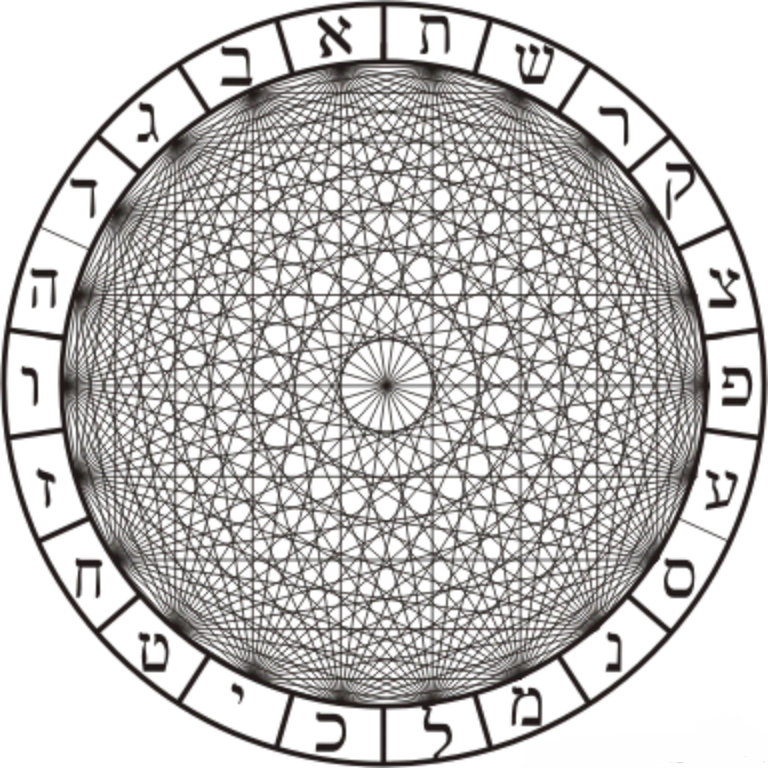
 

The 231 gates of the Sepher Yetzirah.

“I created a modified circle of letters by combining ג/ד into one section and ש/ת into one section since ש/ג and ד/ת share the values of 3 and 4 respectively. So instead of a circle divided into 22 sections, it’s now divided into 20 sections with the line between א and ב centered at the top, and the ג/ד and ש/ת sections directly opposing each other from either side of א and ב.

Following the logic of the Chariot, each gate is a line connecting two letters on the circumference of the wheel. The value of each gate is computed by adding the values of the two connected letters. So gate בא/אב would have a value of 3, gate מח/חמ would have a value of 48, etc. (A gate and its reverse are counted as the same gate, e.g. אב and בא are the same gate; חמ and מח are the same gate, etc.― Otherwise there would be 462 gates instead of 231.)

The major change that occurs using the Chariot gematria is that instead of every letter having a unique value (1 to 400) now there are two letters with the value of 3 (ג and ש) and two letters with the value of 4 (ד and ת). With two duplicated values it becomes possible to form triangles with their vertices located at the circumference of the circle.

Because ג and ש both have the value of 3, the gate from שת to ח and the gate from גד to ח can both have the same value of either 11 or 12. (If we use שת as 3, we have to use גד as 4. If we use שת as 4, we have to use גד as 3. Because either option is possible, gates שת―ח and גד―ח can be either 3+8=11 or 4+8=12.) We could also take שת and גד as both equaling 7. In that case, שת―ח and גד―ח would both equal 15. In either case, we can proceed around the circle as I’ve done in the rest of the images [ed – follow this link to see all 18 individual images].

Note that if ש is 300 and ת is 400, gates with equal values will only form parallel lines that never intersect. For example פי ,עכ ,סל and נמ all have the value of 90, but all of those lines are parallel, because in a circle, 80~10 contains 70~20, 60~30 and 50~40― so they will not intersect. If we take two random gates that do intersect, like במ and טק, the intersection will be somewhere in the middle of the circle, not at the circumference. Only the Chariot gematria allows triangles to be formed whose vertices are on the circumference of the circle.

There are 18 possible triangles that can be formed (see third image). If using 3 & 4 as the “counter-values” of שת―גד, the triangles two other gates values can be 4/5, 5/6, 8/9, 9/10, 10/11, 11/12, 12/13, 13/14, 23/24, 33/34, 43/44, 53/54, 63/64, 73/74, 83/84, 93/94, 103/104 and 203/204. If we use 7 as the counter-value of שת―גד, the triangles two other gates can have the values of 8, 9, 12, 13, 14, 15, 16, 17, 27, 37, 47, 57, 67, 77, 87, 97, 107 and 207.

What I have to do now (and I would much appreciate the help of someone more adept at mathematics than myself) is figure out if these values correspond to a table of sines/cosines. If so, then the Sefer Yezirah― when decoded with the Chariot gematria― contains an ancient system of trigonometry.” ~ ראובן הלוי

Unfortunately I can be of very little use to him as my mathematical skill is rather basic, so if you can help him take his research forward please get in touch!

Next up we’ll be taking a look at the the Sefer Bahir so stay tuned for more numerical honey.

—

[1]  Christopher P. Benton dated it to the time of the Mishna (2nd Century CE) due to its grammatical form, but Richard Reitzenstein placed its origin in the 2nd Century BCE.
ABOUT THE AUTHOR Bethsheba Ashe is almost Scottish. She was born a Geordie in the North East of England but she currently lives 3 thousand miles away in Pennsylvania. She started writing and self-publishing in 1992, with a series of magazines. She is the author of several non-fiction titles such as "Chariot", and has recently published her first adventure/murder mystery novel. She also coded and runs the gematria calculator app "Shematria". Bethsheba is an inventor and her invention is 'Galay'; which is the worlds first dual logographic and alphabetical writing script. Currently she is coding an app for Galay messaging. She's a quiet but intensely curious human being who likes to keep busy and she loves animals.
.

Filed Under: Gematria, Merkabah Wheel Tagged With: Gematria, Kabbalah, Sepher, trigonometry, Yetzirah, ראובן הלוי

How biblical gematria entered the Greek script

January 25, 2019 By BethSheba Ashe Leave a Comment

Welcome to the ninth installment of my blog about Gematria, the Merkabah and the birth of the Alephbet.  Today I’ll be looking at how biblical gematria was adapted to the Greek script, and giving some examples from the New Testament.

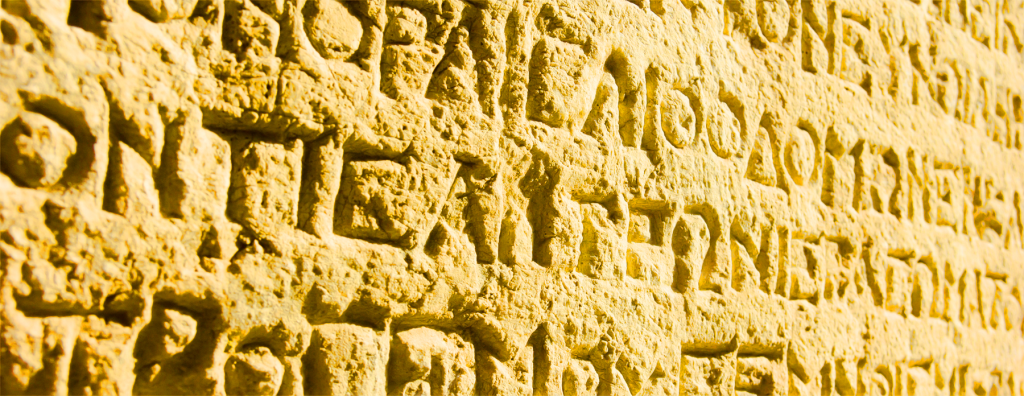
Greek writing inscribed in stone wall

There have been few writers who specialize on the subject of gematria, so it suffers from having too few references, with the consequence that insufficient research by these writers can be given too much weight.  For instance, the writer Kieran Barry (1999) opined that gematria had Greek origins, which is completely untrue as I’ll demonstrate.

When Stephen J. Lieberman (1987) published his excellent paper ‘A Mesopotamian Background for the So-Called Aggadic ‘Measures’ of Biblical Hermeneutics?‘ he made it quite clear that Jewish gematria is as different from the Mesopotamian practice of “aru” as chalk is from cheese.

The chief problem that has hindered the research of most writers on gematria, was that the proper values of biblical gematria were popularly unknown and were not easily discoverable.  Biblical gematria gives the value 3 to both the gimel and the shin, and gives the value of 4 to both daleth and tav, and this duplication of the value is counter-intuitive to what most people believe a number set should be, and can cause some cognitive dissonance.  So I call Stephen Lieberman’s paper ‘excellent’ because he did the very best job he could do of analyzing the matter given that he, like many others, were using the wrong number set, and this explains why there are no convincing examples of gematria in the Torah using ‘standard’ values.

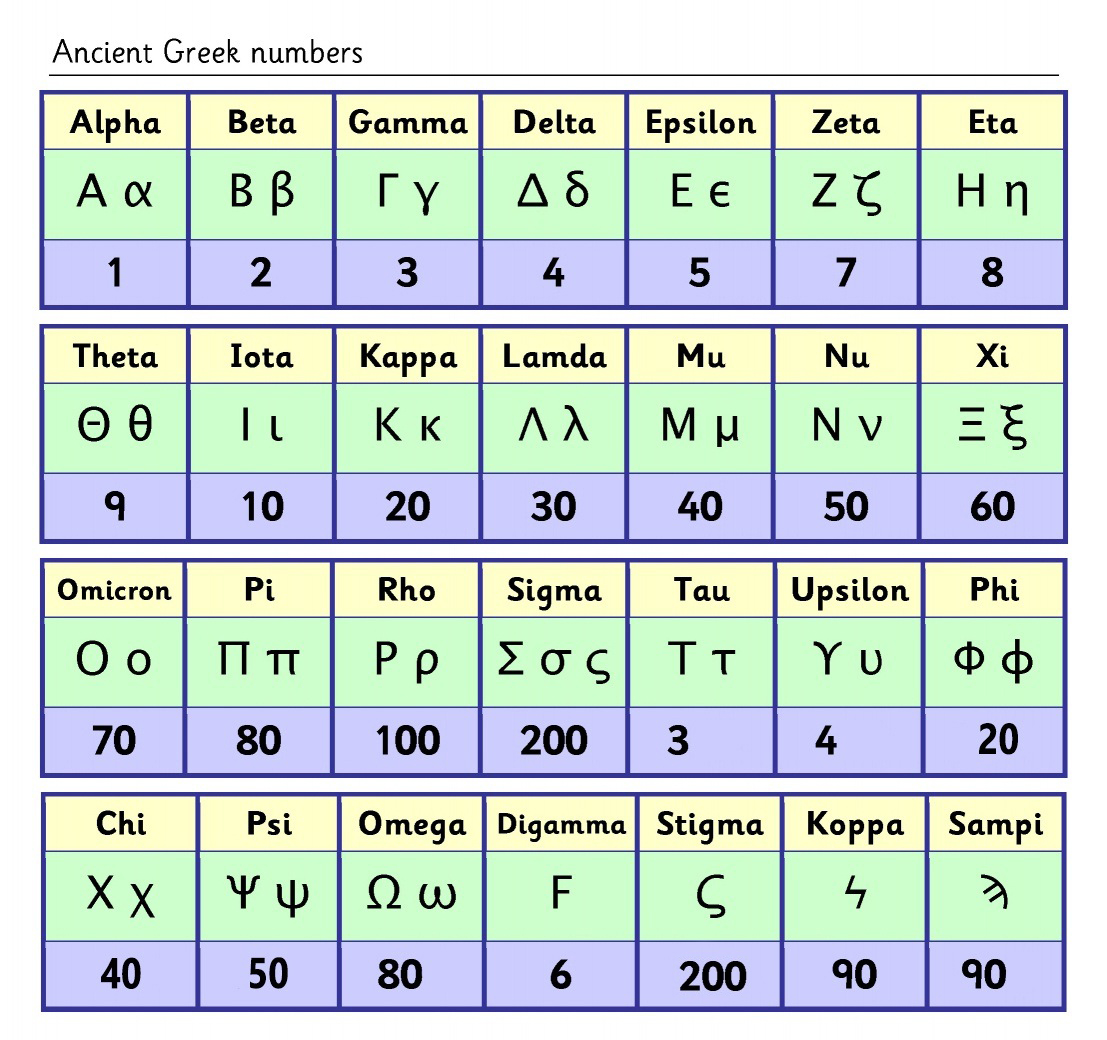
Likewise, when it comes to the Greek version of gematria; called Isopsephy, researchers have had exactly the same problem; to date they have been analyzing the texts of the New Testament using the wrong number set.  The correct number set is a transliteration of biblical gematria:

Biblical gematria;
א 1 ב 2 ג 3 ש 3 ד 4 ת 4 ה 5 ו 6 ז 7 ח 8 ט 9 י 10 כ 20
ל 30 מ 40 נ 50 ס 60 ע 70 פ 80 צ 90 ק 100 ר 200

Isopsephy values of the New Testament.

To arrive at these values, the Standard Isopsephy values are adjusted to match their Biblical Gematria counterparts, and so we use the extended version of Standard (which has the final forms of the letters extending into the hundreds) as a key.  For example: because Standard Gematria (SG) has Shin as 300 but Biblical Gematria counts Shin with the value of 3, then Greek Tau is adjusted to 3 rather than 300; and because (SG) counts Peh sofit as 800, but in Biblical Gematria (BG) sofits have no different values to the normal letters so Greek Omega is counted as 80 rather than 800; and because Kaph sofit is 500 by (SG) but is 20 by (BG) then Phi, which has the Standard Isopsephy value of 500 is adjusted to hold the value of 20.  Due to the fact that there is no natural relationship between the Greek letters Phi (20) and Kappa (20) as there is for Kaph and Kaph sofit which is the same letter with the only difference being the Kaph sofit appears at the end of a word, then it follows that Biblical Gematria was ported to the Greek script and not the other way on.  Standard Isopsephy can be converted to Biblical Isopsephy by following how Biblical Gematria was changed to Standard Gematria, but Standard Gematria cannot be converted back to Biblical Gematria by simply comparing Standard Isopsephy with Biblical Isopsephy, and this conclusively proves the case that Biblical Isopsephy emerged from Biblical Gematria.

The amount of work I’ve done with the NT is rather limited in comparison to the amount of time and study I’ve devoted with the Torah, but I can say with some confidence that the conventions of this gematria are of a different flavor.  For instance, there tends not to be the rigorous exclusion of small words and verbs from the calculations, and this may be because Greek words tend to return higher values than Hebrew ones, making it more difficult to construct calculations for smaller numbers without using the small words.  On the other hand some authors, like Matthew, follow the convention of dropping a signal when they have some gematria to follow.
Let’s start with a verse that has puzzled biblical researchers for centuries; John 21:10-11:

‘Jesus told them, “Bring some of the fish you have just caught.” So Simon Peter went aboard and dragged the net to the land, full of large fish, one hundred fifty-three. And although there were so many, the net was not torn.”

ιχθυων + μεγαλων + δικτυον + γην + 153 = 777.
of fish + large + net + land + 153 (the number of fish) = 777.

For our next verse, let’s have a look at the gematria of the name “Jesus Christ”.  In Greek it is Ἰησοῦ Χριστοῦ which yields an Isopsephy value of 719‎, and this is significant because every twelve hours the hour hand and seconds hands of an analog clock align exactly 719 times, and perhaps the drips from a water clock would also coincide at this rate?  Possibly someone who is an expert in ancient time pieces could answer that.  In John 11:9 it says this:

‎Jesus answered, “Are there not twelve hours of day? If ‎anyone walks in the day, he will not stumble, because ‎he sees by the light of this world.”‎

…and features the following calculations;
Twelve hours = δωδεκα ωραι = 305
Of the day = της ημερα = 365
365 – 305 = 60anyone walks in the day = τις περιπατη εν τη ημερα = 720
720 / 60 = 12 (hours)not = possibly suggests the reverse symmetry that follows;
stumbles = προσκοπτει = 638
light + world + he sees = φως κοσμου βλεπει = 836 [reverse symmetry of 638 ‘stumbles’]

anyone + light + world = τις φως κοσμου = 917 [reverse symmetry of 719 ‘Jesus Christ’]

For my third example, and since we’re only a week away from Christmas, I’m going to investigate the Isopsephy of the birth of Jesus, so we’ll pick up the Gospel of Matthew 2:1.  Matthew helpfully follows the traditional conventions and signals where the gematria is by saying “behold!”

Τοῦ δὲ Ἰησοῦ γεννηθέντος ἐν Βηθλέεμ τῆς Ἰουδαίας ἐν ἡμέραις Ἡρῴδου τοῦ βασιλέως, ἰδοὺ μάγοι ἀπὸ ἀνατολῶν παρεγένοντο εἰς Ἱεροσόλυμα.  λέγοντες Ποῦ ἐστιν ὁ τεχθεὶς βασιλεὺς τῶν Ἰουδαίων; εἴδομεν γὰρ αὐτοῦ τὸν ἀστέρα ἐν τῇ ἀνατολῇ καὶ ἤλθομεν προσκυνῆσαι αὐτῷ.

Word by word translation with gematria;
‘Then now [Jesus (292)], having been born in [Bethlehem (99)] the [of Judea (300)], in [the days (364)] [of Herod (266)] the [King (528)], behold, [Magi (124)] from the east arrived in [Jerusalem (530)], asking, “Where is [he who (70)] [has been born (272)] [King (452)] of the [Jews (229)]? We saw for [of him (82)] the [star (310)] in the east and [are come (212)] [to worship (743)] [him (88)].”

The phrase “in the east” may be a biblical convention similar to “on the head” or “by the foot”; meaning that only the first syllable of the adjacent word should be considered.  If that’s true then “in the east” would be the right hand side and “in the west” would be the left hand side of the word, altering the value of those words to the calculation.  And they are:

Magi = MA[GOI (83)] = μάγοι
Star = Aste[ra (101)] = αστερα

…which gives us;
530 Jerusalem + 83 Magi = 613
101 Star + 82 ‘of him’ = 183.

… and although the greater value of the name (1012) is not here, the value of the name Jesus is interesting in connection to Hashem because; 1012 – 292 = 720; which is 365 x 2 [all the days + all the nights in a year].

613 is generally associated with the number of mitzvot in the Torah, but it is also discovered during the first few verses of Genesis as I explained in a prior blog here;

[Genesis 1:2-3] פְּנֵ֣י תְה֑וֹם – וְחֹ֖שֶׁךְ + אֽוֹר  : the face of the deep – and darkness + light = 365
[Genesis 1:4]  הָא֖וֹר + הַחֹֽשֶׁךְ  : the light + the darkness = 248
365 + 248 = 613. 

183 is a value usually associated with a personification of Winter, or Winter King, who is usually the eldest brother of a King of Summer.  We see the value pop up in Genesis 25:27 with; [Esau + Hunter (183)] + Jacob (182) = 365.
There’s quite a lot more to this verse but that’s all I’ve got time for today.  It’s a nice bit of gematria to find during the seasons holidays, but that wasn’t the main point of this post which has been to show QED that Greek Isopsephy in the New Testament is based on the Hebrew gematria of the Torah.  I hope you’ve enjoyed this special installment.  I’ll be back to Hebrew and Torah study in my next blog, so thank you for all your support and shares, and stayed tuned for more numerical honey.

—————————————————-
Links
Shematria ~ Hebrew and Greek Biblical Gematria Calculator.

[First published DEC 19, 2018, 1:59 AM; https://blogs.timesofisrael.com/how-biblical-gematria-entered-the-greek-script/].

ABOUT THE AUTHOR Bethsheba Ashe is almost Scottish. She was born a Geordie in the North East of England but she currently lives 3 thousand miles away in Pennsylvania. She started writing and self-publishing in 1992, with a series of magazines. She is the author of several non-fiction titles such as "Chariot", and has recently published her first adventure/murder mystery novel. She also coded and runs the gematria calculator app "Shematria". Bethsheba is an inventor and her invention is 'Galay'; which is the worlds first dual logographic and alphabetical writing script. Currently she is coding an app for Galay messaging. She's a quiet but intensely curious human being who likes to keep busy and she loves animals.
.

Filed Under: Gematria, Merkabah Wheel Tagged With: Gematria, Greek, isopsophy, Jesus, script, writing

The gematria of the universal and the particular

January 25, 2019 By BethSheba Ashe Leave a Comment

Welcome to the eighth installment of my blog covering biblical gematria, the merkabah and the birth of the alephbet. 
This morning, like a bee to honey, I have been contemplating a wonderful post made by Rabbi Sacks : ‘The universal and the particular (Miketz 5779)’. He said a lot of interesting things that are worthy of further exploration, and in this blog we’ll look at how they bear a reference to biblical gematria, so please preface your reading of this by first reading the piece by Rabbi Sacks.

The entertainer and occult comedian, Lon Milo Duquette once pointed out that the very first thing that people do when they find out about gematria is calculate the value of their own name. Usually to see whether it totals to 666 or not.  It’s a great comedic observation. Ask people about this and they’ll grin at you wryly as they remember their first exercise with gematria.  They feel a tad foolish.  It’s a little bit embarrassing to be caught red handed in such a rank display of egotism but it’s terribly funny because it’s universally true for just about everyone.  Well… maybe not the 666 part.

Why do we do it?  Perhaps its as Ajahn Munindo once pointed out in a rather good dhamma talk; that we’re just terribly important to ourselves.  We have this “me” that wants to me recognized as “me”, and so we find ourselves in front of a gematria calculator typing our name into the box and expecting a number back that will … what?  Define this sense of “me”?  When asked what they expected from the exercise, most people cannot tell you, only that they expected “something” back.  That “something” is more than a number to them.  It means “something”, and that “something”, like the soul itself, is both universal and particular.

Rabbi Sacks observed:  “The difference between proper names and generic descriptions is fundamental. Things have descriptions, but only people have proper names. When we call someone by name we are engaged in a fundamental existential encounter. We are relating to them in their uniqueness and ours. We are opening up ourselves to them and inviting them to open themselves up to us. We are, in Kant’s famous distinction, regarding them as ends, not means, as centres of value in themselves, not potential tools to the satisfaction of our desires.”

Unless your view of the world is animistic this is true, but a name is more than a personal pronoun; a name – particularly one written in the hebrew script – is made universal by its number.

Rabbi Sacks continued: “Hence the tension in Judaism between the universal and the particular. God as we encounter Him in creation is universal. God as we hear Him in revelation is particular.”

I have a small disagreement with this because to my mind, revelation is both universal and particular.  The universal influences the particular and from the particular arises the universal, and both conditions apply all at once.  There are no hard and fast semantic barriers to separate the tripartite soul.  A good metaphor is the ocean, which does not cease to be the ocean as the waves roll into the shore (universal to particular), nor does the tide water become more ocean as it flows away from the shore (particular to universal).

When we analyse the Torah with biblical gematria it becomes clear that the names of the main characters have been either crafted or chosen specifically because of their number.  To give you some examples, when God (Elohim) changes the name of Abram to Abraham he gives his reason for it: המון גוים נתתיך ‘of many nations I have made you‘ (Genesis 17:5).

המון גוים נתתיך = 248
אברהם = 248

In Genesis 32:28 for the name of Israel (244) the reason given by Elohim is:

שָׂרִ֧יתָ You have struggled = 217
אֱלֹהִ֛ים God = 86
אֲנָשִׁ֖ים Men = 104
(217 – 86) + (217 – 104) = 244.

And in Genesis 17:15-16 for the name of Sarah (208) the reasons given by Elohim are:

Shall be her name 48 + of people 160 = 208.
213 Sarai  + 31 Shall come = 244.
30 And she shall be + 89 of Nations + 100 Kings + 160 of people – 135 from her = 244.

[ Interestingly, the names of both הָגָ֖ר – ‘Hagar’ and יִצְחָ֑ק – ‘Isaac’ also total to 208. ]

What do these numbers have in common?

248 + 244 + 208 = 700, which we first saw in Genesis 1:1:
220 In the Beginning + 86 Elohim + 98 Heavens + 296 Earth = 700.

While the Peshat interpretation of these verses concerns itself with human affairs and particular human names, the Sod shoots out universals for consideration and Talmud tell us that these interpretations do not contradict.  Surely that is a reminder that this separate and particular egocentricity or “me-ness” that we all feel, is yet rooted in the universality of God.

I hope you’ve enjoyed this installment of my blog.  If you’d like to request a topic for the next post then please feel free to drop me a line by using the comment box below.  Thank you and stayed tuned for more treats from the Torah’s dessert table.

ABOUT THE AUTHOR Bethsheba Ashe is almost Scottish. She was born a Geordie in the North East of England but she currently lives 3 thousand miles away in Pennsylvania. She started writing and self-publishing in 1992, with a series of magazines. She is the author of several non-fiction titles such as "Chariot", and has recently published her first adventure/murder mystery novel. She also coded and runs the gematria calculator app "Shematria". Bethsheba is an inventor and her invention is 'Galay'; which is the worlds first dual logographic and alphabetical writing script. Currently she is coding an app for Galay messaging. She's a quiet but intensely curious human being who likes to keep busy and she loves animals.

Filed Under: Gematria, Merkabah Wheel Tagged With: Gematria, HaShem, Rabbi Sacks, YHVH

Merkabah and the Gematria of the Holy Name of God

January 25, 2019 By BethSheba Ashe Leave a Comment

Welcome to the seventh installment of my blog about biblical gematria, the Merkabah and the birth of the Alephbet.  Today I want to discuss the gematria of the Holy Name (HaShem) and why it was such a unifying monotheistic engine in ancient times, as well as asking “Where does the holy name come from?”  And “What do the letters Yod Heh Vav Heh actually stand for?”

[As usual I’m using biblical gematria values which may be different from what you are used to.  Please see my first blog post if you haven’t used biblical gematria before.]

At first glance there doesn’t appear to be much to the name.  It’s only 4 letters long, has a value of 26, and it first appears in verse 2:4 of Genesis.  It’s when we start to consider the significance of the name to the Wheel of the Chariot that things get interesting…

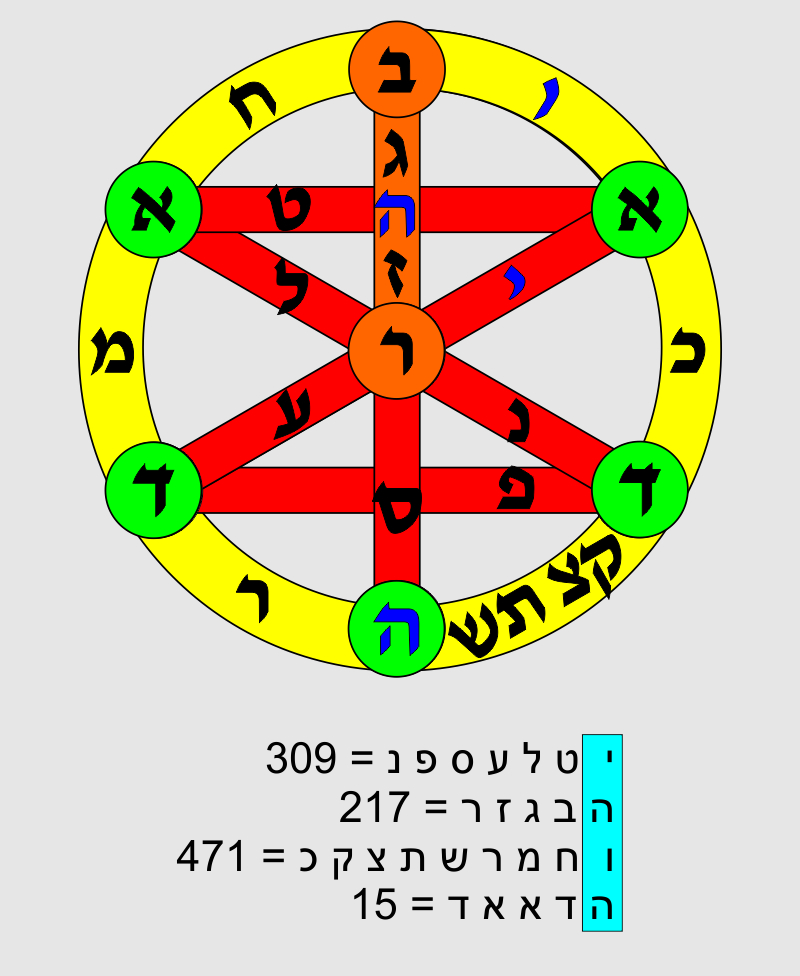
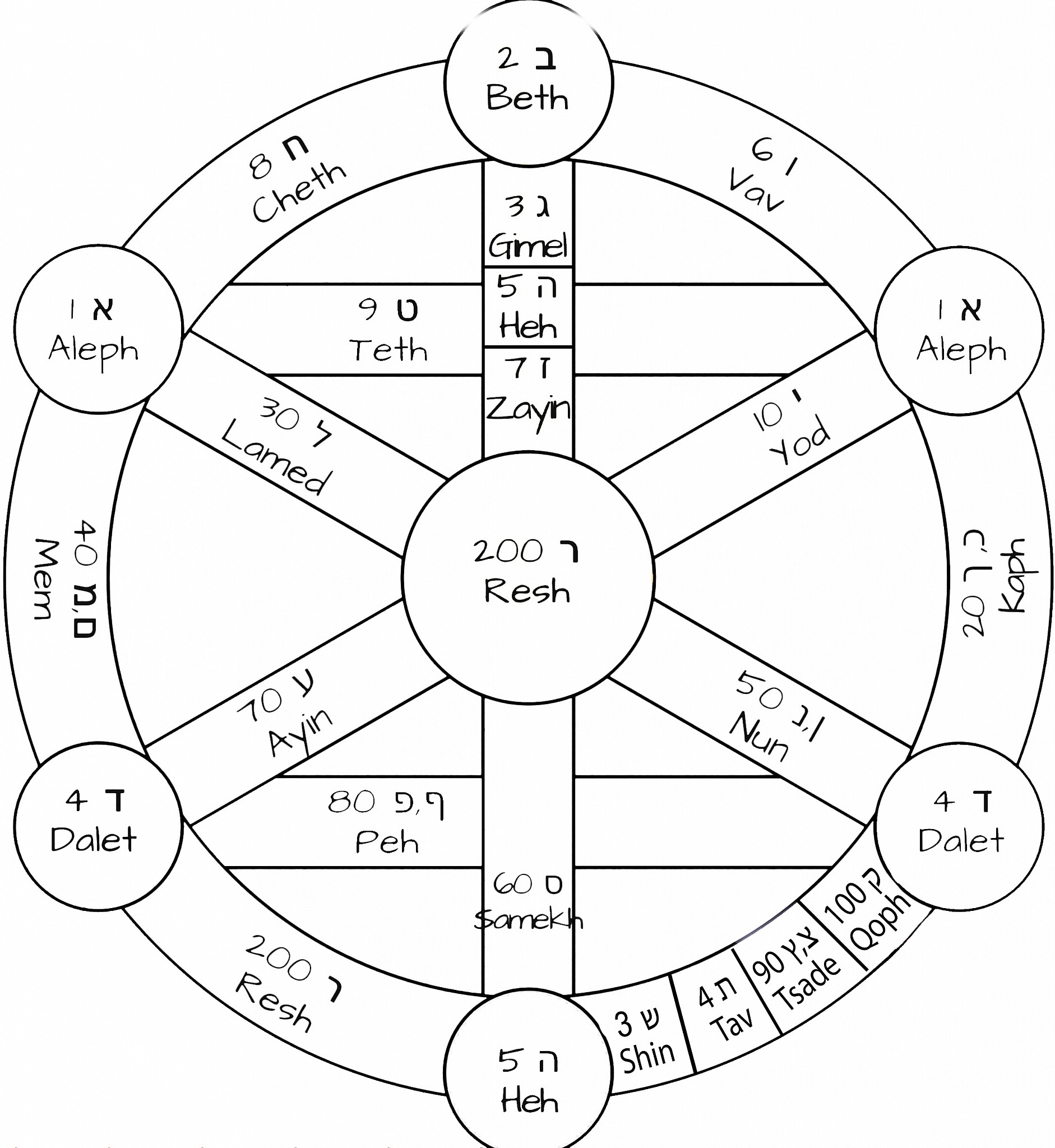
By using the letters of the name as an acronym, the wheel can be divided into 4 sections;

Yod for the inner paths
Heh for the sanctuary
Vav for the paths of the circumference
Heh for the remaining palaces.

This gives us a grand total of 1,012 for all the letters.  When all the numbers of the middle column (282 without ‎using gates) are removed from the total number of 1012 ‎for the entire wheel this leaves 730 and also splits the ‎wheel into two sections. 730 /2 = 365 days.  Those of you who read my last blog may realize that עזרה “The Court” of the Temple of Solomon has a value of 282, and עזרה “The Court” 282 minus the היכל “Heichal” 65 = 217, so we can see a correspondence between the Palaces and the Temple appearing here, and to go a little further in their direction we might draw your attention to these calculations;

Y 309 + H 217 + H 15 = 541.
So YHH 541 – V 471 (the circumference) = 70,
similar to the way the Temple 147 minus the Hall 77 is 70,
and of course 217 / 70 = 3.1.

With the wheel of the Chariot we find the number 31 for אל as the basis for everything, but the Holy Name stands for literally everything in the Heavens and the Earth; it is God and all creation unified in four interlocking parts of the cosmos.

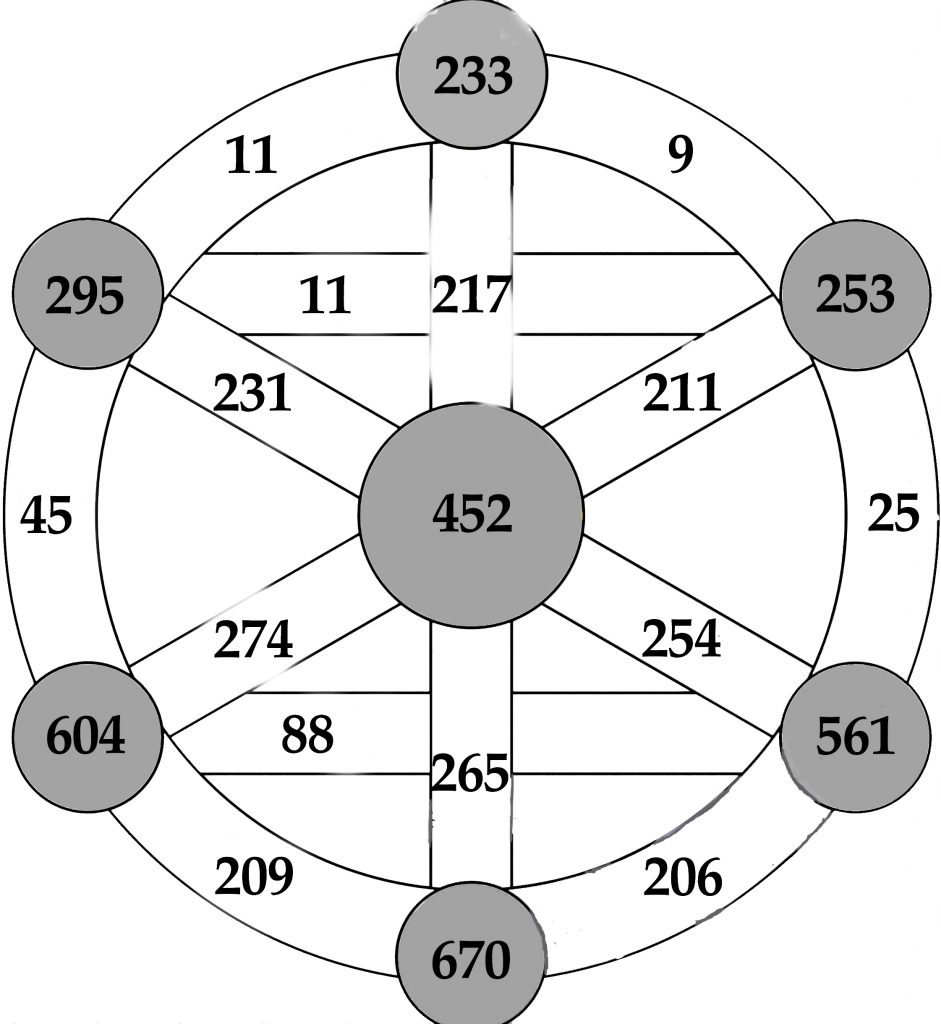
The 3 gates which make up the top triangle of the wheel have a sum total of 31;
11 + 11 + 9 = 31.
And when we add together ALL of the gates of the wheel for all the letters of the paths we find the sum is 3108 which is 777 * 4.

So where are we going with this?  Well the ancients must have been astonished to learn that this beautiful arrangement of numbers on the wheel bears a relationship with (יהוה אלהים (112 because 1012 / 4 = 253 and 253 + 112 = 365 (days in a year).  Not only that but the number 253 is on the wheel.  Collect the letters from all four paths and palaces connecting to the Palace of the Aleph on the right hand side of the wheel:

‎ 1 Palace of the Aleph‎
‎ 9 Path of Teth + 1 the other Aleph = 10‎
‎ 6 The Vav + 2 the Palace of Beth = 8‎
‎ 20 The Kaph + 4 the Palace of Daleth = 24‎
‎ 10 The Yod + 200 the Palace of Resh = 210‎
‎ 1 + 10 + 8 + 24 + 210 = 253.‎

And this was surely noticed by Ezekiel:

Ezekiel 1:10: ֩אל־הימין֩ אריה֩ ופני֩ אדם֩ פני֩ פניהם֩ ודמות לארבעתן֩ופני־נשר֩לארבעתן֩מהשמאול֩ופני־שור֩ לארבעתם ―And the likeness of their faces, the face of a man and the face of a lion on the right side [of the word] to them four and had the face of an ox to the left [of the word] to them four and had the face of an eagle to them four.

Gates of the Seven Palaces

Man = אדם = 45 = the gate of Mem.‎
Lion = ‎אַרְיֵ֤ה‎ = 216 on the right side of the word = ‎אַרְיֵ֤‎ = 211 (gate of the ‎path of Yod).‎
Ox = ‎שׁ֥וֹר‎ = 209 on the left side of the word = ‎וֹר‎ = 206 (gate of the path ‎with four letters; ‎(‎שתצק)‎ Shin, Tav, Tsade & Qoph).
Eagle = ‎נֶ֖שֶׁר‎ = 253.

Therefore:

Man = Path of Mem
Lion = Path of Yod
Ox = Fourfold (‎שתצק‎) Paths
Eagle = Palace of Aleph

Mem (40) Yod (10) Shin (3) Tav (4) Tsade (90) Qoph (100) Aleph (1) = 248
which is numerically identical with the value of Abraham (248) and is 31 x 8.  It is as Rabbi Shimon ben Lakish once said: “The patriarchs they ‎themselves were the Divine Chariot!“

The Wheel of the Chariot occupied a time in ancient history where monotheism was just emerging, and as a stepping stone from paganism to pure monotheism was the idea of YHVH as a unifying umbrella.  Therefore, though we haven’t discussed it in any detail yet, there are quite a few pagan remnants left on the wheel and if we look closely we can see the names of Asherah, Elat and Hadad spelled out there, under the domain of YHVH in every quarter.

Yhvh (26) + AShRH (209) + 777 = YHVH (1012).
Yhvh + AShRH = 26 + 209 = 235. [235 is the exact number of synodic months in 19 solar years (according to the metonic calendar.]
235 + 777 = 1012 (YHVH).

Elohim is the plural form of El and it is usually thought to refer to the supreme God but on at least one occasion in the Tanakh it is also used to refer to ‘the dead’ (1 Samuel 28:13). It has meanings ranging from “gods” in a general sense to specific gods, or (most frequently) to YHVH but also to demons, angels, kings and prophets. However, while the word has an obvious pantheistic heritage – the associated polytheism was slowly dropped in Judaism and the narrative relationships between the El and his family were either ignored or recast into the domain of the family completely by Greco-Christian cults. It came to mean simply ‘God’ – whatever the original writers of the Torah may have originally intended by its use.

In the Levantine pantheon, El fathered the Gods Hadad, Yam and Mot and their sister the Goddess Anat. El was married to the Goddess Asherah/Elat and in that pantheon the sons of El are called the Elohim. Hadad was the god of rain, storms and fertility; Mot was the God of Death; and Yam was the God of the sea while Anat was Queen of Heaven and a violent War Goddess.  In the Baal cycle, Hadad complains to Asherah that he doesn‘t have a Palace of his own like other Gods and has to live in the same dwelling as her and El. Eventually El reluctantly allows Hadad his own house. The ideographic representation of this is found on the Chariot Wheel by the bottom 3 palaces that spell out the name: הדד, and this gives us a clue to the great age and antiquity of the Chariot Wheel because Ugarit was destroyed in 1050 BCE.

I hope you’ve enjoyed this installment of my blog.  If you’d like to request a topic for the next post then please feel free to drop me a line by using the comment box below.  Thank you and stayed tuned for more numerical honey.

ABOUT THE AUTHOR Bethsheba Ashe is almost Scottish. She was born a Geordie in the North East of England but she currently lives 3 thousand miles away in Pennsylvania. She started writing and self-publishing in 1992, with a series of magazines. She is the author of several non-fiction titles such as "Chariot", and has recently published her first adventure/murder mystery novel. She also coded and runs the gematria calculator app "Shematria". Bethsheba is an inventor and her invention is 'Galay'; which is the worlds first dual logographic and alphabetical writing script. Currently she is coding an app for Galay messaging. She's a quiet but intensely curious human being who likes to keep busy and she loves animals.

Filed Under: Gematria, Merkabah Wheel

More about the Genesis alphabetic acrostic

January 25, 2019 By BethSheba Ashe Leave a Comment

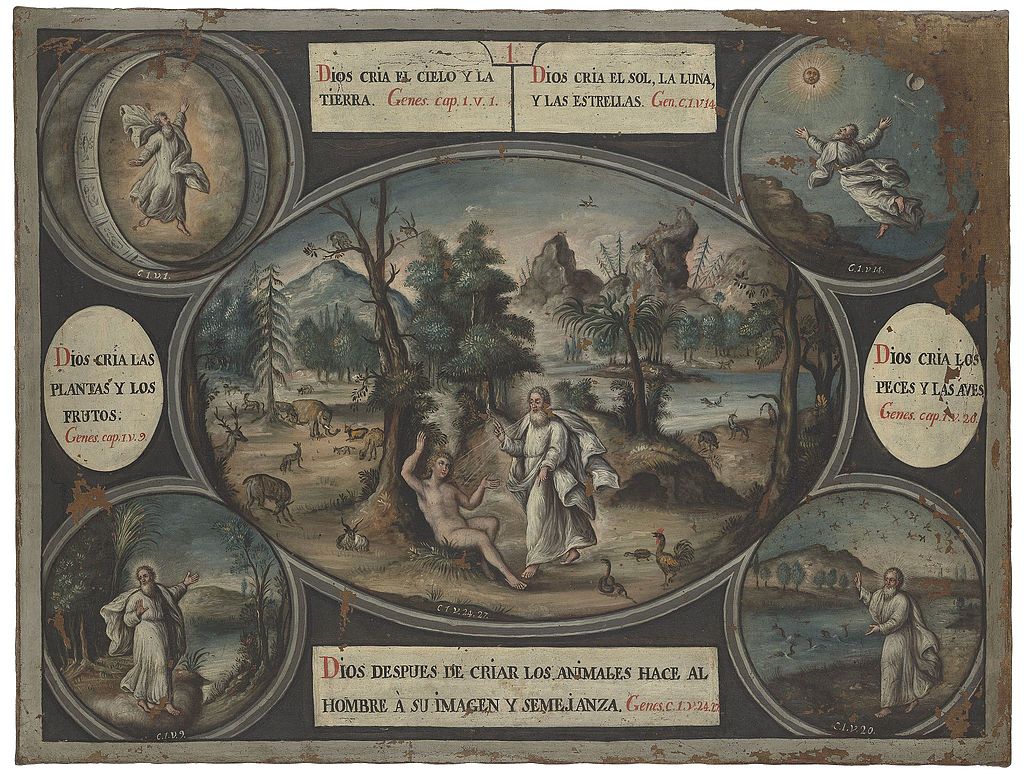
Episodes in the Book of Genesis

Welcome to the fourth installment of my blog about gematria, the Merkabah and the birth of the alephbet, and a happy Hanukkah to you all.

Yesterday I gave you the Genesis alphabetic acrostic to contemplate, but today I’m going to attempt a brief potted commentary on it, although its really something I feel should be expounded upon by a more learned soul than myself.  I’m not going to throw open all the gematria of the first two chapters of Genesis for you, because that would deprive you from the fun of finding out new things about the Torah for yourself, but I will point out the most interesting or pertinent information as I can.

What the presence of the acrostic means is that we have far more information about the qualities of the letters and their attributions to the Seven Palaces.  It functions as verification of the great antiquity of Genesis, given that the Shin and Tav are placed in their earliest order and not at the back of the alephbet.  The acrostic also means that we have a lot more information about these two chapters of Genesis herself.  For example, when on the path of Cheth, said Elohim :

Let Us make man in Our image, according to Our likeness; and let them rule over ‎the fish of the sea and over the birds of the sky and over the cattle and over all the earth, and over ‎every creeping thing that creeps on the earth.

~ we already know that the fish of the sea and the birds of the sky were created with the Vav, and that the cattle and creeping things were created with the Zayin; so with the Cheth ruling at the head we have the word חזו meaning vision or appearance.

The verses of Genesis, and indeed all the Torah were first publicly numbered (as we find them today) by Robert Estienne (Robert Stephanus) in 1571, but the ‎move was not without criticism at the time from traditionalists.  The manuscripts that he worked from did not ‎contain the chapter and verse divisions in a numbered form.

The progression through the alephbet in Genesis starts with a Beth (2) for the Seventh Palace (at the top) rather than an Aleph, though Aleph (1) is the smaller number.  There are also two Alephs for the two Palaces directly to the left and right of the Beth, as if Beth had been split into two, like a new shoot, to form the Palaces of the Alephs; of Day and of Night.  Beth is also the letter that begins the Book of Genesis with the word בראשית, which has the value of 220 [and 220/7 gives a pi approximation].

The Seven Palaces with Gate correspondences.

Kabbalah supports the idea that the Beth begins the acrostic with the Aleph coming afterwards.  Note the the Aleph is called twice:

The Creator told her, “Aleph, Aleph, although the world was created with the letter Bet, you will be the head of all the letters, for there is no unification in Me, except in you. In you will all calculations begin, all the works of the people of the world, and the whole unification is only in the letter Aleph.” ~ Sepher Ha Zohar.

The letter Beth means “house” or palace and it was where Elohim was thought to dwell in the thick darkness of the watery expanse that the ancients believed surrounded the earth.  It is from this Seventh Palace that he began his work to create the Heavens (or the Sky) and the Earth with his sacred signs.

If you’re exploring the gematria of Genesis it’s worth noting that gematria calculations are generally intended to come to fruition over several subsequent verses, so if you can’t determine what text is telling you in that verse, see if the values are carried over to the next verse.  For instance:

[Genesis 1:2-3] פְּנֵ֣י תְה֑וֹם – וְחֹ֖שֶׁךְ + אֽוֹר  : the face of the deep – and darkness + light = 365
[Genesis 1:4]  הָא֖וֹר + הַחֹֽשֶׁךְ  : the light + the darkness = 248
365 + 248 = 613.

The Talmud tells us that there are 613 commandments in the Torah; 248 Positive Commandments (do’s) and 365 Negative Commandments (do not’s), however there is disagreement on whether 613 is the right number since the matter rests on gematria that would, if calculated with biblical gematria rather than Standard, result in the value 217, but on the other hand it may simply be that the use of Standard Gematria rather than Biblical Gematria is the norm in the Talmud.  I cannot explain what 613 has to do with the Palaces of the Aleph or the Day and Night, so answers on a postcard please…

If I were to mnemonic the letters via the descriptions from Genesis they’d probably resemble something like this:

Beth ~ Gods house, everything in Heaven and Earth.
Aleph ~ Light/ Day and Night.
Gimel ~ Sky / Heaven.
Shin ~ Fire / Dryness / Heat.
Daleth ~ Doors into and out of the world.
Tav ~ the Measurement of Solar and Lunar Time.
Heh ~ Stars and Starlight.
Vav ~ Birds, Fish and Sea Monsters.
Zayin ~ Cattle and Insects.
Cheth ~ Sight, Vision, Appearance, Prophesy, Man.
Teth ~ Food.
Yod ~ Rest and Contemplation.
Kaph ~ Mist, Rain, Desire.
Lamed ~ The breath of Life, Ruach.
Mem ~ Pregnancy.
Nun ~ Life, but also Death for all living things under the Sun.
Samekh ~ the great River.
Ayin ~ Temptation.
Peh ~ Mating.
Tsade ~ Childbirth, because Eve is regarded as the first birth according to Kabbalah.
Qoph ~ Moon / Eve / female.
Resh ~ Sun / Adam / male.

The letter Daleth needs a little further explanation; as it is assigned to two Palaces, but only one of them – the one to the left – is being discussed in her verses.  This Palace represents the door through which all things enter into the world from heaven.  It’s twin on the right side is the door through which all things exit the world and enter heaven.  In these verses, though they seem to be about the creation of trees and vegetation in the world, the take away is that it is the first time God has caused anything to live upon the earth and so it is the first time one of these doors are used.

A note to say about Teth.  Because these verses begin with the word “behold” הִנֵּה֩, which is a word that indicates there is gematria to follow, we must total the gifts that Elohim has given to man.

One more matter of note is the origin of the letter Tsade.  This has long been an open question to attract a great deal of debate so I feel quite free to offer the unusual but logical suggestion here that the letter Tsade may have started off life as an image of an ancient vaginal specula.

I hope you’ve enjoyed this installment as you navigate your way through the gematria of the Torah.  Tomorrow I’ll be discussing the relationship of the tabernacle and first temple to the Seven Palaces, and on Thursday this will be followed by a discussion about the implications for the long planned for Third Temple.  So stay tuned for more numerical liquid gold.

[Originally published DEC 4, 2018, 9:39 PM
https://blogs.timesofisrael.com/more-about-the-genesis-alphabetic-acrostic/]

ABOUT THE AUTHOR Bethsheba Ashe is almost Scottish. She was born a Geordie in the North East of England but she currently lives 3 thousand miles away in Pennsylvania. She started writing and self-publishing in 1992, with a series of magazines. She is the author of several non-fiction titles such as "Chariot", and has recently published her first adventure/murder mystery novel. She also coded and runs the gematria calculator app "Shematria". Bethsheba is an inventor and her invention is 'Galay'; which is the worlds first dual logographic and alphabetical writing script. Currently she is coding an app for Galay messaging. She's a quiet but intensely curious human being who likes to keep busy and she loves animals.

Filed Under: Gematria, Merkabah Wheel Tagged With: Gematria, Genesis, mnemonic, pi

The conventions of biblical gematria.

January 25, 2019 By BethSheba Ashe Leave a Comment

Yesterday I called the biblical art of gematria ‘sophisticated’, and today I’d like to elaborate a little upon that theme.

You’ll all be familiar with the concept of written grammar, but have you ever paid mind to numerical grammar?  It is by convention to numerical grammar that we structure our mathematical calculations the way that we do.  For instance, understanding the sum [ 220 / 7 = 31.428571r ] requires us to know which elements of the sum are arranged where and for what reason.  And before we do any calculation we also need to be familiar with the signs for math functions (like +, -, *, /, $, %, !) .  Therefore, because we require knowledge of the conventions, we need some degree of formal education in order to do math, and the same is true for biblical gematria.  There are numerical conventions for biblical gematria; it has a type of numerical grammar.

A student who is learning biblical gematria needs to develop an eye for the text they are working with.  They should try to see the cues, the math functions, the indicators, the logic of the calculation, the results, and finally ~ the sum in context with the other gematria calculations in the text.

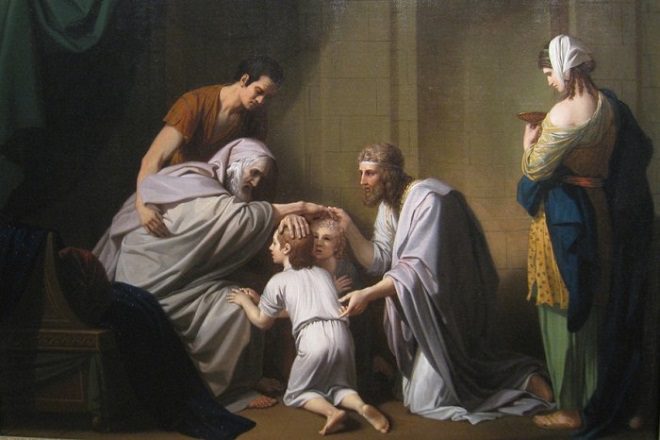
Most indicators have a logical relationship ‎with their mathematical function, for instance:‎“et” = add, “not” = disregard, “on the head” = ‎the first syllable of a word, “bruise” = put two ‎words together, “the heel” = the end syllable of ‎a word.  So we’re going to be taking you on a bit of a whirlwind tour around the Torah, to alight on some of the common conventions of biblical gematria.  As promised, today we’re going to look at an unusual bit of gematria in the story of Ephraim and Manasseh; Genesis 48:14.

This calculation has something of the feel of a cryptic crossword clue about it.  When we read it we should be looking for logical relationships ‎between the words in the sentence:

וישלח ישראל את־ימינו וישת על־ראש אפרים והוא הצעיר ואת־שמאלו ‏על־ראש מנשה שכל את־ידיו כי מנשה הבכור

“But Israel stretched out his right hand and laid ‎it on the head of Ephraim, who was the younger, ‎and his left hand on Manasseh’s head, crossing ‎his hands, although Manasseh was the firstborn.”‎

The value of the names are exactly the same, until just ‘the head’ of the names are considered;

מְנַשֶּׁ֖ה הַבְּכֽוֹר ‘Manasseh the firstborn’ = 331
 אֶפְרַ֙יִם֙ ‘Ephraim’ = 331

Israel is touching both Ephraim and Manasseh which indicates the sum of the three names are to be added, but the text specifies that he is only touching them  עַל רֹ֤אש “on the head” which by convention means we should add ‎‎‘the head’ or first parts from each name, therefore we take the Peh and Aleph from Ephraim and the Mem from Manasseh:

יִשְׂרָאֵ֨ל‎ ‘Israel’ (244) + (‎‏(81) אֶפְ‎ of  ‎‏(אֶפְרַ֙יִם֙‎ + (‎‏ (40) מְof ‎מְנַשֶּׁ֑ה‎) = 365 (days).

And now we may ask ourselves “Why is the number of days in a year relevant to the story of Manasseh and Ephraim?”   Much of the gematria in Genesis concerns the Solar and Lunar cycles, and we see the number 365 appearing many times in Genesis as the text discusses the cycles of the solar year.  It’s first seen in Genesis 1:2-3;

365 = פְּנֵ֣י תְה֑וֹם – וְחֹ֖שֶׁךְ + אֽוֹר
“The Face of the Deep” – “and darkness” + “light” = 365

We see 365 again in Genesis 3:3;

ומפרי העץ אשר בתוך ־ הגן
“And the fruit of the tree which in the middle of the garden.

[In my experience of the calculating art, typically the use of the words such as בְּתוֹךְ ‘middle’ or ‘’between’ denotes the function of division by 2 of the following noun, which in this case is הגן ‘garden’ 58. Therefore: 58 / 2 = 29 and when we add this to ומפרי ‘and the fruit’ 336 results in 365 (days in a year).]

365 is central to the story of Jacob and Esau [Genesis 25:27];

עֵשָׂ֗ו + צַ֖יִד + יַעֲקֹב֙

Esau 79 + hunter 104 + Jacob 182 = 365

This story in particular has strong typological similarities to the 3rd millennium BCE Sumerian text The Debate between Winter and Summer.

365 is a significant number to the Seven Palaces.  When the sum of the middle column is calculated (282 if we do not ‎use gates) and then removed from the total number (1012 ‎for the entire wheel) this leaves 730 and also splits the ‎wheel into two sections.

730 = 365 days + 365 nights.

When the letters Yod and Ayin are doubled on their paths we find the total sum from the Palace of the Aleph to the Palace of the Daleth is 365;

Aleph (1) + (Yod x 2 (20)) + Resh (200) + (Ayin x 2 (140) + Daleth (4) = 365.

And we also find the same calculation with the opposite diagonal;

Aleph (1) + (Lamed x 2 (60)) + Resh (200) + (Nun x 2 (100) + Daleth (4) = 365.

Lastly, the Talmud Yerushalmi Tractate Rosh Hashanah ‎‎2:5 says:

”The Holy One blessed be He ‎created 365 windows that the world might ‎use them:  182 in the east, and 182 in the ‎west and one in the center of the firmament ‎from which it came forth at the beginning of ‎the Creation.”‎

That’s it for today.  Continuing on tomorrow I’ll be discussing how the ancients thought about light, as well looking into the story of the expulsion of Adam and Eve from the Garden of Eden.  So stay tuned for more numerical honey.

ABOUT THE AUTHOR Bethsheba Ashe is almost Scottish. She was born a Geordie in the North East of England but she currently lives 3 thousand miles away in Pennsylvania. She started writing and self-publishing in 1992, with a series of magazines. She is the author of several non-fiction titles such as "Chariot", and has recently published her first adventure/murder mystery novel. She also coded and runs the gematria calculator app "Shematria". Bethsheba is an inventor and her invention is 'Galay'; which is the worlds first dual logographic and alphabetical writing script. Currently she is coding an app for Galay messaging. She's a quiet but intensely curious human being who likes to keep busy and she loves animals.

Filed Under: Gematria, Merkabah Wheel Tagged With: biblical, Eden, Ephraim, Garden of Eden, Gematria, Genesis, Jacob, Manasseh

  • « Previous Page
  • 1
  • 2
  • 3
  • 4
  • Next Page »

Copyright © 2025 · BethSheba Ashe · Log in